When irrigation demands peak or water must be moved quickly from a pool, pond, or flooded area, a reliable submersible water pump is essential. This guide highlights five top floating-style pumps designed for garden irrigation, pool maintenance, basement drainage, and more. Each entry includes key specifications, typical use cases, and what to consider before purchase.
| Product | Brand | Key Use | Flow | Head |
|---|---|---|---|---|
| Aquastrong 1/2 HP Utility Pump | AQUASTRONG | Irrigation, flooded areas | 3159 GPH | 26 ft |
| Acquaer 1/3 HP Automatic Submersible | Acquaer | Pools, hot tubs, basement | 2160 GPH | not listed |
| Prostormer 1HP Submersible Pump | Prostormer | Pond, garden, irrigation | 3700 GPH | not listed |
| PHLEX PRO 1HP Submersible Pump | PHLEX PRO | Pool, pond, irrigation | 5300 GPH | 26 ft |
| Weeflos 1.6HP Submersible Pump | weeflos | Irrigation, garden ponds | 5500 GPH | 36 ft |
Aquastrong 1/2 HP Submersible Pump For Quick Irrigation Flow

Powered by a 1/2 HP motor, this pump delivers up to 3159 GPH with a vertical lift of 26 feet, making it suitable for rapid irrigation transfer and drainage tasks. Its rugged thermoplastic housing resists corrosion, and a 10-foot power cord with a handheld design adds portability. The adjustable tether float switch enables automatic on/off based on water level, while manual on/off is possible by simply adjusting the switch position. It is built to handle small solids up to 1/5 inch and features a reliable mechanical seal to minimize leaks. This model is well-suited for temporary irrigation setups, emergency drainage, and pool-to-garden transfers.
Acquaer 1/3 HP Automatic Submersible Water Pump

This 1/3 HP unit features an automatic on/off function via a built-in smart sensor, activating at roughly 1-1/2 inches of water and stopping near 1/4 inch. With a flow of up to 2160 GPH and a bottom suction design that filters debris, it’s ideal for removing water from pool covers, hot tubs, basements, and irrigation-related drainage. A thermal protection core helps prevent motor damage from shortfalls in water, extending service life. A user-friendly strainer base allows quick cleaning without tools.
Prostormer 1HP Submersible Pump For Clean/Dirty Water

With a 1 HP motor and a 3700 GPH rating, this pump handles both clean and dirty water, making it versatile for irrigation drainage, pool and garden use, and flooded basements. Automatic float switch operation allows for hands-off control, while the pump’s design supports low-water scenarios when the float is locked in place. A recommended practice is to submerge the unit at a slight angle during startup to expel trapped air for optimal priming.
PHLEX PRO 1HP Submersible 5300GPH Pump For Irrigation

This model delivers up to 5300 GPH with a 26-foot lift, powered by a 1 HP PSC motor. It features automatic water transfer switching to handle both clean and dirty water, and can manage solids up to 1/5 inch to protect the motor. The unit supports automatic and manual modes, with the float switch enabling easy level-based control. A removable base simplifies cleaning and maintenance, extending pump life for irrigation and drainage projects.
Weeflos 1.6HP Submersible Pump For Large Irrigation Needs
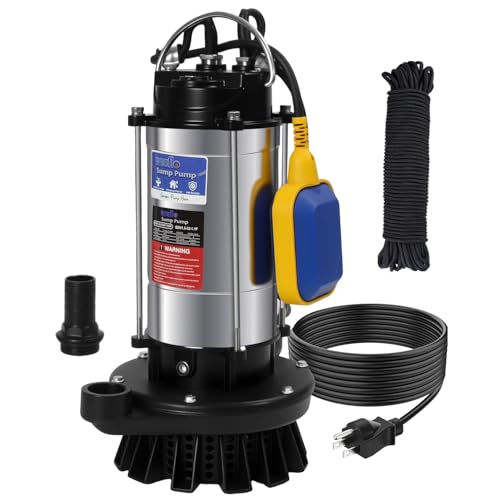
Designed for higher throughput, this 1.6 HP unit can move up to 5500 GPH with a maximum head of 36 feet. The automatic float switch provides hands-off operation, and the stainless steel housing delivers corrosion resistance for longer life in irrigation, ponds, and basements. A 26-foot power cord supports flexible placement in outdoor and indoor irrigation setups, with reliable performance under demanding conditions.
Buying Guide: Key Considerations For Choosing A Floating Water Pump
- Flow rate and head: Match the pump’s GPH and lift height to your irrigation or drainage needs. Higher GPH moves more water faster, while head height determines how high you can lift water to reach irrigation lines or elevated basins.
- Automatic vs. manual operation: Pumps with automatic float switches help maintain water levels with minimal supervision, while manual modes give continuous operation in specific setups.
- Substance handling: If debris is common, select models rated for dirty water and with debris filtration. Impeller design and intake strainer affect solids tolerance.
- Durability and materials: Thermoplastic housings offer corrosion resistance for outdoor use; stainless steel housings provide extended life in harsher environments.
- Power and cord length: Consider the availability of outlets and the distance to the water source. Longer cords provide more placement flexibility but may require extension considerations.
- Maintenance: Look for removable bases or bases that facilitate cleaning. A simple disassembly can extend pump life and keep performance consistent.
- Applications: For irrigation, prioritize steady flow and reliability. For basements and pools, focus on auto-start features and debris tolerance to handle occasional dirty water.
- Installation: Ensure a proper submersion depth and a stable base to prevent air pockets. Tilting the pump slightly during startup helps expel trapped air.
In selecting a floating water pump, balance performance with durability and ease of use. The units highlighted above represent a range of capacities and features suitable for residential irrigation, pool maintenance, and flood drainage tasks. Always verify compatibility with your irrigation layout, water source, and local electrical safety requirements before purchase.