Product comparisons at a glance
| Product | Best For | Wattage | Notes |
|---|---|---|---|
| K&H Stock Tank & Pond Heater, 750W | Balanced power for small to medium tanks | 750W | Floating with cage; versatile use |
| Farm Innovators Floating Tank De-Icer, 1500W | Moderate to large tanks; efficient heating | 1500W | Thermostatically controlled |
| K&H 500W Floating/ Submersible Deicer | Compact tanks; smaller livestock operations | 500W | Full cage and cord clip |
| API Floating Water Tank De-Ice, 1500W | Rugged, surface-mounted option | 1500W | Buoyant enclosure; durable guard |
| Farm Innovators H-418C 1250W De-Icer | Convertible floating/submergible | 1250W | Cast aluminum; self-regulating |
Floating stock tank heaters are designed to keep drinking water accessible for livestock during freezing weather. This guide focuses on five reliable options that balance energy use, durability, and ease of use. The selections cover a range of tank sizes, from small troughs to larger stock tanks, and include both floating and submersible capabilities. Buyers can choose based on tank size, preferred mounting style, and energy efficiency.
K&H Pet Products Stock Tank & Pond Heater, 750W
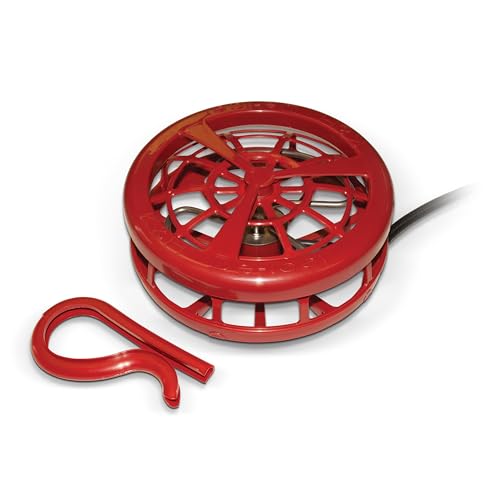
The 750W K&H model offers automatic thermostat control to cycle on and off as needed. It’s designed for floating use or submersion and ships with a full protective cage and cord clip. This unit works well in plastic, rubber, or metal stock tanks, preserving a reachable water boundary for horses, cattle, goats, and other livestock. Best for mid-size tanks or moderate climate protection, it helps reduce energy use by turning off when water is above freezing.
Who it’s best for: small to mid-sized farms needing a balanced, all-purpose heater with simple installation. Why selected: a proven design that maintains water access without extensive setup. Limitation: may require larger tanks to fully exploit its 750W capacity in very cold conditions.
Farm Innovators Floating Tank De-Icer, 1500W

This 1500W model from Farm Innovators uses thermostatic control to heat only when necessary, helping conserve energy in larger tanks. The floating design is easy to spot and position for optimal water circulation. It’s best for medium-to-large tanks or harsher winter climates where sustained heating is needed. A key advantage is the built-in thermostat that reduces unnecessary heating cycles, lowering operational costs over time.
Who it’s best for: farms with larger stock tanks or consistently freezing conditions. Why selected: strong heating capacity with energy-aware operation. Limitation: higher wattage may be excessive for very small tanks or mild winters.
K&H Pet Products Stock Tank & Pond Heater, 500W
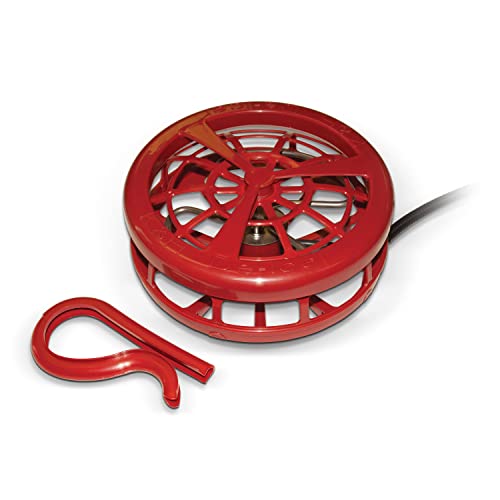
The 500W version provides automatic thermostat control and remains versatile as a floating or submersible heater. It includes a protective cage and cord clip and is suited for smaller tanks or milder winter regions where a lighter heating option suffices. It’s also ideal when electricity usage is a primary concern, given its lower wattage.
Who it’s best for: small herds or limited electrical capacity situations. Why selected: compact, cost-efficient option with reliable open-water results. Limitation: may struggle to prevent freezing in very cold climates or in very large tanks.
API Floating Water Tank De-Ice, 1500W

This 1500W API model uses a buoyant enclosure to keep the heater at the water surface, emphasizing visibility and protection. It’s designed to work with rubber, foam, and plastic tanks and includes a galvanized guarding element to help prevent damage to the heating element. It’s a solid choice for medium-to-large tanks where a robust, surface-mounted heater is preferred.
Who it’s best for: farms needing a surface-mounted, durable heater for multiple tank types. Why selected: rugged enclosure and versatile tank compatibility. Limitation: buoyant design requires careful placement to avoid submersion in deep tanks.
Farm Innovators H-418C 1250W De-Icer

The H-418C is a versatile convertible unit that can be used floating or submerged by removing its float. Cast aluminum construction enhances heating efficiency and durability, while the built-in self-regulating thermostat minimizes running time. This option suits larger tanks where a more robust metal design is valued and where conversion between floating and submersible use may be needed.
Who it’s best for: operators who want a convertible heater that can adapt to tank shape and size. Why selected: durable construction and adjustable operation. Limitation: cast aluminum, while durable, may require more heat management in extremely cold climates.
Buying Guide: How to Choose The Right Floating Tank Heater
What tank size and fuel use should guide your choice?
Measure the tank’s gallon capacity and note whether you prefer a floating unit or a submersible option. Higher wattage provides faster de-icing in very cold climates, but can use more energy. For small to medium tanks, 500–750W models are often sufficient; for larger tanks or harsh winters, consider 1000–1500W units.
Floating vs. submersible: which is better?
Floating heaters stay on the surface and are typically easier to install. Submersible units work beneath the water line and can provide more uniform heating in very deep tanks. If you want flexibility, select models that support both modes.
Thermostat control: how important is it?
Thermostatically controlled heaters turn on only when needed, saving energy and reducing stress on the electrical circuit. This is especially important in moderate climates where water doesn’t always need heating but must stay above freezing in cold periods.
Durability and safety features to look for
Choose heaters with a protective cage or guard to prevent accidental contact with animals. Look for rust-resistant materials, corrosion protection, and a secure cord clip to minimize hazards around water. Consider models with an automatic shutoff in the event of a fault.
Tank compatibility and installation ease
Verify compatibility with your tank material (plastic, rubber, or metal) and whether the unit comes with a cage, guard, or floating deployment. Easy installation and clear placement guidance reduce setup time and ensure effective heat distribution.
FAQ
- Do stock tank heaters work in plastic tanks? Yes. Many models are designed to be safe for plastic, rubber, and metal tanks when used as directed.
- Should I choose a floating or submersible heater? Floating heaters are easier to deploy and monitor; submersible heaters can provide more uniform heat in deeper tanks. Your tank shape and depth guide the choice.
- Will a 1500W heater be necessary for small tanks? Not typically. For small tanks, 500–750W is often enough, depending on climate and tank size.
- Do these heaters require professional installation? Most are plug-in and designed for simple setup; follow product instructions for safe use and placement.
- Can these heaters help with water quality? They primarily prevent freezing and maintain water access; always ensure water remains clean and free of contaminants.
- How do I prevent animals from chewing cords? Use provided cord clips and protective cages to keep cords clear of livestock access.