Fine mesh garden netting helps protect vegetables, fruits, and flowers from pests while still letting air, light, and water reach plants. This guide compares five top-rated options, covering coverage options, mesh density, durability, and ease of use to help American gardeners choose the right barrier for raised beds, greenhouses, and outdoor plots.
Product Comparison Snapshot
| Product | Size | Mesh Density | Best For |
|---|---|---|---|
| Ultra Fine Garden Netting 4’x10′ (Meuallikit) | 4 ft x 10 ft | 0.8 mm x 1 mm | Small to mid-size beds; easy to install |
| Garden Netting 10×33 Ft (FARAER) | 10 ft x 33 ft | 0.8 mm x 1 mm | Large rows; expanded coverage and less frequent reapplication |
| Garden Netting 4×10 (Jevrench) | 4 ft x 10 ft | 0.8 mm x 1 mm | Raised beds; durable and reusable |
| Ultra Fine Garden Netting 4’x10′ (WenTao) | 4 ft x 10 ft | Ultra-fine, prevents insects and pests | Versatile protection for beds, greenhouse, and outdoor spaces |
| Garden Netting 2 Pack 10×33 Ft (RIFNY) | Two nets, 10 ft x 33 ft each | 0.04 in (approx. 1 mm) mesh | Double coverage; protection against birds and small pests |
Below you’ll find detailed sections for each product, followed by a buying guide with practical insights to help you pick the right mesh for your garden layout and climate.
Ultra Fine Garden Netting 4’x10′ By Meuallikit

The Meuallikit Ultra Fine Garden Netting offers a 4×10-foot footprint with a fine mesh of 0.8 mm x 1 mm. Its design aims to keep insects and pests away while allowing air, light, and water to reach plant roots and foliage. The netting is lightweight and easy to install: simply cover the plant, secure the edges with stones, soil, or optional stakes and clips, and trim to size as needed. This model is suitable for gardeners who want a straightforward barrier that can be cut to fit irregular bed shapes and is see-through for monitoring plant health at a glance.
Key features include a lightweight PE construction, compatibility with garden stakes and staples, and a design that can be left in place during watering. It is advertised as reusable and capable of withstanding sun exposure for multiple growing seasons if properly maintained. The mesh density is designed to keep small pests at bay without overly restricting airflow or sunlight.
Garden Netting 10×33 Ft By FARAER
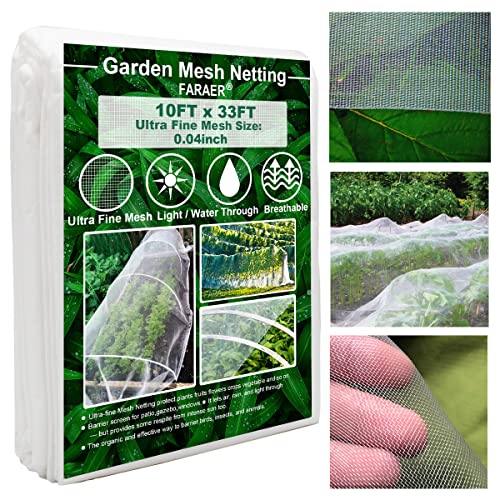
The FARAER Ultra Fine Mesh Netting comes in a generous 10×33 feet, delivering extensive coverage for larger garden beds, greenhouses, or row crops. Its ultra-fine mesh measures 0.8 mm by 1 mm, designed to deter insects, birds, and other pests while still allowing ample airflow and sunshine to reach plants. A notable benefit is the ease of watering and feeding directly through the mesh without removing the netting, simplifying routine garden maintenance. This netting is positioned as a versatile all-purpose barrier suitable for outdoor beds, indoor windows, and greenhouse applications.
This model emphasizes durability and visibility, making it possible to monitor plant growth through the mesh. With its broad dimensions, it helps minimize the number of edge ties and reattachments during season-long protection, which is appealing for larger plots or raised bed setups.
Garden Netting 4×10 By Jevrench

Jevrench’s 4×10-foot garden netting provides a robust physical barrier with a fine 0.8 mm x 1 mm mesh. The large 4×10 footprint supports shielding of a substantial planting area, and the netting is described as reusable and durable due to its thicker PE material. Garden netting of this type is typically used to protect vegetables, fruits, and flowers while improving yields by preventing pest pressure without affecting photosynthesis. The product emphasizes resilience against sun exposure and edge-to-edge coverage that reduces vulnerability to animal intrusion.
Beyond pest protection, Jevrench notes the netting can be cut to fit irregular shapes and used with garden stakes or clips to create a complete barrier around targeted plots. For gardeners seeking a long-lasting solution to seasonal pests, this option offers a balance of sturdiness and flexibility.
Ultra Fine Garden Netting 4×10 By WenTao

WenTao’s Ultra Fine Garden Netting is pitched as a versatile barrier for raised beds, greenhouses, and outdoor gardens. The 4×10-foot size offers broad application, and the mesh is designed to block pests while enabling air, light, and water to reach plants. The product emphasizes its mosquito-netting capability, meaning it can help reduce outdoor bite risk while keeping garden boundaries intact. This makes it suitable for gardeners in warmer climates who face both insect pressure and sun exposure, helping protect plant health without compromising photosynthesis or water uptake.
The netting’s lightweight construction aims for easy installation and removal, making it useful for seasonal pest control or temporary quarantine of new plantings. Its ability to shield a variety of plant types—from delicate flowers to leafy greens—positions it as a flexible choice for multi-crop gardens.
Garden Netting 2 Pack 10×33 Ft By RIFNY

The RIFNY 2-pack includes two nets, each measuring 10×33 feet, offering expansive coverage for larger beds or multiple plots. The mesh density is described as 0.04 inches, commonly interpreted as a tight weave to block small insects while allowing essential elements like light, air, and water to pass through. The design promotes straightforward watering without net removal and emphasizes high permeability for plant health. The inclusion of two nets in one package can appeal to gardeners managing several plant zones or seeking a backup barrier for ongoing pest control across the season.
RIFNY highlights the product’s ability to shield crops such as cabbage, cauliflower, tomatoes, and fruit trees from birds and small animals. The netting’s lightweight, white design is described as offering proper visibility to monitor plant growth, with a balance of protection and practical maintenance needs in busy garden environments.
Buying Guide: How To Choose The Right Fine Mesh Netting
Key considerations for selecting fine mesh netting include mesh size, coverage area, durability, and climate compatibility. Here are practical points to help you compare options and match them to your garden layout:
- Mesh density: A 0.8 mm x 1 mm (roughly 1 mm) opening blocks most small pests while still allowing critical light and air exchange. If you garden under heavy pest pressure or want to protect fruit trees, a denser mesh can be valuable; for delicate seedlings, ensure the mesh doesn’t hinder growth.
- Size and coverage: Larger beds benefit from longer nets (e.g., 10×33 ft). If you have irregular shapes, consider nets that can be cut to size and secured with stones or staples. Two-pack offerings can simplify multi-bed protection or backup coverage during replacement cycles.
- Durability and material: Look for high-quality PE or similar UV-stable materials that resist sun exposure and stretching. Reusability saves money and reduces waste over several growing seasons.
- Watering and feeding: Nets designed to let water through without removal save time and reduce plant stress. Confirm that the product supports direct watering through the mesh if this is important to your routine.
- Installation ease: Features like edge weights, clips, or compatibility with garden stakes can simplify setup. A see-through mesh helps monitor plant health without removing the barrier.
- Climate considerations: In windy regions, consider nets with sturdier edges or additional anchoring options. In dusty environments, a net with tight weave can also provide some dust protection while still allowing light.
Additional Perspectives and Usage Scenarios
For hobbyist gardeners, a 4×10 foot netting often suffices for a single raised bed or row cover, making it quick to deploy and remove. Larger plots, greenhouses, or community garden plots may benefit from 10×33 foot nets for reduced setup time and fewer seams. Multi-pack options are especially advantageous for gardeners managing several beds or seasonal crop rotations.
It is also helpful to consider pegs, clips, or garden stakes compatibility. The ability to cut nets to custom shapes enables coverage for irregular plots, around trellises, or along curved paths. For pest-prone climates with persistent bird activity, longer nets reduce edge exposure and create a more continuous barrier that’s easier to maintain.
Finally, observe the plant-health monitorability requirement. Nets described as “see-through” assist growers in identifying plant stress or disease early, ensuring timely interventions without fully removing protective coverage.
Buying Guide: Quick Decision Checklist
- What size beds or plots need protection?
- Which pests are the primary concern (insects, birds, larger animals)?
- Do you prefer a single long roll or multiple smaller nets for modular use?
- Is water access through the mesh essential for your watering routine?
- How important is netting durability across seasons and sun exposure?