Maintaining crystal-clear koi pond water requires reliable filtration that balances mechanical cleaning with biological benefits. The right filtration system reduces waste, controls algae, and supports healthy koi. This guide reviews top filtration options, highlighting how each unit handles debris, bacteria growth, and maintenance for ponds ranging from 200 to 1600 gallons. Explore five practical filters designed for koi ponds and ornamental water features, along with a buying guide to help you choose the best fit for your setup.
| Product | Capacity (approx.) | Key Benefit | Filter Type |
|---|---|---|---|
| VIVOHOME Pressurized Biological Pond Filter | Up to 1600 gal ornamental / 800 gal koi | Integrated 13W clarifying lamp for visible water improvement | Pressurized mechanical + biological with UV-light |
| AquaMiracle All-in-One Koi Pond Filter | 200-350 gal | 4-layer filtration with bio-balls and ceramic rings | Biological + mechanical with multiple media |
| FEOXSHAL Pond Filter with Fountain Kit | Up to 1300 gal (pond pump kit included) | Compact all-in-one with fountain and adjustable flow | Mechanical + biological filtration |
| VEVOR Pressurized Biological Pond Filter (2000 gal) | Up to 2000 gal decorative / 1000 gal fish ponds | 13W UV-C lamp option for water clarity | Pressurized bio filtration with UV-C |
| Aquatic Experts Pond Filter Pad FINE | Bulk filter media for koi ponds | High-capacity pad for mechanical filtration and oxygenation | Replacement filter media |
Note: The table summarizes capacity ranges and core benefits. Always align filtration capacity with your pond volume, stocking density, and growth expectations for best results.
VIVOHOME Pressurized Biological Pond Filter
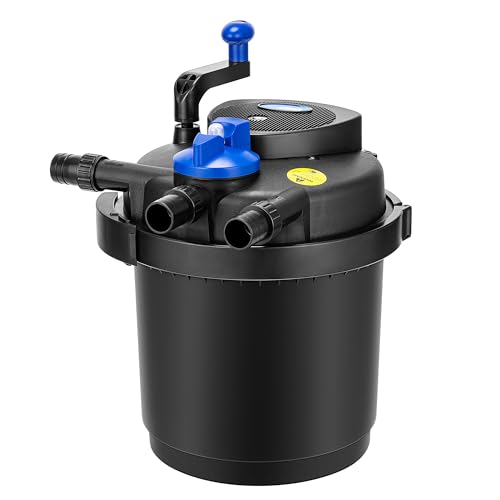
The VIVOHOME unit delivers robust bio-mechanical filtration suitable for koi and ornamental ponds. It handles up to 800 gallons of fish ponds or 1600 gallons for ornamental setups, with a flow of up to 1580 GPH. A distinctive feature is the integrated light for clarifying water, aiding visibility and algae control. Cleaning is straightforward: switch to Clean mode, backflush via the handle, and perform weekly maintenance or when the red float rises. The modular body and detachable lid simplify routine service and media replacement, making it a practical choice for mid-sized ponds.
AquaMiracle All-in-One Koi Pond Filter

The AquaMiracle system is designed for 200-350 gallon ponds and features four filtration layers: coarse sponge, fine sponge, ceramic rings, and bio-balls. This arrangement promotes efficient mechanical and biological filtration while maintaining high oxygen levels in the water. The pump provides up to 400 GPH with a 6-foot head height and includes three spray patterns for aeration and aesthetic water displays. A secondary water outlet enables additional features, such as waterfalls or streams, without compromising filtration efficiency.
FEOXSHAL Pond Filter With Fountain Kit

The FEOXSHAL all-in-one kit provides a compact filtration solution with a 660 GPH pump, suitable for small to medium ponds up to around 1300 gallons. It combines mechanical filtration with biological media and includes a fountain function. The adjustable water flow supports fountains and other water features, enabling a pleasant acoustic environment. Its integrated design reduces clutter and makes maintenance simpler in tighter pond setups, although larger koi populations may require higher-capacity systems.
VEVOR Pressurized Biological Pond Filter (2000 gal)

The VEVOR unit is a high-capacity pressurized filter designed for decorative ponds up to 2000 gallons and koi ponds up to 1000 gallons. It includes four filter media densities for enhanced solid removal and nitrification support, plus a 13W UV-C lamp option to reduce algae and improve clarity. The quick-backwash top switch simplifies cleaning, while the four-media stack promotes robust biological filtration. Overall, this model suits larger backyard ponds where consistent turnover and reduced maintenance are priorities.
Aquatic Experts Filter Pad FINE

These white, bulk roll filter pads are designed for koi ponds and aquariums alike. The 1-inch thick material delivers strong mechanical filtration and helps introduce dissolved oxygen to the water. Pads are cut-to-fit, enabling customization to fit skimmer boxes or filtration drums. Regular replacement supports crystal-clear water and reduces nutrient buildup that can feed unwanted algae growth.
Buying Guide: Key Purchase Considerations
- Pond size and fish load: Match filtration capacity to total pond volume and how densely you stock koi. Overloading a filter leads to poor water quality and increased maintenance.
- Filtration type: Choose between mechanical-only, biological, or a combination with UV-C for algae control. Pressurized filters offer backwash convenience, while drum and pad systems excel at large solids removal.
- Media compatibility: Look for units that support multiple media types (sponges, bio-balls, ceramic rings) to optimize nitrification and debris capture. Ensure media is easy to replace or upgrade.
- UV-C integration: A 13W UV-C lamp can help reduce green water, but must be properly sized for your pond and lamp life needs. Some systems include UV-C as a selectable option.
- Maintenance and accessibility: Front-door access, removable lids, and clear backwash procedures reduce downtime. Consider whether you prefer weekly maintenance or occasional deeper cleans.
- Noise and energy use: Higher-flow pumps consume more energy and can generate more noise. Look for energy-efficient models and quiet operation for residential settings.
- system expansion: If you anticipate pond growth or additional features, choose filtration with scalable media or additional outlets for decorative waterfalls or bio-filtration enhancements.
How To Choose The Best Filtration For Your Koi Pond
For koi ponds, a balanced approach that emphasizes both mechanical debris removal and robust biological filtration is essential. Ponds hosting koi require dependable filtration to handle fish waste, which rapidly increases ammonia and nitrite levels without proper processing. UV-C can help with string algae, but not a substitute for a well-sized bio-filter. Consider filtration systems with easy backwashing, modular media, and maintenance-friendly design to minimize downtime and maximize clarity. Selecting a mid-to-large capacity unit from the reviewed options provides a practical path toward clearer water and healthier koi.
Maintenance best practices include monitoring ammonia, nitrite, and nitrate levels, performing regular water tests, and scheduling media replacement or backflushing based on pond conditions. Position filters where access to power and clean water is straightforward, and align your filtration with your pond’s seasonal demands. Regardless of the system, consistent upkeep and the right media combination are the foundation for thriving koi and a beautiful water feature.