Find the right fertilizer sticks to keep houseplants healthy with minimal effort. This guide highlights five reliable options, each suited to common indoor setups—from low-maintenance fern pots to flowering arrangements. Whether you’re a busy plant parent or a beginner, these products provide steady nourishment, reduce runoff, and support steady growth for foliage, blooms, and herbs. The quick-reference table below helps compare core details at a glance.
| Product | NPK (where listed) | ||
|---|---|---|---|
| Miracle-Gro Indoor Plant Food Spikes (48 Spikes) | 6-12-6 | Up to 2 months | All indoor plants; versatile for flowers and herbs |
| Miracle-Gro Indoor Plant Food Spikes (24 Spikes) | 6-12-6 | Up to 2 months | All indoor plants; great for smaller collections |
| Jobe’s Plant Food Fertilizer Spikes (50 Count) | 13-4-5 | Every 60 days | Indoor flowering houseplants; minimal runoff |
| RAINFLOW Slow Release Fertilizer Spikes (90 PCS) | Balanced nutrients | Up to 6 months | Beginners and busy plant lovers; broad indoor use |
| The Old Farmer’s Almanac Mini Spikes (24) | 5-5-5 | Every 6-8 weeks | Houseplants, flowers, container plants |
Note: All recommendations consider typical indoor plant care needs and the data provided by product descriptions. Choose based on your plant mix, container size, and feeding routine feasibility.
Miracle-Gro Indoor Plant Food Spikes (48 Spikes)

Best for: Mixed indoor plant collections, including flowers, vegetables, and herbs. These spikes deliver steady nutrition for up to two months when used as directed, aiding healthier growth with minimal maintenance. The 6-12-6 balance supports both foliage and flowering development, making them a versatile choice for many homes.
Why chosen: Easy, low-effort feeding that avoids over-application when used as directed. The longer feeder window is convenient for busy households or for growers who prefer a set-it-and-forget-it approach for most indoor plants.
Caution: Follow placement and dosage directions to minimize the risk of over-fertilization in sensitive species. Not ideal for very small pots where root volume is limited; adjust usage accordingly.
Miracle-Gro Indoor Plant Food Spikes (24 Spikes)

Best for: Smaller plant collections or compact planters where frequent feeding isn’t desired. The 24-spike option provides up to two months of continuous feeding for most indoor plants when used as directed.
Why chosen: Notable for its simple dosing and compatibility with a wide range of indoor plants, including common ferns and pothos. It’s a reliable option for beginners building a routine with a limited number of pots.
Caution: Limited supply for very large plant families; consider a larger package if you grow many plants or need longer intervals between feedings.
Jobe’s Plant Food Fertilizer Spikes (50 Count)

Best for: Indoor flowering houseplants that benefit from a steady, slow-release feed. The 13-4-5 NPK formulation supports vibrant blooms and healthy foliage while reducing run-off risk.
Why chosen: Slow-release design suits busy households and helps avoid fertilizer burn when used as directed. The 50-count package is beneficial for larger collections or frequent repotting schedules.
Caution: The higher phosphorus ratio may not be ideal for every plant type; monitor plants showing nutrient sensitivity, particularly in very young roots. Replace every 60 days as directed.
RAINFLOW Slow Release Fertilizer Spikes (90 PCS)
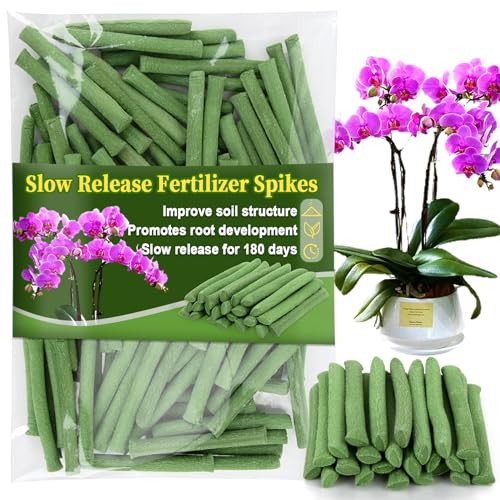
Best for: Beginners and busy plant lovers who want a long-lasting feeding solution. The 90-piece set aims to provide balanced nutrients for up to six months, with persistent nutrition for a range of indoor plants.
Why chosen: The broad utility makes it suitable for varied indoor setups, including orchids and foliage plants, while keeping maintenance minimal. The simple insertion method helps keep pots clean and stress-free.
Caution: Extended feeding intervals require attention to plant responses; some species may prefer more frequent light feeding. Use within recommended guidelines to avoid soil buildup.
The Old Farmer’s Almanac Mini Spikes (24)
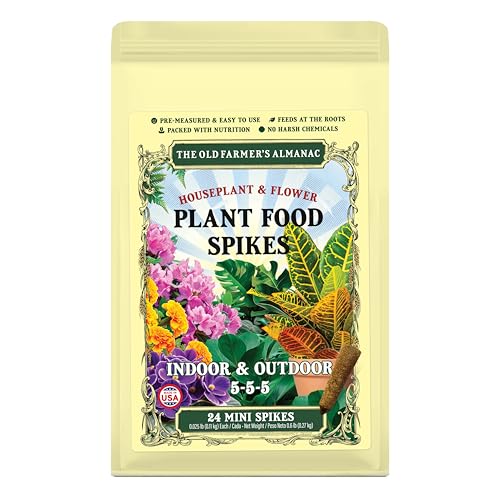
Best for: Containers and small planters where quick, robust nutrition is desired for continuous color and growth. The 5-5-5 formula supports general plant health and flowering potential.
Why chosen: Consistent, balanced feeding every 6-8 weeks helps maintain color and growth across a mix of houseplants, window boxes, and hanging arrangements. The mini-spike format minimizes waste and runoff.
Caution: The 5-5-5 formula may require adjustments for plants with specialized nutrient needs; pair with a soil test if you have sensitive species.
The Old Farmer’s Almanac Mini Spikes (12)

Best for: Light-duty feeding for a small collection of houseplants or for beginners testing a feeding routine without committing to larger supplies.
Why chosen: The smaller pack size is convenient for new plant owners or for those experimenting with different plant groups. It supports continuous feeding on the standard 6-8 week cadence.
Caution: If you keep many plants, you may need more cycles or a larger package to sustain feeding intervals between waterings and soil changes.
Buying Guide: Key Considerations For Fertilizer Sticks
What should you look for when choosing indoor plant fertilizer spikes?
- Plant type and needs: Some spikes have higher phosphorus for flowering; others balance nitrogen, phosphorus, and potassium for general growth. Match the formula to your plant mix.
- Pot size and soil volume: Larger pots with more soil may require more spikes or a longer feeding interval to avoid nutrient limitations.
- Feeding frequency: Decide between monthly, bi-monthly, or multi-month feeding plans. Choose a product that fits your care routine.
- Ease of use and cleanup: Insertion ease, mess-free formulas, and predictable release reduce maintenance time and prevent spills.
- Runoff and safety: Look for slow-release designs to minimize runoff and root burn. Avoid products not listed for indoor use with your plant types.
Frequently Asked Questions
- What are fertilizer spikes best for in houseplants? They are best for providing steady, slow-release nutrients with minimal maintenance, ideal for busy owners and mixed plant collections.
- How long do indoor plant spikes last? Many spikes feed for up to two months, while some options extend to several months depending on the product and soil conditions.
- Can spikes cause fertilizer burn? Yes, over-application or placing spikes too close to delicate roots can cause burn. Follow label directions carefully.
- Are these spikes safe for all indoor plants? Most are designed for a wide range of indoor plants, but sensitive species may require alternative feeding or lower concentrations.
- How should I choose between 24 and 48 spikes? Consider your pot count, plant variety, and how often you want to feed. Larger collections benefit from more spikes to maintain consistent nutrition.
- When is the best time to fertilize indoors? Begin feeding during active growth periods and resume after a brief rest period for species that have seasonal growth cycles.