Guiding tomato growth from flowering to abundant fruit requires balanced nutrients tailored for fruit set and firmness. The following fertilizers are widely used for tomato crops, offering a mix of organic and synthetic options, easy application, and proven results for in-ground and container plants. This guide highlights five top picks, their key benefits, and practical considerations for choosing the best fit for your garden or patio tomatoes.
Summary of selected products
| Product | Brand | Main Benefit | Form |
|---|---|---|---|
| Miracle-Gro Shake ‘N Feed Tomato, Fruit & Vegetable Plant Food | Miracle-Gro | Extended feeding up to 3 months; improves fruit quality | Granular |
| Miracle-Gro Water Soluble Tomato Plant Food | Miracle-Gro | Fast-acting feeding; customizable by dilution | Water-soluble |
| Espoma Tomato-Tone 3-4-6 with 8% Calcium | Espoma | Organic, calcium for blossom end rot prevention | Granular organic |
| Espoma Organic Tomato Plant Food 8 Ounce Concentrated | Espoma | Concentrated organic liquid for tomato and vegetables | Liquid concentrate |
| Jobe’s Organics Granular Garden Fertilizer | Jobe’s Organics | OMRI-listed organic NPK with polyculture-friendly formulation | Granular organic |
Note: The table provides a quick reference. Each product page contains specific usage instructions, application rates, and safety tips. Always follow label directions for best results and soil compatibility.
Miracle-Gro Shake ‘N Feed Tomato, Fruit and Vegetable Plant Food

Miracle-Gro Shake ‘N Feed Tomato, Fruit & Vegetable Plant Food feeds for up to three months, nourishing above and below the soil. It includes calcium to help form stronger walls and support better fruit quality. Suitable for both in-ground and container plants, it supports tomatoes, vegetables, and other fruiting plants throughout the growing season. The extended-release formulation simplifies maintenance for busy gardeners.
Miracle-Gro Water Soluble Tomato Plant Food
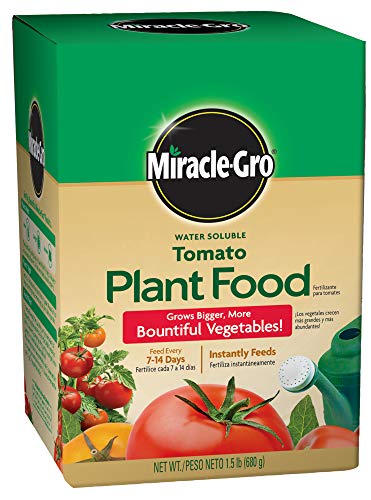
This water-soluble formula feeds tomatoes quickly and can be applied through soil or foliar feeding. It’s designed to promote larger yields and healthier vegetables when used on a regular schedule of 1-2 week intervals, particularly during active growth and fruit set. Convenient for adjustable feeding regimes in containers or garden beds.
Espoma Tomato-Tone 3-4-6 with 8% Calcium

Tomato-Tone is an organic fertilizer blend with calcium to help prevent blossom end rot and promote flowering and fruit production. It’s environmentally safe, per label claims, and requires two-week applications during the growing season. Ready to use with no mixing needed, it suits both heirloom and hybrid tomatoes and other vegetables.
Espoma Organic Tomato Plant Food Concentrated

Espoma’s Organic Tomato Plant Food is a concentrated liquid fertilizer designed for all types of tomatoes and vegetables. It’s easy to mix—simply dilute in water—then apply around the drip line. The product emphasizes safe, organic gardening with essential nutrients that support fruit set and plant health without synthetic additives.
Jobe’s Organics Granular Garden Fertilizer

Jobe’s Organics Granular Garden Fertilizer provides a 2-5-3 NPK ratio in an OMRI-listed, organic format. It’s designed to avoid runoff and odors while delivering nutrients to vegetables and fruiting plants, including tomatoes. The slow-release granules support steady growth, leafy vigor, and eventual fruit production in both garden beds and pots.
Buying Guide: Key Considerations For Purchasing Tomato Fertilizers
- Form and application: Choose between granular, liquid, or water-soluble formats based on your preferred routine and growing setup (beds vs containers).
- NPK balance: For fruiting tomatoes, look for formulations that emphasize phosphorus and potassium for flowering and fruit development, while ensuring calcium is present to reduce blossom end rot.
- Organic vs synthetic: Organic options (Espoma, Jobe’s) support soil health and may align with organic gardening standards, though synthetic options (Miracle-Gro) can deliver quick results.
- Calcium inclusion: Products with calcium or a calcium-rich blend help prevent blossom end rot in many varieties. Ensure labeling supports this claim if rot prevention is a priority.
- Growing method: Container gardening often benefits from balanced, water-soluble, or concentrated liquid feeds for precise control, while in-ground beds may tolerate slower-release granular options.
- OMRI status: If you practice organic gardening, verify OMRI listing to ensure compatibility with organic standards.
- Environmental considerations: Choose products designed to minimize runoff and ensure soil health, especially in small spaces with limited soil volume.
- Seasonal timing: Begin feeding at transplant or early growth, then adjust frequency with the plant’s development, reducing or increasing as needed during fruit set.