Growing healthy flower seedlings starts with the right nutrition. The best fertilizers for seedlings provide a balanced mix of nutrients to support root development, lush foliage, and eventual blooms. Below are five reliable options that work well for indoor starters and transplant-ready plants. This guide highlights each product’s strengths and suitable use cases, helping you choose the right fertilizer for seedling success.
Summary of Selected Products
| Product | Main Benefit | Typical Use |
|---|---|---|
| Miracle-Gro Water Soluble All Purpose Plant Food | Instantly promotes growth across many plant types | Seedlings, houseplants, vegetables, ornamentals |
| FoxFarm Grow Big Liquid Plant Food | Supports vegetative growth and bigger plants | Indoor/outdoor seedlings in pots |
| Cz Garden 4-10-10 Bulb & Bloom Fertilizer | Slow-release formula for steady feeding | Bulbs, flowers, indoor/outdoor beds |
| Organic Plant Magic | Fast-acting, organic, broad-spectrum nutrition | Seedlings, pots, soil mixes |
| True Organic All Purpose Plant Food | Organic blend with slow-release nutrients | Fruits, vegetables, flowers, herbs |
Miracle-Gro Water Soluble All Purpose Plant Food
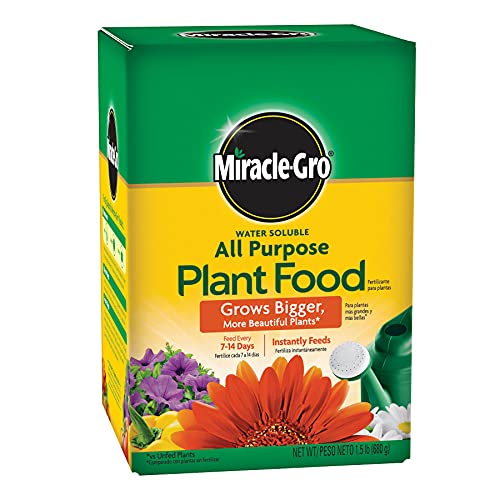
Miracle-Gro’s water-soluble formula is designed to feed a broad range of plants, including flowers, vegetables, and houseplants. The 24-8-16 NPK ratio delivers nitrogen for leafy growth, phosphorus for root and bloom development, and potassium for overall plant vigor. It dissolves quickly in water, making it convenient for seedlings that require consistent, gentle feeding. Use as a regular feeding schedule to promote robust seedlings and faster green growth.
FoxFarm Grow Big Liquid Plant Food
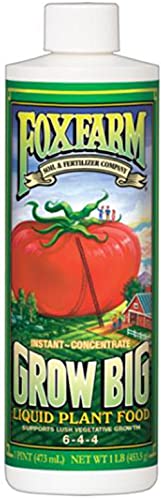
Grow Big is formulated to support vegetative growth, which helps seedlings establish a strong structure early. Its 6-4-4 mix focuses on nitrogen and phosphorus to foster robust stem and leaf development, with a blend that can improve size and vitality in indoor and outdoor seedlings. The product’s formulation also supports flavorful herbs and strong bloom initiation later, making it versatile for a range of seed-starting scenarios.
Cz Garden Supply 4-10-10 Bulb & Bloom Fertilizer

This slow-release fertilizer uses a 4-10-10 formula designed to promote vigorous growth and bigger blooms while reducing the risk of fertilizer burn. It’s well-suited for flowering seedlings and bulbous plants, delivering steady nutrition over time. The premium ingredients aim to sustain roots and foliage without rapid nutrient surges, supporting steady seedling development in both indoor and outdoor gardens.
Organic Plant Magic

Organic Plant Magic focuses on fast-acting, organic nutrition suitable for seedling growth. The concentrate is designed for ease of use, allowing you to mix directly with water or apply to soil as needed. A half-pound bag covers a substantial area, making it a practical choice for setting up multiple trays of seedlings with consistent nourishment. The product emphasizes a soil-building approach, which supports long-term plant health from seedling onward.
True Organic All Purpose Plant Food

True Organic All Purpose Plant Food combines organic nutrients with a balanced NPK blend to support a wide range of plants, including seedlings. The formula incorporates slow-release components and organic matter to enrich soil over time. It’s designed to minimize synthetic input while providing steady nourishment for early growth, ensuring roots establish securely while leaves and stems begin to develop.
Buying Guide: Key Purchase Considerations For Seedlings
- NPK balance: Seedlings typically respond well to balanced or slightly lower nitrogen and adequate phosphorus and potassium. Avoid products with very high nitrogen that may lead to lush foliage at the expense of blooms and root development.
- Release method: Slow-release fertilziers reduce the risk of fertilizer burn and provide a steady nutrient supply, which is beneficial for young plants in pots or trays. Liquid concentrates offer quick uptake but require careful, regular application.
- Organic vs synthetic: Organic options improve soil biology and can be more forgiving for soil mixes, while synthetic fertilizers deliver precise nutrient ratios and quick results. Choose based on your preferred gardening approach and sensitivity of seedlings.
- Form and application: For beginners, ready-to-use liquids or soluble powders mixed with water provide simplicity. For larger seedling operations, slow-release granules can reduce the frequency of feeding while maintaining steady growth.
- Root and soil health: Some formulas include organic additives like kelp, worm castings, or bone meal that support root systems and soil structure, which is especially helpful for transplanting vigor.
- Plant variety and timing: Seedlings destined for bloom-heavy crops may benefit from phosphorus-heavy options later in growth. For leafy species or ornamentals, a balanced NPK may be more appropriate in early stages.
Additional Considerations and Comparisons
- Speed of action: Liquid fertilizers tend to be faster-acting than slow-release blends, which can be advantageous when seedlings show signs of nutrient deficiency. Use with caution to avoid overfeeding.
- Compatibility: Check container size and soil mix. Seedlings in light, well-draining potting soil typically require lighter feeds than established plants in heavier soil mixes.
- Safety and sustainability: Organic options reduce chemical exposure and may align with eco-friendly gardening goals. Non-organic formulas can be effective but should be used per label directions to prevent harm to young roots.
- Cost and coverage: Seedling-focused feeding often uses smaller quantities. Consider packaging size relative to your seedling operation to determine the best value per plant or per tray.
- Experimentation: For best results, test one product on a small batch of seedlings before broad application. Monitor growth, leaf color, and overall vigor to adjust feeding schedules accordingly.