Alocasia plants demand precise nutrition to support bold, oversized leaves and sturdy root systems. This guide highlights five effective fertilizers and supplements tailored for Alocasia care, emphasizing ease of use, organic options, and compatibility with common growing media. Each product section provides key features, application notes, and how it fits into a balanced feeding routine for both indoor and outdoor setups.
| Product | Brand | Main Benefit | |
|---|---|---|---|
| Alocasia Fertilizer, Complete Liquid Alocasia Plant Food | TPS NUTRIENTS | Leaves and roots health | Follow care instructions included |
| Gardenera Plant Growth Superfood for ALOCASIA | Gardenera | 18 nutrients for robust roots and foliage | All soils and media; hydroponics supported |
| Elephant Ear Fuel Plant Fertilizer | Wellspring Gardens | Complete soil nutrients for elephant ears | Water-soluble and easy mixing |
| Alocasia Food Mist by Perfect Plants | PERFECT PLANTS | Spray nutrient delivery for rapid absorption | Ready-to-use, weekly spray |
| Premium Liquid Silica Plant Supplement | Gardenera | Stronger stalks and resilient leaves | Works in hydroponics or soil |
These selections cover a range from liquid fertilizers to silica boosters and kelp-based concentrates, offering options for different growth stages, budgets, and preferred application methods. Below are the five curated products with details to help you compare at a glance.
Alocasia Fertilizer, Complete Liquid Alocasia Plant Food

This TPS NUTRIENTS formulation is a specialized liquid feed designed for Alocasia. Its targeted blend supports healthy leaf development and strong roots, helping young plants establish and mature specimens maintain vibrant foliage. The product comes with straightforward care instructions, enabling consistent feeding without guesswork. Use during active growth periods or as a regular monthly supplement to sustain robust performance in both potted and container setups.
Gardenera Plant Growth Superfood For Alocasia

Gardenera’s organic liquid vitamin superfood is designed as an all-purpose nutrient concentrate with 18 essential nutrients. It’s suitable for a wide range of media—including hydroponics, leca, terrariums, and aquaponics—making it adaptable to many Alocasia care routines. The formula includes a blend of natural inputs such as mycorrhizae and other minerals, aiming to promote robust root systems, strong stems, lush leaves, and vigorous growth. A versatile option for growers seeking a comprehensive nutrient boost.
Elephant Ear Fuel Plant Fertilizer

Wellspring Gardens offers a water-soluble formula designed for quick uptake by alocasias and related elephant ear varieties. The product emphasizes ease of use, with simple mixing for rapid absorption and reduced risk of over-fertilization. It’s positioned as a reliable option for both indoor and outdoor setups, providing a complete nutrient package to support vibrant foliage and robust growth. Enjoy the convenience of adjustable feeding levels to suit plant size and seasonality.
Alocasia Food Mist by Perfect Plants
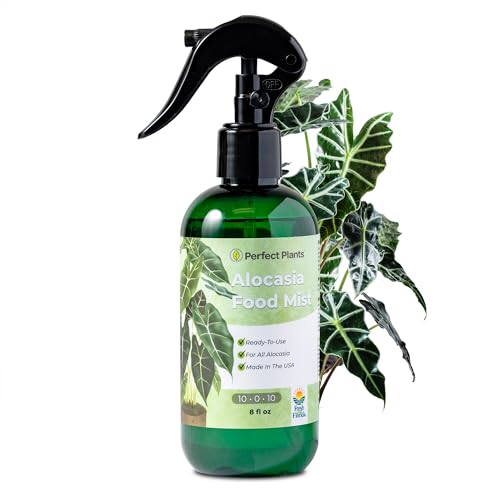
This Ready-to-Feed Plant Mist provides a balanced 10-0-10 NPK blend with added boron to support foliage vigor and prevent micronutrient deficiencies. The fine mist application supports even coverage on broad leaves, improving nutrient uptake without heavy soil disturbance. Designed for weekly use, it minimizes preparation time and reduces the risk of over‑fertilization, making it suitable for busy indoor plant setups and routine maintenance.
Premium Liquid Silica Plant Supplement

Gardenera’s silica supplement focuses on strengthening alocasia stalks and protecting delicate leaves from browning. Silica fortifies cell walls, supporting structural integrity in tall, broad-leaf varieties that are prone to bending or tip damage. Compatible with both hydroponic systems and soil gardens, this product is useful during periods of rapid growth or environmental stress, helping maintain plant turgor and resilience.
Buying Guide: Key Considerations For Alocasia Fertilization
- Growth stage and season: Use balanced formulas during active growth (spring through summer) and reduce feeding in winter when growth slows. Liquid products tend to act faster but may require more frequent applications.
- Media compatibility: Choose fertilizers appropriate for soil, hydroponic, or semi-hydro systems. Some blends are designed to work across multiple media, while others excel in one environment.
- Nutrient balance: Alocasia benefits from a mix of nitrogen for foliage, potassium for overall vigor, and trace minerals for leaf coloration and resilience. Silica can add structural support for taller plants.
- Micronutrients and vitamins: Products that include micronutrients like zinc, iron, manganese, and boron help prevent deficiencies commonly seen in indoor care scenarios with limited soil diversity.
- Organic vs synthetic: Organic superfoods (kelp, compost-derived inputs) support a broad nutrient profile and microbial activity, while synthetic blends can offer precise dosing and quick results. Consider your preference and plant response.
- Application method: Sprays offer quick uptake for foliage, while root-fed liquids support systemic nutrition. Water Soluble formats enable easy mixing and dose control to avoid over-fertilization.
- Safety and labeling: Read instructions for dilution rates, frequency, and safety notes. High-potassium or high-nitrogen formulas can lead to leaf burn if misapplied.
When building an Alocasia feeding schedule, a mixed approach can work well: a root-focused liquid feed every 2–4 weeks during the growing season, complemented by a foliar spray or silica supplement during periods of rapid leaf expansion or environmental stress. Always start with a light dose and monitor leaf color, growth rate, and new leaf size to calibrate future feedings for your specific plant and environment.