Acid-loving plants like azaleas, rhododendrons, hydrangeas, camellias, blueberries, and hollies demand fertilizers that help lower soil pH while delivering essential nutrients. The right product supports vibrant blooms, lush foliage, and resilient roots. The following selections are geared toward acid-preferring varieties and include organic, mineral, and soil-acidifying formulas. Use them according to plant needs and seasonal guidelines to maintain optimal acid conditions and nutrient balance.
Summary of selected products: GARDENWISE 8-4-8 Acidic Fertilizer; Miracle-Gro Miracid Acid-Loving Plant Food; Miracle-Gro Azalea, Camellia, Rhododendron Plant Food; Down To Earth Organic Acid Mix; Espoma Holly-Tone 4-3-4 Organic Plant Food. These options cover a range from soil acidification to long-lasting organics, giving you practical choices for potted and garden plantings.
GARDENWISE 8-4-8 Acidic Fertilizer For Acid-Loving Plants

GARDENWISE 8-4-8 is formulated for azaleas, camellias, hydrangeas, rhododendrons, blueberries, magnolias, evergreens, and other acid-loving species. It combines magnesium, iron, and manganese to combat chlorosis and support vibrant foliage and blooms. The product also functions as a soil acidifier, promoting a lower soil pH for optimal nutrient uptake. A standout feature is its eco-conscious bio-solid base, produced through a refined process with live microbial life to enrich soil health. This can help sustain robust growth across multiple seasons while maintaining safety in the garden.
Ideal use involves applying as directed to acid-loving shrubs and trees, aiming to improve bloom quality and overall vigor. It’s particularly beneficial where soil tests indicate higher pH or chlorosis symptoms. When used properly, it supports root development and microbe activity that contribute to a healthy rhizosphere. This product is a practical option for homeowners seeking a balanced mix of micronutrients and pH adjustment.
Miracle-Gro Miracid Acid-Loving Plant Food
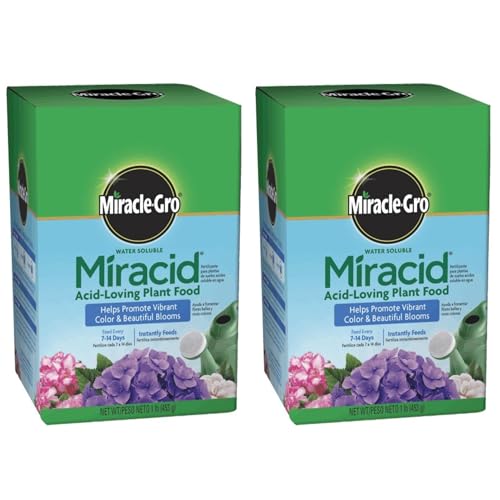
Miracle-Gro Miracid is a water-soluble fertilizer designed to instantly feed acid-loving plants, including azaleas, hydrangeas, and rhododendrons. The dual feeding action supports both root uptake and foliar absorption, promoting rapid and visible growth responses. This formulation is convenient for quick corrections of nutrient deficiencies and for seasonally boosting bloom production. It’s especially useful in containers or mixed plantings where rapid nutrient delivery is desirable and where soil pH management is needed to sustain acid-preferring species.
Usage guidance emphasizes regular feeding at recommended intervals to maintain consistent uptake during active growth. While it delivers essential macronutrients, it’s important to monitor soil pH to ensure that the acid-loving plants do not become stressed by overly acidic conditions. This product is favored by gardeners seeking predictable results and straightforward application, especially in cooler spring periods when plants are establishing new growth.
Miracle-Gro Water Soluble Azalea, Camellia, Rhododendron Plant Food

This Miracle-Gro option focuses on acid-loving plants and delivers fast-acting nutrients to azaleas, camellias, rhododendrons, gardenias, hibiscus, hollies, hydrangeas, and even orchids. The product is designed for both indoor and outdoor use, making it versatile for containers and garden beds alike. The liquid formulation allows for even distribution through irrigation or foliar feeding, helping to correct nutrient gaps quickly. Regular applications support ongoing bloom quality and healthy foliage across the growing season.
Gardeners should consider pairing this feed with soil pH monitoring to prevent imbalances. While the rapid response is advantageous, repeated heavy applications without pH management can alter soil chemistry over time. This product is well-suited for users seeking a straightforward, dependable solution for acid-loving plant maintenance and periodic feeding cycles.
Down To Earth All Natural Organic Acid Mix

Down To Earth Organic Acid Mix is tailored for acid-lovers such as rhododendrons, azaleas, camellias, and hydrangeas, as well as evergreens and certain fruiting plants like blueberries. The 4-3-6 formulation supports vegetative growth and flowering while encouraging a low pH environment in the root zone. The product emphasizes natural ingredients and soil-building benefits, aligning with eco-conscious gardening practices. It’s particularly suitable for organic or sustainable garden plans where long-term soil health is a priority.
Application guidance suggests spring and bloom-season applications to promote robust flowering and root development. Fall feeding can assist in root growth and winter hardiness. For best results, combine with soil testing and pH adjustments to maintain optimal conditions for acid-loving crops throughout the year.
Miracle-Gro Shake ‘N Feed For Flowering Trees And Shrubs

Shake ‘N Feed is designed for flowering trees and shrubs, including many acid-loving varieties. It feeds for up to three months and contains natural ingredients like kelp, earthworm castings, bone meal, and feather meal. The product is suitable for in-ground gardens and containers, delivering sustained nutrition that supports vibrant foliage and continuous flowering. While it targets a broad range of plants, its formulation remains compatible with acid-loving species when used as part of a seasonal feeding plan.
Gardeners should follow the feeding schedule consistently and monitor plant response. The long-lasting nature reduces the need for frequent applications, but soil pH checks remain important to ensure the soil remains within the optimal range for acid-loving flora.
Espoma Holly-Tone 4-3-4 Organic Plant Food

Espoma Holly-Tone is a classic organic option designed for acid-loving plants, including azaleas, hydrangeas, rhododendrons, blueberries, and evergreens. The 4-3-4 analysis with 5% sulfur provides a slow-release nutrient supply that aligns with the natural decomposition of organic materials. The Bio-tone formula enhances microbial activity to support soil health and nutrient availability over time. This product is favored by gardeners seeking a reliable, long-term feeding approach that integrates smoothly with organic gardening practices.
Usage considerations include gradual application to avoid nutrient shocks and aligned watering to promote nutrient uptake. Because it’s organic, the release rate may vary with soil conditions, so periodic soil tests help optimize timing and concentration for peak performance in acid-loving gardens.
Buying Guide: Key Purchase Considerations
- Soil pH and plant needs: Regular soil testing helps determine whether you need a pH-lowering product or reaffirmation of existing acidity. Choose formulas that match your plants’ nutrient requirements and soil conditions.
- Formulation type: Liquid feeds provide rapid uptake and easy application, while granular and organic options offer longer-lasting effects and soil-building benefits. For containers, liquids can be especially convenient, whereas in-ground beds may benefit from slow-release granules or organics.
- Plant targets: Prioritize products labeled for azaleas, hydrangeas, rhododendrons, camellias, blueberries, and other acid lovers. Some formulas also support general shrubs and evergreens, broadening applicability.
- Nutrient balance: Look for products with micronutrients such as iron, manganese, and magnesium (to address chlorosis in acid-loving plants). A balanced N-P-K ratio around 4-1-4 to 8-4-8 is common for these plants, but adjust to the specific plant stage and soil test results.
- Organic vs. synthetic: Organic options improve long-term soil health and microbial activity, while synthetic blends often provide quicker results. An integrated approach can combine immediate feeding with ongoing soil improvement.
- Application timing: Early spring feeding supports vegetative growth and bloom development; multiple applications through the growing season help maintain vigor. Avoid heavy applications close to late fall if winter hardiness is a concern.
- Container vs. in-ground: Containers require more frequent feeding and careful pH monitoring, while in-ground plantings may benefit from slower-release formulas that align with root growth cycles.