If you’re dealing with moss, algae, or floating weeds in a farm pond, you need reliable, safe, and field-tested treatments. This guide highlights five top products that help keep water clear, protect fish, and simplify maintenance for farm ponds. Each option targets common pond issues—algae blooms, chara, duckweed, and moss—while considering different pond sizes, water flow, and fish populations. The selections are suited for livestock operations, irrigation ponds, and farm water features that require steady, practical control.
Buying tip: Match the product to your pond’s size, water movement, and the most troublesome species. For quick bloom knockdown, choose fast-acting formulas. For long-term control, opt for systemic treatments that linger in plant tissue. For small, managed ponds, consider easy, low-labor applications that fit regular maintenance routines.
| Product | Best For | Key Benefit |
|---|---|---|
| Airmax Algae Defense | Moderate to large farm ponds with algae blooms | Fast-acting, spray-on application directly to algae blooms |
| Crystal Blue Copper Sulfate Algaecide | Active growth algae in larger water bodies | Powerful copper-based control for persistent mats |
| Cutrine-Plus Liquid Algaecide | Lakes, ponds, and irrigation systems needing broad algae coverage | Fast, broad-spectrum algaecide with EPA alignment |
| Airmax Wipeout Pond Weed Defense | Long-season weed prevention in small to medium ponds | Systemic herbicide targets submerged and floating weeds |
| Scotts Turf Builder Triple Action | Moss-prone lawns and nearby drainage edges | Combination moss control and lawn fertilization |
Airmax Algae Defense: Quick Algae Knockdown
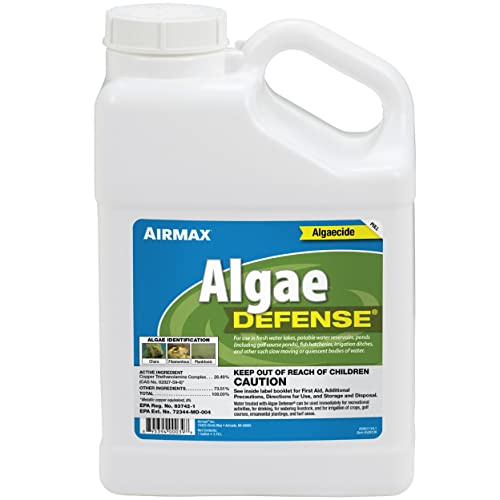
Product overview: Airmax Algae Defense is a liquid algaecide designed to kill a broad spectrum of algae, including floating mats and green water. It is suited for fresh water lakes, large ponds, irrigation ditches, and farm ponds. The formula is applied via a pressurized sprayer directly onto algae blooms, with dead algae turning brown for easier removal.
Who it’s best for: Farmers managing mid-to-large sized ponds with visible algae blooms, and managers seeking direct, on-contact application. It’s a practical choice when quick surface algae control is needed without heavy equipment.
Why selected: This product provides a fast response to algae blooms and is adaptable to various water bodies commonly found on farms. It supports straightforward retreatment as algae recurs seasonally.
Caution or limitation: After treatment, remove dead organics from shorelines to prevent buildup. Consult label for aquatic plant and wildlife considerations in your region.
Crystal Blue Copper Sulfate Algaecide

Product overview: Crystal Blue uses 99% copper sulfate pentahydrate to control most algae species in larger water bodies. It is intended for active algae growth in warmer water and is often applied atop thick floating mats. It’s best used carefully to avoid abrupt oxygen depletion in dense vegetation.
Who it’s best for: Farm ponds with persistent, thick algae mats where surface treatment is feasible and there’s a need for robust algae suppression in larger volumes.
Why selected: Copper-based algaecides offer strong performance against filamentous and other algae types common in farm ponds, making it a go-to option when other products struggle with dense growth.
Caution or limitation: Excessive application can reduce oxygen for fish. Do not apply if copper-sensitive fish are present; monitor for potential environmental impacts and follow label directions.
Cutrine-Plus Liquid Algaecide
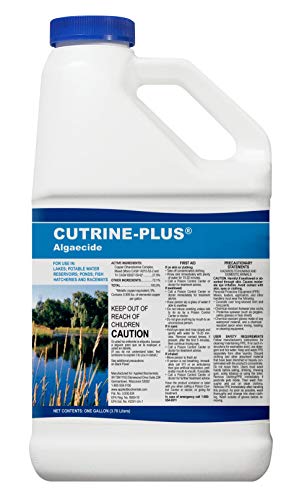
Product overview: Cutrine Plus is an EPA-approved copper-based algaecide aimed at fast control of planktonic, filamentous, and chara algae. It’s engineered for use in ponds, lakes, hatcheries, and irrigation systems, with visible reductions within 1-2 days.
Who it’s best for: Water managers needing broad-spectrum algaecide action with rapid effect, especially where multiple algae types co-exist and irrigation or livestock use is involved.
Why selected: This product targets major algae forms comprehensively, balancing fast action with broad applicability across farm water systems.
Caution or limitation: Avoid use in water bodies with copper-sensitive fish, such as koi or trout. Always confirm compatibility with local wildlife and follow proper dosing guidelines.
Airmax Wipeout Pond Weed Defense (4 Oz)
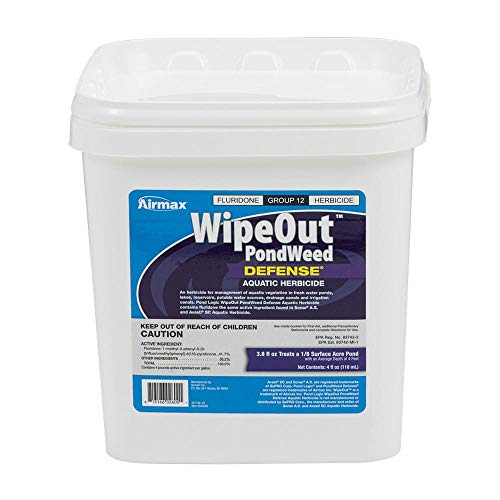
Product overview: Airmax Wipeout is a systemic herbicide designed to control floating and submerged pond weeds, including duckweed, water lilies, hydrilla, milfoils, and other common species. The 4-ounce formulation emphasizes easy application and long-lasting control.
Who it’s best for: Ponds with a mix of floating and submerged weeds where a straightforward, seasonal treatment is preferred without specialized equipment.
Why selected: Its all-season approach supports longer weed suppression with a simplified application process, making it suitable for busy pond owners and larger facilities.
Caution or limitation: Suitable for many species, but avoid indiscriminate removal that could impact pond oxygen balance. Follow label instructions about application sites and timing.
Airmax Wipeout Pond Weed Defense (8 Oz)

Product overview: This larger 8-ounce bottle provides extended weed control across ponds, built on the same systemic herbicide approach as the 4-ounce version. It targets floating and submerged weeds for season-long maintenance.
Who it’s best for: Larger farm ponds or facilities with significant weed pressure where a longer treatment window reduces maintenance frequency.
Why selected: It complements smaller-quantity options by offering scalability and consistent weed management through longer seasons.
Caution or limitation: As with all systemic herbicides, plan treatments to minimize disruption to non-target plants and consider pond aeration and fish presence during application.
Scotts Turf Builder Triple Action Moss Control

Product overview: Scotts Turf Builder Triple Action provides moss control for lawns while delivering step-in lawn fertilizer. It helps green turf and reduces moss growth on lawn edges that drain toward pond zones.
Who it’s best for: Farm landscapes where moss on lawns near ponds is a concern and a combined moss control plus fertilizer is desirable.
Why selected: It offers a practical synergy of moss suppression and lawn nourishment, supporting overall property aesthetics and drainage near water features.
Caution or limitation: Primarily designed for lawns, not pond water bodies. Use as directed on turf areas and avoid contact with pond surfaces or aquatic habitats.
BioAdvanced 2-in-1 Moss and Algae Killer

Product overview: BioAdvanced combines moss and algae killing with surface-cleaner action. It targets moss, algae, lichen, mold, and mildew, with a no-odor formula designed to minimize staining when used as directed.
Who it’s best for: Surfaces adjacent to ponds, such as walkways, roofs, decks, and building exteriors, where moss and algae accumulation is a recurring issue near farm water features.
Why selected: The 2-in-1 capability reduces the need for multiple products in peripheral areas, simplifying maintenance around farm ponds and facilities.
Caution or limitation: Not all formulations are suitable for direct waterbody use. Follow labeling for areas of application and ensure no run-off into waterbodies that may harm aquatic life.
Lilly Miller Moss Out For Lawns Concentrate

Product overview: Lilly Miller Moss Out For Lawns concentrates on fast moss kill and prevention, with a focus on lawns, but it’s frequently used in edge areas around ponds where moss encroaches toward walkways and drainage ditches.
Who it’s best for: Homeowners or managers seeking rapid moss elimination in turf zones that border irrigation ditches or pond perimeters, aiming to reduce spread toward water features.
Why selected: It provides quick control with preventive action, supporting longer-term moss suppression in adjacent landscapes.
Caution or limitation: Not designed for direct pond treatment. Apply to lawn areas and edges according to label directions, away from aquatic habitats.
Buying Guide: Moss, Algae, and Weed Control for Farm Pond Management
What pond size and depth should guide your choice? Larger ponds with heavy algae require fast-acting surface treatments or copper-based products that penetrate mats. Smaller or slow-moving ponds benefit from systemics that offer lasting weed suppression with simpler application.
Which algae types are present? If you see filamentous or chara algae, consider products that address multiple forms, such as Cutrine-Plus or Copper-based algaecides, while monitoring dissolved oxygen levels after treatment.
Is there a risk to fish or livestock? Always check the label for fish tolerance, especially when using copper-based products. For ponds used for irrigation or livestock water, favor products with explicit safety notes for wildlife and drinking water use.
What is the maintenance cadence? Some products require single-season treatments, while others imply repeated applications. Plan your treatment schedule around pond use patterns, seasonal temperature shifts, and mowing or dredging activities near shorelines.
What about near-shore vegetation and shorelines? Algaecides and herbicides that target shoreline growth can reduce dead organic matter after treatment. Ensure removal of dead algae to prevent oxygen depletion and maintain shoreline aesthetics.
Safety and environmental considerations: Use protective gear as directed, store chemicals safely, and avoid runoff into streams or groundwater. When possible, apply treatments in calm weather and avoid windy days to minimize drift toward non-target areas.
Frequently Asked Questions
- What is the fastest way to clear green pond water?
Apply a fast-acting algaecide directly to algae blooms and retreatment as needed. Combine with mechanical removal of dead algae to speed up clarity.
- Can I use algaecide and pond weed herbicide together?
Ensure products are compatible and follow label directions. Some formulations may require separate applications or specific timing to avoid oxygen depletion or harm to aquatic life.
- How do I protect fish when treating a pond?
Choose products labeled safe for use with fish, monitor oxygen, and avoid applying large doses all at once. Consider partial treatments and aeration after application.
- How often should I apply moss control near lawns and pond edges?
Follow product label guidance for frequency. Moss control near lawns may require periodic applications, especially in damp, shaded areas.
- What should I do after algae dies post-treatment?
Remove dead organic matter from shorelines and perform light aeration if recommended to restore oxygen balance.