Answering the need for reliable, easy-start walk-behind trimmers: these models are designed for big yards, uneven terrain, and brushy patches. They’re best for homeowners with medium to large properties who want less pulling, steadier starts, and broader cutting swaths. The top picks below balance power, durability, and user-friendliness to help you choose confidently.
| Product | Why It Stands Out | Best For |
|---|---|---|
| BILT HARD Self-Propelled Walk Behind String Trimmer | 170cc engine, 22″ cut, self-propelled; strong build and wide swath save time | Large yards with overgrowth; users who want effortless mobility |
| BILT HARD Walk Behind String Trimmer (22″ cut) | High power and rugged steel deck; 14″ flat-free wheels for rough terrain | Heavy mowing on uneven surfaces; frequent use across varied terrains |
| SENIX 22-Inch Gas Walk Behind Trimmer | 160cc engine, adjustable cutting height, 14″ rubber wheels; solid steel deck | Property with mixed terrains and need for height customization |
| Powerhorse High-Wheeled Walk-Behind String Trimmer | 173cc engine and 22″ cutting path; designed for reliable, long-term use | Frequent heavy mowing; users prioritizing engine power |
| Earthquake Walk Behind String Mower | 160cc Viper engine; 22″ cut with 14″ wheels; robust steel deck | Dense brush and tall grass; durability and stability matters |
BILT HARD Self-Propelled Walk Behind Trimmer

Features: 170cc 4-cycle OHV engine; manual recoil ignition for quick starts; 22-inch cutting diameter with durable nylon line; heavy-duty steel deck for stability and reduced vibration; self-propelled drive at approximately 1.9 mph.
Best for: Homeowners with medium to large lawns who want a powerful, easy-start machine that covers more ground per pass. The self-propelled feature reduces user effort on slopes or thick growth.
Caution: Heavier unit may require more storage space and occasional maintenance on the recoil start system.
BILT HARD Walk Behind String Trimmer (22″ Cut)

Features: 170cc 4-cycle OHV engine; one-piece steel deck; 22-inch cutting width; 14-inch flat-free wheels; foldable ergonomic handle for easy storage and maneuvering.
Best for: Users needing a rugged, high-capacity trimmer for thick grass and weeds across flat to mildly uneven ground.
Caution: 22-inch swath requires careful handling to avoid obstacles on tight properties.
SENIX 22-Inch Gas Walk Behind Brush Cutter

Features: 160cc 4-cycle engine; 22-inch cutting swath; 14″ rubber wheels; .155-inch trimmer line; steel deck; five-height settings (1.57″ to 3″).
Best for: Large properties needing consistent power and height-adjustable cutting to match tall or varied vegetation.
Limitation: Heavier models may require more storage space and regular maintenance on moving parts.
Powerhorse High-Wheeled Walk-Behind Trimmer

Features: 173cc engine; 22-inch cutting path; rear wheels for easy walk-behind control; offset head design for efficient edge-to-edge trimming.
Best for: Users prioritizing high engine power for lengthy, demanding trimming sessions and wide swaths.
Caution: Larger engine means heavier operation; ensure you have suitable storage and handling space.
Earthquake Walk Behind String Mower
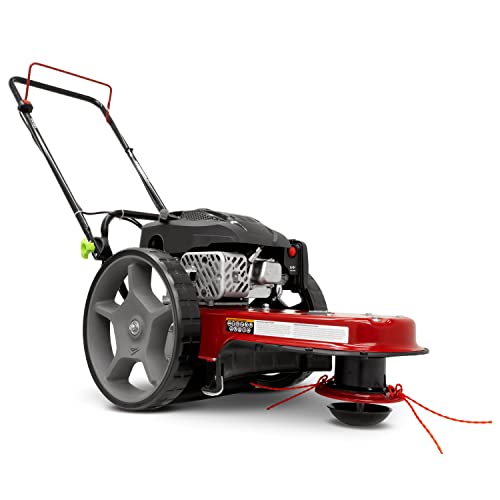
Features: 160cc Viper 4-cycle engine; 22” cutting diameter; 14” never-go-flat wheels; one-piece steel deck; integrated clutch and bail system for debris clearance without restarting the motor.
Best for: Property owners facing tough brush and nettles; durability and stability matter for frequent use.
Limitation: The integrated clutch system may involve a learning curve for new users.
Buying Guide
What to consider when selecting a walk-behind trimmer or mower
- Engine size and power: Larger engines handle thick grass and brush more easily but add weight. Choose 160cc–173cc for heavy use; smaller engines suit light to moderate mowing.
- Cutting width: Wider swaths (20–22 inches) save time on large yards but require more clearance to avoid obstacles. Narrower options are better for tight spaces.
- Wheels and maneuverability: Flat-free or never-go-flat wheels reduce downtime. Larger wheels improve stability on uneven ground.
- Deck construction: A steel deck improves durability and reduces vibration. Look for a one-piece design for stability.
- Starting method: Electric or manual starts offer different convenience. Electric-start models reduce pulling effort, especially in cold weather.
- Height adjustments: Adjustable cutting height helps tailor performance to grass height and terrain. Five-height settings offer flexibility for varied landscapes.
- Maintenance considerations: Recoil starters, blades, and debris clearance systems should be easy to access and service. Check for availability of replacement parts.
Frequently Asked Questions
- What is a walk-behind trimmer best used for?
Best for large lawns with dense or tall grass, weeds, and brush where a handheld trimmer would be inefficient.
- Is a self-propelled model easier to use?
Yes, it reduces manual effort on slopes and thick growth by maintaining a steady pace.
- What should I consider when choosing between 160cc and 173cc engines?
Choose 160cc for normal mowing with occasional brush; 173cc is better for heavy-duty tasks and taller vegetation.
- Do I need to fear maintenance of steel decks?
No, steel decks are durable but require occasional cleaning and inspection for damage or rust protection.
- Are electric-start models worth it for cold weather?
Electric starts can be easier in cold weather and for users with limited pulling strength.
- Can these units handle uneven terrain?
Yes, models with larger wheels and robust decks are designed to manage uneven ground more effectively.