Finding the right dry-pasture seed mix is essential for establishing resilient pastures in hot, arid climates. This article highlights five dependable seed blends designed to germinate quickly, endure drought, and provide nutritious forage for a variety of livestock. Each product section includes a concise glance at key features to help you compare options for pasture reliability, palatability, and long-term soil health.
| Product | Brand | Best Use | Coverage |
|---|---|---|---|
| X-Seed Pasture Land Dry-Land 25 lb | X-Seed | Dry, hot climates; quick establishment | 25 lb bag |
| Pasture growth and repair | 25 lb covers ~1 acre | ||
| Horse pastures; high palatability | 25 lb | ||
| Safe for diverse livestock; high palatability | 25 lb | ||
| Grazing, hay, silage; drought-tolerant | 25 lb |
X-Seed Pasture Land Dry-Land 25-Pound Seed Mix

The X-Seed Dry-Land mix is designed for hot, dry climates and higher elevations up to 8,000 feet. Its Micro-Boost technology supports faster germination and stronger seedling development, helping establish a robust forage stand quickly. The blend includes tall fescue, orchard grass, and ryegrass components to deliver fibrous roots and reliable grazing across dry pastures. Endophyte-free seed choices contribute to safer nutrition for livestock, particularly in stress-prone seasons.
- Micro-Boost technology enhances germination and root development
- Formulated for hot, dry climates with solid performance in full sun
- Blend includes tall fescue, orchard grass, and ryegrass suitable for dry pastures
X-Seed Pasture Land Dry-Land Forage Seed Mix (7-Pound)
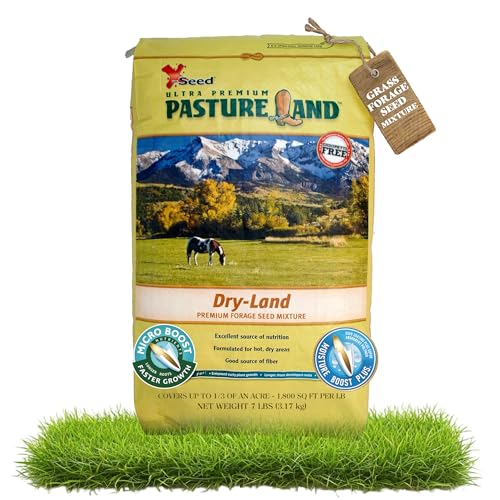
Another dry-area option from X-Seed, this 7-pound bag emphasizes rapid establishment and enduring growth in desert or high-temperature environments. The same Micro-Boost technology supports seedling vigor, while the endophyte-free formulation increases safety for livestock grazing. This size is well-suited for smaller pastures or as a pilot plot before expanding to larger fields.
- Quick germination and dense coverage
- Endophyte-free for animal safety
- Ideal for dry, high-heat conditions and compact soils
X-Seed Pastureland Over-Seeder With Micro-Boost

The Over-Seeder mix is designed to rejuvenate old pastures or establish new fields with a strong focus on rapid ryegrass establishment and long-term vigor. It includes red and white clover alongside perennial ryegrass, creating a palatable forage base with nutrient-rich clover. The Micro-Boost technology supports drought resilience and dense stand establishment, making it a practical option for grazing systems facing steady use and soil variability.
- Renews tired pastures with quick germination
- Includes ryegrass and clover for balanced forage
- Endophyte-free and suitable for animal safety
Barenbrug Pasture Seed 25 Lb 23094

This Barenbrug formula targets a safe, highly palatable pasture seed blend suitable for horses, cattle, sheep, goats, and deer. It emphasizes durability under grazing pressure and is designed for both northern and transition climate zones. The blend provides durable forage with a focus on digestible fiber, contributing to steady nutrition in regions with variable precipitation and temperatures.
- Endophyte-free, safe for a wide range of livestock
- Palatable, digestible forage with good grazing resilience
- Suitable for multiple climate zones including northern regions
Barenbrug Premium Free Range Chicks Mix

Although marketed for poultry, this Barenbrug mix demonstrates the value of non-GMO ingredients like white clover, tetraploid ryegrasses, flax, and alfalfa for diverse forage systems. The blend supports egg nutrition and broader dietary options for mixed livestock operations where herbaceous diversity is beneficial. It serves as a reference point for evaluating palatability, growth rates, and forage quality in dry pasture contexts.
- Non-GMO ingredients and diverse forage components
- Versatile uses for poultry and small ruminants alongside larger livestock
- Potential to influence egg Omega-3 content when included in mixed diets
Buying Guide: Key Considerations For Dry Pasture Seed Purchases
- Drought Tolerance and Root Structure: Look for blends featuring deep-rooted grasses like tall fescue and orchardgrass, which improve soil moisture retention and grazing resilience in dry climates.
- Germination Promoters: Seeds with micro-nutrient or growth-boosting technologies (such as Micro-Boost) can shorten establishment time and encourage quick ground cover, reducing erosion risk in arid soils.
- Endophyte Status: Endophyte-free or endophyte-safe seed is important for animal safety, particularly in high-grazing or high-stress environments. Ensure the seed mix aligns with your livestock species and rotation plans.
- Palatability and Nutrition: Choose blends that balance fiber content with digestible nutrients. Palatability affects intake and overall animal performance, especially in new pastures or during drought stress.
- Climate and Zone Compatibility: Consider climate-zone suitability, including heat tolerance, cold hardiness, and wind exposure. Some mixes are specifically formulated for northern zones or high-elevation dry regions.
- Soil Health and Establishment: Assess seed mixes that promote soil health, including sod-forming grasses and clover components that support nitrogen fixation and soil structure over time.
- Maintenance and Grazing Pressure: For high-traffic pastures, opt for durable blends that tolerate grazing and recover quickly to maintain consistent forage supply for hay, silage, or direct grazing.
- Size and Coverage: Match bag size to pasture area and grazing intensity. Smaller plots may benefit from starter mixes, while larger pastures need scalable blends that provide long-term yield.
- Seed Source and Certification: When possible, choose reputable brands with quality control and seed certifications that verify germination rates and endophyte status.
- Compatibility with Existing Pasture: If seeding into established fields, consider overseeding compatibility and methods to minimize disruption to existing stands.