Fast, efficient watering for trees, shrubs, and containers is possible with drip ring irrigation. This guide compares five popular drip ring options to help American gardeners choose the right setup for their climate, plant types, and water conservation goals. Each product is evaluated for ease of installation, water delivery consistency, and suitability for different garden sizes and species.
| Product | Best For | Notes |
|---|---|---|
| Tujoe 4 Set Water Ring (5 Inch) | Small to medium container setups; tree seedlings | Includes 4 rings with stakes and 1/8″ inlet |
| One Stop Outdoor 10 Pack (5 Inch) | Bulk installations; greenhouse and commercial use | Circular multi-outlet dripper; 1/8″ tubing compatible |
| Tujoe 4 Sets Water Ring (9 Inch) | Medium trees; larger container plantings | Similar design, larger diameter ring |
| Sustainable Village Drip Ring (5 Inch, Blumat Compatible) | Blumat integration; plug-and-play irrigation | 3mm inlet barb; built-in filter |
| HEYTIMI 4 Pcs 360° Tree Water System (13 Inch) | Larger trees and expanded root zones | Includes valves and Y splitter; adjustable 13″ to 37″ |
Tujoe 4 Set Water Ring 5 Inch – Drip Emitter Rings

Best for compact trees, potted shade trees, or containers where a narrow ring fits around the root zone. The package includes four green rings with built-in 1/8 inch barbed inlet fittings and three removable stakes for adjustable height. Durable plastic and rubber construction supports consistent water delivery to the root zone, promoting healthier growth. A caution: for very large installations, adding ball valves may help maintain uniform flow across all rings.
One Stop Outdoor 10 Pack Premium Drip Rings – 5″ Diameter

This set targets larger container and greenhouse irrigation with a circular multi-outlet dripper that distributes water evenly to plant roots. It supports 1/8″ tubing connections for quick installation and scalable watering networks. Best for small commercial setups or busy home gardens where multiple rings are deployed across many pots. Choose this if you need a high-throughput solution and easy expansion across many plants.
Tujoe 4 Sets Water Ring 9 Inch – Wider Coverage

Best for medium-sized trees or larger container plantings where root zones require a broader watering ring. The set mirrors the 5-inch version but with a larger diameter for deeper root zones. Be mindful of space around mature trees; ensure rings do not interfere with trunk growth. A useful option for expanding water reach without increasing pressure requirements significantly.
Sustainable Village Drip Ring – Blumat Compatible, Ten Pack
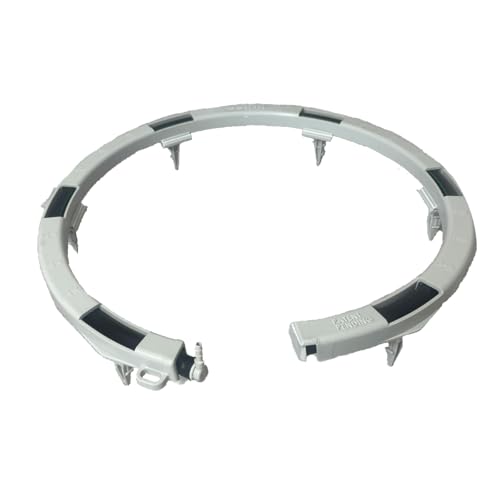
Best for Blumat-based systems or where plug-and-play irrigation is preferred. Features a 3mm inlet barb that connects easily with Blumat sensors and includes a built-in filter to resist clogs while supporting a variety of nutrient solutions. Limitations include relying on compatible sensors and potential need for adapters in non-Blumat environments. Ideal for garden beds and decorative plantings that use sensor-driven irrigation.
HEYTIMI 4 Pcs 360° Tree Water System – 13 Inch Rings

Best for larger trees or shrubs requiring a wider root-zone irrigation circle. The kit includes four rings, four plastic valves, and two Y hose splitters for easy network setup. The rings expand from 13 inches to 37 inches, providing flexible coverage and targeted watering near the root zone. Use this if you need quick, scalable irrigation across multiple large plants. Limitation: larger rings may require more space and higher flow management to prevent overwatering in dense plantings.
HEYTIMI 2Pcs 360° Tree Water System – 13 Inch Rings

Best for smaller deployments or when adding a second circle around trees. It mirrors the 4-pack version but with two rings, ideal for expanding coverage without overextending the network. The product includes Y splitters and valves to facilitate simple distribution. Choose this if you want a compact upgrade or to create multiple ring configurations around a single plant.
20 Gallon Tree Water Bags – Slow Release

Best for drip irrigation in drought-prone areas or for trees with high water demands. The 20-gallon bags slowly release water around the root zone, helping to minimize transplant shock and maintain soil moisture. Replacement schedules depend on soil type and weather. This option complements ring systems by providing a deep-soak alternative when integrated around the root zone. Limitation: it requires period monitoring to ensure complete emptying between fills.
Buying Guide: Key Purchase Considerations
- Plant size and root-zone needs: Smaller rings fit pots and young trees; larger rings cover extended root zones for mature trees.
- Watering method compatibility: If you already use Blumat sensors, a Blumat-compatible ring can simplify integration.
- Flow control: Look for rings with adjustable height stakes or ball valves to balance flow in larger installations.
- Material and durability: Durable plastic and rubber resists wear; consider UV resistance for outdoor use.
- Installation and expansion: Choose rings that support quick connections to 1/8″ tubing and offer scalable options (adding more rings or Y splitters).
- Maintenance: Rings with built-in filters help prevent clogging when using nutrient solutions; check compatibility with your water quality.
- Space and layout: Measure available space around the root zone to select diameter ranges (5″ vs 9″ or larger) and determine how many rings you need per plant.
Frequently Asked Questions
- What size ring should I choose for a young tree? – Start with a smaller diameter ring (5″) around the root zone; you can upgrade to larger rings as the tree grows.
- Do these rings require electricity or complex setup? – No, most rings are passive irrigation devices that connect to standard hoses or tubing.
- Can I mix different brands in one watering network? – Yes, as long as connections and tubing sizes are compatible (1/8″ fittings are common).
- Will these rings water evenly if I have a windy or hot climate? – Proper spacing and a gentle flow rate help achieve even distribution; consider ball valves or multiple rings for uniformity in harsh conditions.
- How often should I check for clogs? – Inspect monthly or after heavy nutrient use; rings with built-in filters reduce clogging risk.
- Are tree watering bags and rings compatible? – They serve complementary roles; bags provide deep root-zone moisture, while rings deliver targeted surface irrigation.