For hunters and wildlife managers, directional deer feeders deliver feed precisely where wildlife congregates, helping to improve baiting efficiency and reduce waste. This guide reviews top directional and semi-directional feeders from Moultrie and other brands, focusing on reliability, ease of use, and app connectivity. Learn what to look for when selecting a directional feeder, including feed control mechanisms, mounting options, hopper capacity, and power sources. The following picks are chosen for their directional capabilities, durability, and user-friendly controls suitable for American hunting and wildlife management needs.
| Product | Brand | Approx. Capacity | Key Feature |
|---|---|---|---|
| Moultrie 40lb All-in-One Directional Hanging Deer Feeder | Moultrie | 40 lb | Directional hanging design with Bluetooth control |
| Moultrie Pro Hunter III Directional Deer Feeder Kit | Moultrie | Variable (depends on hopper) | Focused feed stream and Bluetooth app control |
| Moultrie Deer Feeder Standard | Moultrie | 200 lb | Remote programming via Moultrie app |
| Moultrie 250 lb Pro Hunter III Deer Feeder System | Moultrie | 250 lb | Full 360° feed coverage with digital timer |
| Prolee 50-80lbs Deer Feeder | PROLEE | 50-80 lb | Heavy-duty, 4-port feeding system |
Moultrie 40lb All-in-One Directional Hanging Deer Feeder
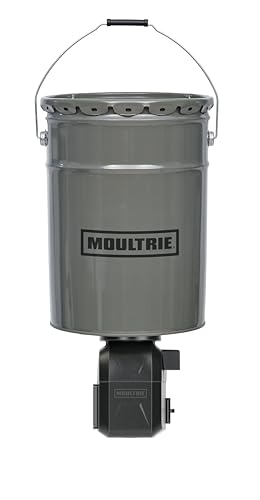
The 40-lb directional feeder is built with a metal hopper and lid for long-term durability. Its PRO HUNTER III kit pushes feed in a single direction, helping to direct deer into specific lanes or concentrate feed near ponds. Bluetooth connectivity lets users adjust feed times and run length via the Moultrie app, enabling on-the-go management from vehicles, blinds, or docks without physical adjustments at the feeder.
Moultrie Pro Hunter III Directional Deer Feeder Kit
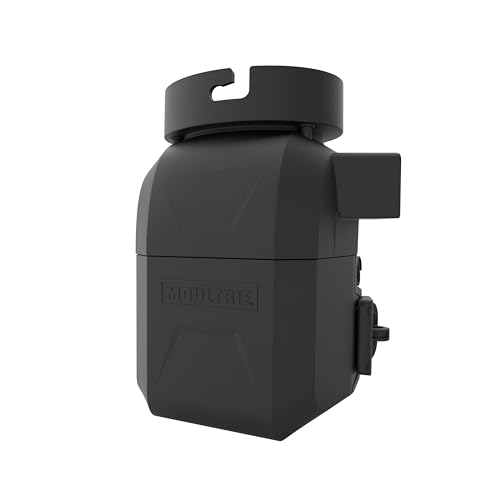
This directional feeder kit delivers feed in a focused stream to attract deer into specific shooting lanes or feeding zones. It features Bluetooth control via the Moultrie app, enabling quick adjustments from afar. An EDGE 3 camera integration option allows real-time changes while monitoring wildlife remotely, making it suitable for whitetail management and pond stocking scenarios.
Moultrie Deer Feeder Standard

Equipped with Bluetooth connectivity, this 200-lb hopper feeder supports remote programming via the Moultrie app. Set feed times, durations, and frequencies up to a distance of about 300 feet without visiting the feeder. The rugged 30-gallon hopper is UV-resistant for outdoor durability, while grounding access simplifies refilling in field conditions. Power options emphasize flexible operation in remote locations.
Moultrie 250 lb Pro Hunter III Deer Feeder System

Designed for open fields and large feeding areas, this system provides full 360° feed coverage. A programmable timer supports up to 10 feed times per day, while Bluetooth connectivity enables adjustments from a smartphone. The solid construction supports heavy-use sites, and the app integration supports remote management of feeding schedules, making it suitable for managing large whitetail properties or stocked ponds.
Prolee 50-80lbs Deer Feeder
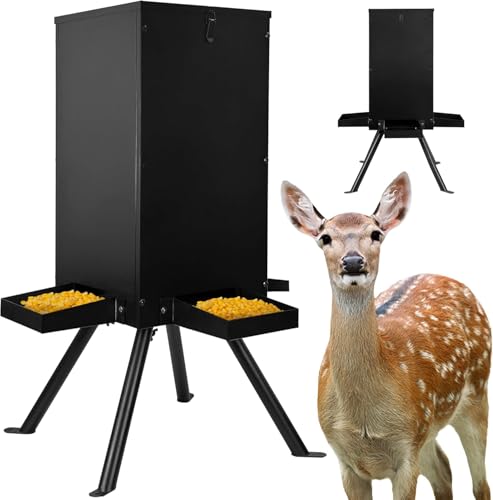
Prolee offers a heavy-duty, weatherproof 50-80 lb capacity feeder with a four-port feeding system. The steel construction is designed for harsh outdoor conditions and features four feeding trays to accommodate multiple deer simultaneously. The design includes a weatherproof top cover and a secure latch to protect feed during rain, snow, or heat, making it a reliable option for year-round use.
Buying Guide
Key considerations when choosing a directional deer feeder include directionality and feed control, capacity, durability, power options, and smart connectivity. Directional feeders focus feed into a narrow stream to attract deer to a specific zone or lane, reducing waste and scent spread in hunting areas. Capacity should align with the size of your property and refill frequency you’re comfortable with. Durability matters for year-round outdoor exposure; look for UV-resistant hoppers, weatherproof housings, and robust mounting options.
Power and reliability are essential. Battery-powered units offer flexibility in remote locations, while solar options can extend runtime with proper maintenance. Bluetooth or Wi-Fi connectivity adds convenience for scheduling and adjusting feeds without near-field access, which helps in maintaining natural deer behavior and reducing human scent in the area.
Consider the feeding schedule options: some units support up to 4 daily feed times, others offer up to 10. Timers and adjustable run times (seconds per feed) help tailor feeding to deer activity patterns and feed types (corn, pellets, or mixed grains). For larger properties, look for remote management compatibility with cameras or weatherproof remote sensors to align feeding with animal movement data.
Budget and maintenance are practical factors. More complex digital systems provide precise control but may require more upkeep. Simpler gravity or mechanical feeders require less maintenance but offer less control. Finally, ensure the feeder’s installation and mounting options suit your terrain—hanging, tripod, or ground-based configurations each have different setup needs and footprint.
In sum, the best directional deer feeder should balance precise feeding, capacity, durability, and remote management features to fit your property layout and wildlife goals. The products listed above offer a range of directional and semi-directional feeding capabilities with Bluetooth connectivity and robust construction to help you manage deer activity effectively.