Answering your search for a reliable deer fence for raised beds, this guide compares top options that deter deer while keeping your plants healthy. The best picks suit different needs—from portable, flat-pack kits to sturdy, wooden raised beds with built-in deer protection. Ideal buyers include urban gardeners needing quick setup, hobby-growers focusing on long-term durability, and homeowners seeking a cedar, deer-proof frame. Below is a quick table of the top five products featured, followed by in-depth sections for each item.
| Product | Best For | Material | Key Benefit |
|---|---|---|---|
| Feitore Deer Fence Netting | Small to mid-size beds | Polypropylene netting | Large coverage with reusable design |
| AMERLIFE Raised Garden Bed With Deer Proof Fence (7.5×20) | Long-term raised beds | Wood with deer-resistant fence | Premium protection for vibrant crops |
| Outdoor Living Today 8×8 Deer Proof Raised Garden Bed | Medium to large plots | Western Red Cedar | Sturdy cedar construction with deer defense |
| FEED GARDEN Heavy Duty Deer Netting | Temporary or flexible setups | UV-protected polyethylene | Complete protection kit |
| Qinheesiu Deer Fence Netting 4x75ft | Long, narrow beds | HDPE mesh | Reinforced edges and tangle-free |
Feitore Deer Fence Netting, 7 x 100 Feet

Best for: Small to mid-sized raised beds where easy reuse and modular setup matter. This netting provides a 7 ft by 100 ft coverage with a 3/4 inch square mesh, designed to deter deer, birds, and other animals while preserving plant growth. The kit includes installation nails and cable ties for quick setup. The material is polypropylene, which resists tearing, rust, and rot and can be reused across seasons.
Why chosen: It offers a balance of protection and flexibility. The 3/4″ mesh blocks most deer-sized intruders without shading plants excessively. It’s light enough to reposition as beds change, and the included accessories simplify installation. Caution: The netting is lightweight and may require stakes or weights in high-wind areas to prevent sagging.
Best for, limitations, and notes:
- Best for portable or seasonal gardens with multiple beds.
- Better in calm to moderate wind zones; in strong winds, secure edges well.
AMERLIFE Raised Garden Bed With Deer Proof Fence (7.5x20x6)
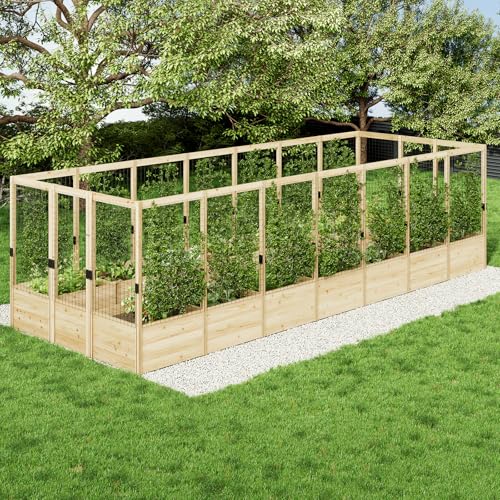
Best for: Gardeners who want a complete raised-bed solution with built-in deer protection. This model features a bottomless design for improved drainage and root health, along with a secure door for easy access. The deer-resistant fence adds an extra barrier to deter browsing animals from reaching crops.
Why chosen: Combines durable wood construction with an integrated deer fence, reducing the need for separate netting. The bottomless design supports healthy root systems and drainage, which benefits vegetable growth in various climates. Caution: Assembly can be more involved than modular netting; ensure proper anchoring to prevent wobble in windy conditions.
Best for, limitations, and notes:
- Choose this if you want a ready-to-assemble raised bed with built-in deer defense.
- Avoid if you need ultra-lightweight, relocatable solutions.
Outdoor Living Today 8×8 Deer Proof Raised Garden Bed

Best for: Gardeners seeking a Canadian-made cedar option with built-in deer defense and accessible assembly. This unit emphasizes timber quality, airflow, and sunlight access while reducing deer browsing risk with an integrated fence.
Why chosen: Cedar construction offers natural durability and a pleasing aesthetic for outdoor spaces. The fence height and design are intended to deter deer without compromising plant growth. Caution: Cedar requires periodic maintenance to preserve color and longevity; sealants may be needed in wetter climates.
Best for, limitations, and notes:
- Best for views and durability in moderate climates.
- Keep in mind maintenance needs for long-term outdoor use.
FEED GARDEN Heavy Duty Deer Netting

Best for: Gardeners who want a complete protection kit with minimal setup hassle. This 7×100 ft netting uses a 3/4 inch mesh to block deer, birds, rabbits, and other small pests while allowing sunlight and air to reach plants.
Why chosen: The package includes installation stakes and zip ties, making it a ready-to-deploy option for immediate protection. The UV-protected polyethylene construction supports multi-season use and weather resistance. Caution: The netting’s depth and height depend on bed dimensions; verify coverage for tall plant varieties.
Best for, limitations, and notes:
- Best for quick protection across larger bed footprints.
- Plan for proper tensioning to avoid sagging in wind.
Qinheesiu Deer Fence Netting 4 x 75ft

Best for: Long, narrow raised beds or rows where deer protection is needed along a stretch. The 4×75 ft length fits long beds with a 55GSM HDPE mesh that resists tearing and is designed to be tangle-free with reinforced edges.
Why chosen: The reinforced rope edge helps keep the net taut and reduces tangling, a common issue with long-run coverings. The 5/8 inch square mesh provides robust protection without overly restricting plant growth. Caution: Edge reinforcement improves durability but may require additional securing in windy locations.
Best for, limitations, and notes:
- Choose if you need an extended net for straight garden rows.
- Avoid if you require a wide, square layout in a single piece.
Buying Guide: Key Considerations For Choosing A Deer Fence For Raised Beds
What size and mesh matter?
Mesh size should block typical deer while not hindering plant growth or pollinators. A 3/4 inch mesh is a common compromise for vegetables and shrubs. For very small plants, a finer mesh may be preferred, but may reduce air and water flow.
How durable should it be?
Durability depends on material and climate. UV-protected polyethylene and reinforced HDPE mesh offer longer multi-season performance. Wooden raised beds with integrated fences are sturdy but require maintenance, especially in wet climates.
Is portability important?
If you rotate crops or move beds seasonally, consider netting with lightweight, reusable materials or modular panels. Netting with included installation hardware speeds up setup for temporary protections.
What about ease of installation?
Look for complete kits that include stakes, nails, or zip ties. Built-in doors or access points in raised beds improve practicality for routine maintenance and harvesting.
Sun, water, and airflow considerations
Ensure the fence design allows sunlight and rainfall to reach plants. A solid barrier should not overly shade beds. Permeable nets and low-profile fences help maintain plant health and soil moisture.
Longevity and maintenance
UV stability and rust resistance extend life. Wooden beds require periodic sealing or care, while plastic nets may degrade in high heat unless UV-stabilized.
Frequently Asked Questions
- What is the best fence height to deter deer from raised beds? A height of 5 to 6 feet is commonly effective for many deer. For shorter deer or in windy areas, taller setups with strong anchoring may be beneficial.
- Can I reuse deer netting for multiple seasons? Yes, many nets are designed for multi-season use, especially UV-stabilized polyethylene and HDPE options. Inspect for tears before reuse.
- Will deer fences harm wildlife? Most fences are designed to deter deer without harming animals. Mesh sizes and barrier designs should prevent entanglement of birds or small mammals.
- Should I combine fencing with ground barriers? For robust protection, pair fencing with soil barriers or edging to prevent deer from digging under the fence.
- Is a built-in deer fence better than netting? Built-in deer fences offer integrated protection and stability, but modular netting provides flexibility and easier relocation for changing beds.
- How do I maintain a cedar deer-proof bed? Regularly inspect for cracks or rot, and apply a weather-appropriate sealant if needed to prolong cedar life.