Crimson red rhubarb plants bring vivid color and tart sweetness to pies, jams, and desserts. This guide highlights five top options that suit American gardens, from bare-root crowns to established roots. Whether you’re a beginner or a seasoned gardener, these selections aim to balance yield, vigor, and culinary utility. The top picks cater to different growing spaces, including beds and containers, so you can choose what works best for your climate and sun exposure.
The following table summarizes the featured products, including their growth habit, ideal growing conditions, and what type of buyer each one suits best. Use this quick reference to compare at a glance before diving into each product’s details.
| Product | Best For | Growth Habit | Notes |
|---|---|---|---|
| TriStar Plants Crimson Red Rhubarb Bare Root Crown | Keen cooks and first-time rhubarb growers | Perennial crown | Bold red stalks, long-term bed presence |
| Crimson Red Rhubarb Jumbo Bare Root Plant | Large yields and dependable flavor | Bare root crown | Flourishes in sun to partial shade |
| TriStar Plants Canadian Red Rhubarb Roots | Pie and jam enthusiasts seeking repeat harvests | Perennial crown | High yield potential |
| Mountain Valley Seed Company Organic Crimson Red Rhubarb Roots | Organic gardeners seeking non-GMO options | Perennial crown | Certified organic |
| Victoria Rhubarb Crown (CZ Grain) | Containers and smaller spaces | Perennial crown | Excellent for northern climates |
TriStar Plants Crimson Red Rhubarb Bare Root Crown, 1 Plant

Best for first-time rhubarb gardeners who want a straightforward starting plant. This TriStar Plants option is a single bare-root crown that delivers bold crimson stalks with classic tart flavor. It is a perennial edible suitable for long-term garden beds. The crown form is simple to establish, reducing transplant shock for beginners. A limitation is that, like other bare-root crowns, establishment may take one growing season to become fully productive in cooler soils. Plan for a sunny spot with well-drained soil.
Who it’s for: home cooks and new growers wanting reliable color and flavor with minimal maintenance. Why this was selected: it provides a solid, dependable introduction to crimson stalks without requiring a large plant collection to begin producing.
Key considerations:
- Best in full sun to partial shade, with rich, well-drained soil.
- Space plants about 3 feet apart in rows that are 4 feet apart for best air circulation.
- Water consistently during establishment; mulch to regulate moisture.
Crimson Red Rhubarb Jumbo Bare Root Plant
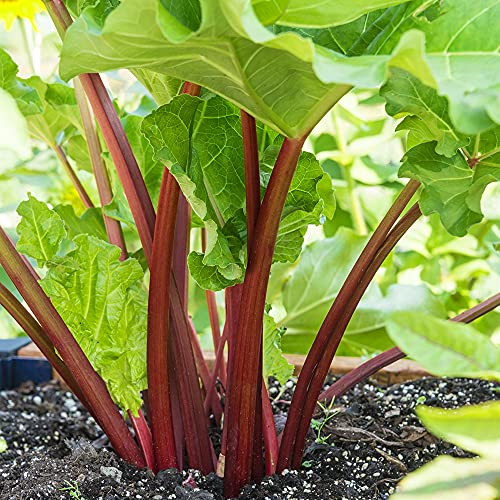
Best for gardeners prioritizing high yields and robust flavor. This jumbo bare root rhubarb plant from SPRING HILL NURSERIES aims to deliver ample crimson stalks year after year. It grows well in loamy, well-drained soil and appreciates full sun to partial shade. Plant spacing is 3 feet apart in rows 4 feet apart. It can reach 24 to 30 inches in height and width as it matures. A potential limitation is that larger roots may require more initial space and careful root management to prevent crowding in smaller beds.
Who it’s for: serious fruit and pie lovers who want a dependable, high-yield rhubarb source. Why this was selected: its size and vigor are tailored for prolific harvests over multiple seasons.
Key considerations:
- Provide full sun to maximize stalk color and sweetness.
- Ensure even moisture and weed-free rows during establishment.
- Fed with balanced fertilizer in early spring for best growth.
TriStar Plants Canadian Red Rhubarb Roots (3 Plants)

Best for gardeners seeking multiple-year harvests with consistent performance. The TriStar Canadian Red rhubarb roots bring sweet, tender red stalks and are described as high-yield perennials suited for pies, sauces, and jams. This option provides three bare-root crowns, offering more immediate plant density and production compared to a single crown. A caveat is that bare-root plantings require careful handling during installation to avoid drying out the crowns.
Who it’s for: households that want a small rhubarb patch with strong yield potential across seasons. Why this was selected: multi-plant bundles improve early production and garden density without extra purchases.
Key considerations:
- Plant in well-prepared soil with good organic matter.
- Space about 3 feet apart in each row, with at least 4 feet between rows.
- Water regularly during establishment; expect several plants to emerge in subsequent years.
KVITER 50 Red Victoria Rhubarb Seeds

Best for growers who prefer starting from seeds and building a long-term, organic-friendly rhubarb patch. These KVITER seeds offer a high germination rate after soaking, with rhubarb capable of thriving in USDA Zones 4–8. The resulting plants can reach 2–3 feet tall with bright red stalks suitable for canning and fresh use. One limitation is that seeds take longer to reach harvest compared to established crowns; patience is required for first-year stalk production.
Who it’s for: seed-to-harvest gardeners who want to grow rhubarb from scratch and value non-GMO or heirloom options. Why this was selected: seeds provide a more economical entry point and allow customization of planting density and growth over time.
Key considerations:
- Soak seeds 2 hours before sowing; plant shallowly in rich, well-drained soil.
- Provide consistent moisture during germination and early growth.
- Expect 1–2 seasons before substantial harvests appear.
Organic Crimson Red Rhubarb Roots – 2 Pack

Best for organic gardeners seeking certified organic crowns. These Crimson Red rhubarb roots are labeled as non-GMO crowns delivering tall, plump, uniform red stalks. The texture is crisp and fiber-free, which suits a variety of recipes. Plant crowns 6–12 inches deep and space 36 inches apart in rows 36–48 inches apart. They perform well in full sun, with partial shade tolerated in hotter zones. A limitation is that organic certification may imply stricter handling during harvesting and planting.
Who it’s for: organic-focused gardeners who want dependable perennial color and flavor with organic growing assurances. Why this was selected: organic certification and dual-root packaging offer a reliable entry for sustainable beds.
Key considerations:
- Choose a sunny site with rich soil and good drainage.
- Keep crowns evenly moist but avoid waterlogging.
- Apply mulch to suppress weeds and conserve moisture.
Victoria Rhubarb Crown – Large Root for Planting

Best for northern climates and container-friendly setups. Victoria rhubarb crowns produce large, sweet-tart stalks year after year. The crown is well-suited for garden beds or spacious containers in cool summers. Growth reaches about 2–3 feet tall and wide, forming sturdy clumps. A noted limitation is potential heat sensitivity; long periods of high heat can affect stalk sweetness and vigor in warmer zones. Proper spacing and sun exposure help mitigate this risk.
Who it’s for: gardeners in cooler regions or those who want a robust container rhubarb option. Why this was selected: strong winter hardiness and reliable stalk production make it a dependable choice for varied layouts.
Key considerations:
- Plant 2–3 inches deep in fertile, well-drained soil.
- Provide consistent moisture, especially during establishment.
- Protect from extreme heat where summers are very hot.
Red Rhubarb Plant for Planting – Bare Roots

Best for gardeners seeking a straightforward perennial option in an easy-to-manage size. This red rhubarb bare-root is described as a live perennial vegetable plant ready for long-term production. It performs best in full sun with partial shade in warmer zones. The plant height ranges are modest, blurring the line between a starter plant and a mature crown. The main limitation is that bare-root planting requires careful handling and proper planting depth to avoid dry crowns.
Who it’s for: hobby gardeners and small-space planters who want a reliable, low-maintenance rhubarb option. Why this was selected: compact size and straightforward planting make it suitable for balcony or small garden beds.
Key considerations:
- Prepare a deep, enriched bed and water consistently after planting.
- Mulch to conserve moisture and suppress weeds.
- Monitor for signs of drought stress in hotter climates.
Buying Guide: How To Choose The Right Crimson Red Rhubarb
What to consider before buying
Plant type matters. Bare-root crowns are cost-effective and fast to establish, but require careful handling during transplant. Established crowns or roots offer quicker initial harvest but at a higher price. Consider space: rhubarb needs room to spread, typically 3 feet between plants and 4 feet between rows for good air circulation.
Growing conditions determine success. Rhubarb loves full sun to maximize stalk color and flavor. It tolerates partial shade but may produce fewer stalks in hotter climates. Soil should be well-drained and rich in organic matter. Mulching helps retain moisture and suppress weeds during establishment.
Climate compatibility matters. Some varieties perform better in cooler northern climates, while others tolerate heat better. If you garden in zones 4–8, you have multiple suitable options from the list, but you should select a cultivar known for cold hardiness if winters are severe.
Flavor, color, and culinary use
Crimson stalks offer a vivid color and tart bite ideal for pies, sauces, and jams. The level of sweetness can be influenced by sugar balance and cooking method. For canning, sturdier stalks that hold up to simmering are advantageous. Some varieties emphasize flavor intensity, while others prioritize yield and size.
Maintenance and longevity
Rhubarb is a long-lived perennial. Once established, it can produce for many years with proper care. Regular feeding in early spring, consistent watering, and weed control support long-term vigor. Avoid heavy harvesting in the year of planting to allow the crowns to establish a strong root system.
Care and planting tips
- Plant crowns 2–3 inches deep, with the crown slightly above soil to prevent rot.
- Water deeply after planting and maintain even soil moisture during first growing season.
- Keep harvests moderate in the first year to allow root establishment, then increase in subsequent years.
Choosing by buyer type
- Beginners: TriStar Crimson Red Bare Root Crown offers straightforward setup and reliable color.
- High-yield growers: Jumbo Bare Root Plant from SPRING HILL NURSERIES emphasizes abundant stalks.
- Organic gardeners: Mountain Valley Seed Company roots provide certified organic options.
- Seed enthusiasts: KVITER seeds enable starting from seed for a slow-burn approach.
- Container gardeners: Victoria Rhubarb Crown suits smaller spaces and container setups.
Frequently Asked Questions
- What is the best rhubarb variety for beginners?
Typically, simpler crown-based options like Crimson Red rhubarb root crowns are well suited for beginners due to their straightforward establishment and reliable color.
- How deep should rhubarb crowns be planted?
Depth recommendations vary by cultivar, but a common guideline is 2–3 inches deep with the crown slightly above the soil line to prevent rot.
- How much space does rhubarb need?
- When can I start harvesting rhubarb?
- Can rhubarb grow in containers?
- Are rhubarb leaves safe to eat?
Allow about 3 feet of space between plants and 4 feet between rows to ensure air circulation and light penetration.
Most varieties take at least one growing season to establish; careful harvesting typically begins in the second year for robust yields.
Yes, certain varieties adapt well to containers, provided they receive full sun, ample water, and large enough containers to accommodate their root systems.
No. Rhubarb leaves contain oxalic acid and should not be consumed. Only the stalks are used in culinary applications.