Answering the buyer’s needs: A cordless electric garden cultivator offers mobility, reduced noise, and easier soil preparation without cords. This guide highlights five well-rounded options ideal for small to medium gardens, raised beds, and hard-to-reach plots. Each model is suited to different gardeners—pros seeking speed, beginners needing simplicity, and those working in tight spaces. The summary table below compares core specs to help you decide quickly.
| Product | Tilling Width | Tilling Depth | ||
|---|---|---|---|---|
| Alloyman 20V Cordless Tiller Cultivator | 9 in | 6 in | 2x 4.0Ah | Not specified (fast tilling) |
| YDlawn 20V Cordless Tiller Cultivator | 9 in | 7 in | 2x 4.0Ah | Up to 60 minutes |
| MZK 40V 12-inch Cordless Garden Tiller | 14 in | 8.6 in | 2x 4.0Ah | Up to 35 minutes |
| SEYVUM Cordless Tiller for Gardening | 9 in | 7 in | 2x 4.0Ah | Up to 50 minutes |
| EnduTools Cordless Tiller Cultivator | 9 in | 6.7 in | 2x 4.0Ah | Up to 30 minutes per battery |
Alloyman 20V Cordless Tiller Cultivator
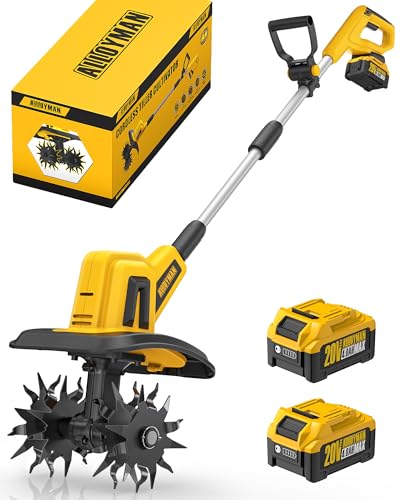
Best for gardeners who need fast setup and compact maneuverability in small plots. Alloyman’s 360 RPM four-tine head covers up to 9 inches wide and 6 inches deep per pass, making quick work of weeded beds and aeration tasks. The cordless design adds freedom when working near borders, around raised beds, or in orchards where outlets are sparse. The auxiliary handle is adjustable to reduce fatigue during longer sessions.
Who it’s best for: small-space gardeners and DIY enthusiasts who value cordless convenience and straightforward operation. Limitations: no extended runtime details are listed; plan for shorter sessions with a single pair of batteries if you tackle large areas.
YDlawn 20V Cordless Tiller Cultivator

Best for beginners and seniors seeking a light, easy-to-handle option. YDlawn includes two 20V 4.0Ah batteries and a charger, delivering up to about 60 minutes of runtime split between two batteries. It tills up to 7 inches deep and 9 inches wide per pass, with 48 hardened steel tines designed to break compacted soil and mix compost efficiently. It’s a practical choice for raised beds and small garden plots.
Who it’s best for: new gardeners and those prioritizing lightweight design with decent runtime. Caution: runtime varies with soil hardness; very compact soil may reduce effective tilling depth per pass.
MZK 40V 12-Inch Cordless Garden Tiller
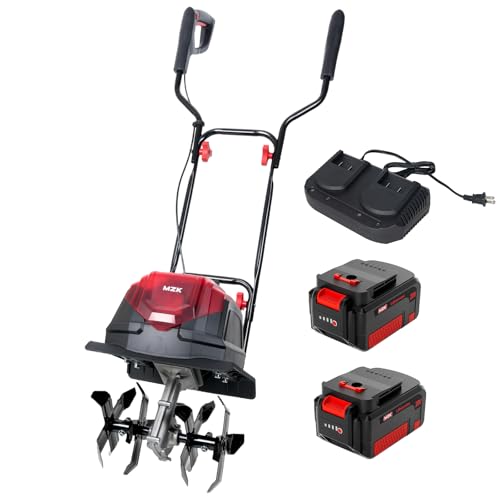
Best for larger beds and tougher soil. The MZK tiller delivers a wider 14-inch tilling width and 8.6-inch depth, powered by two 4.0Ah batteries. With 16 steel tines, it breaks ground quickly, turning hard soil into workable ground. The cordless design enables easy movement around expansive plots without power cords. Runtime reaches about 35 minutes per two batteries, suitable for mid-sized projects.
Who it’s best for: gardeners needing broader coverage and deeper tilling for bigger beds. Caution: higher weight and power may be less ideal for very tight spaces or elderly users without sturdy support.
EnduTools Cordless Tiller Cultivator
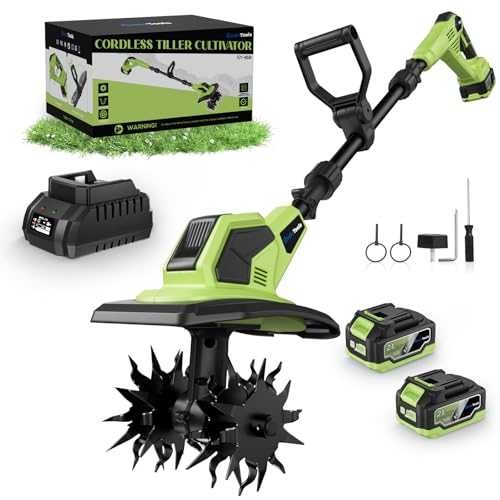
Best for balanced performance and safety features. EnduTools uses a 360 RPM motor with 4 steel tines for up to 9 inches wide and 6.7 inches deep tilling. It includes two 4.0Ah batteries for extended work sessions and a dual-safety start system to prevent accidental starts. This makes it a reliable choice for mid-sized gardens and lawns where safety matters as you work around plants and irrigation lines.
Who it’s best for: safety-conscious gardeners who want steady power and straightforward operation. Caution: battery swap and charge times should be planned into your workflow to avoid interruptions on larger tasks.
Buying Guide
What to consider when choosing a cordless garden tiller
Power and speed: Look for motors around 360 RPM or higher for effective soil penetration, especially in hard or clay soil. More RPM often means faster work, but balance with the weight and comfort of handling.
Width and depth: Wider tills cover more ground per pass but can be harder to maneuver in tight spaces. Narrow tillers excel in raised beds and borders. Depth is important for breaking up dense soil and incorporating compost deeply.
Battery setup: Two batteries with a shared charger generally provide longer runtimes and uninterrupted work. Check run time per battery and recharge time to plan sessions efficiently.
Weight and ergonomics: A lighter, well-balanced unit reduces fatigue. An adjustable auxiliary handle helps users customize reach and stance, improving control over long sessions.
Safety features: Dual-safety start mechanisms reduce the risk of accidental activation. Consider models with shielded tines and easy-access kill switches.
Maintenance: Favor models with rust-resistant steel tines and simple maintenance routines. Cordless units reduce maintenance concerns like fuel mixing and exhaust.
How to use a cordless tiller effectively
Prep the area by removing large rocks and debris. Start with shallow passes to learn the tiller’s handling, then gradually increase depth as the soil loosens. Back-and-forth passes help mix compost and improve aeration without overworking the same area.
Rotate the tiller’s direction slightly between passes to prevent creating tracks. For raised beds, go along the beds’ length first, then fill in with cross-cuts to ensure even soil texture.
Compare common scenarios
- Small herb garden or raised bed: A 9-inch width with 6–7 inch depth is usually sufficient and easier to maneuver (Alloyman, YDlawn, SEYVUM).
- Medium vegetable plot: A wider tilling width (12–14 inches) and about 8 inches depth are beneficial (MZK).
- Tight spaces or inter-row weeding: Narrow profiles with good weight balance are preferable (EnduTools, SEYVUM).
Maintenance and care quick tips
- Clean tines after use to prevent soil build-up and rust.
- Charge batteries in a cool, dry place and store them with a partial charge if storing for long periods.
- Inspect safety switches and replace worn parts to maintain safe operation.
Frequently asked questions
- Can cordless tillers replace gas-powered models? They are typically best for small to mid-sized tasks and quiet operation, but for very large plots or extremely hard soil, gas-powered units may offer more power and run time.
- What’s the typical runtime for cordless tillers? Most models provide 30–60 minutes per battery, with dual-battery setups offering longer sessions. Real-world time varies with soil type and depth settings.
- Is a 9-inch tilling width always best? Not necessarily. A 9-inch width is versatile for tight spaces, while wider heads (12–14 inches) cover ground faster in larger beds.
- Should I choose two 4.0Ah batteries or more powerful packs? Two 4.0Ah packs balance weight and runtime for most home gardens; higher capacity packs can extend runtime but add cost and weight.
- Are cordless tillers hard to assemble? Many are designed for quick assembly with minimal tools, often ready to use within minutes.
- How should I store batteries long-term? Store at room temperature in a dry place and avoid full discharge. Recharge every few months if not in use.