Copper sulfate is a widely used algaecide for ponds and larger water bodies. When used correctly, it helps manage filamentous algae and keeps ponds clearer for fish and plants. This article highlights five top copper sulfate products, explains how to apply them safely, and compares key purchase considerations to help you choose the right option for your pond size and fish population.
Summary of chosen products:
| Product | Brand | Form | Key Point |
|---|---|---|---|
| Crystal Blue Copper Sulfate Algaecide | Crystal Blue | Granular Aquatic Grade | Effective on actively growing algae; large bodies of water |
| Copper Sulfate Crystals-10lb Bag | Earthworks Health LLC | Fine Crystals | Bulk option for various uses; flexible dosing |
| Copper Sulfate Crystals 5 Lb | MENDELEEV STYLE | Granular Crystals | Versatile uses including pond care; fish sensitivity noted |
| Copper Sulfate Pentahydrate – 25.2% Cu – 5 Pounds | Alpha Chemicals | Powder | Dissolves easily; useful for experiments and treatments |
| Southern Ag Copper Sulfate Granular Crystals, 1 Pound | Southern Ag | Granular Crystals | Controls surface algae; 99% copper sulfate |
Crystal Blue Copper Sulfate Algaecide For Ponds

Crystal Blue offers a granular aquatic grade copper sulfate designed to combat a wide range of algae species in larger water bodies. The product is formulated for active algae growth, typically at water temperatures above 60°F. It works best when applied to thick mats of floating algae, helping to reduce oxygen depletion risks associated with rapid die-off. Users should apply copper sulfate gradually to avoid stressing fish or disrupting aquatic vegetation.
Copper Sulfate Crystals-10lb Bag

Earthworks Health LLC provides a 10-pound bag of fine copper sulfate crystals suitable for bulk pond treatments and other applications. Its powder granulation format allows flexible dosing and long-term storage. While it is effective for algae control, users should monitor water chemistry and oxygen levels after dosing to protect fish and beneficial aquatic life.
Copper Sulfate Crystals 5 Lb, Granular

MENDELEEV STYLE copper sulfate crystals come in a 5-pound granular package with broad applications from Bordeaux and Burgundy preparations to wood preservatives and electroplating. The product notes sensitivity for koi, goldfish, and trout, indicating pond managers should apply copper-based products conservatively in fish-bearing waters to reduce stress on sensitive species.
Copper Sulfate Pentahydrate – 25.2% Cu – 5 Pounds

Alpha Chemicals sells a 5-pound powder of copper sulfate pentahydrate, favorable for easy dissolution in water. The powder form is convenient for tests, experiments, or targeted pond treatments. It’s important to account for its solubility and water chemistry to avoid harming fish or aquatic plants.
Southern Ag Copper Sulfate Granular Crystals, 1 Pound
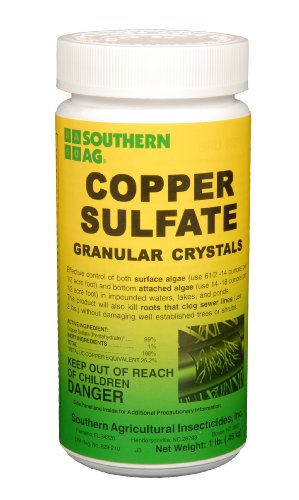
Southern Ag offers a one-pound bag with 99% copper sulfate content, designed to tackle surface algae effectively. This option is suitable for smaller ponds or as a supplemental dose in larger systems. It provides a straightforward application for homeowners seeking manageable, incremental treatment increments.
Buying Guide: Copper Sulfate For Ponds
- Water chemistry and fish safety: Copper sulfate can affect fish, snails, and certain plants. Always measure copper levels and consider fish sensitivity, especially for koi and goldfish. Use the minimum effective dose and avoid treating all vegetation at once to prevent oxygen depletion and stress on aquatic life.
- Pond size and algae type: Large ponds with dense filamentous algae may require granular formulations or multiple applications. For shallow, decorative ponds, avoid high copper doses that could exceed safe thresholds for fish and beneficial organisms.
- Dose timing and environmental conditions: Apply during actively growing algae phases and when water temperatures are conducive (often above 60°F). Avoid windy days to prevent drift and concentrate treatment in a targeted area. Do not apply during fish spawning periods or when aquatic plants are in active growth if possible.
- Product form and dissolution: Granular and crystalline forms differ in dissolution rates. Powders dissolve quickly but require careful mixing. Follow manufacturer directions for ratio, mixing, and dosing intervals to maintain safe copper levels.
- Non-target considerations: Copper can impact other water features, decorative plants, and nearby waterways. Use containment measures to prevent runoff and avoid dosing in streams, wetlands, or areas with sensitive species.
- Alternatives and integration: Consider combining copper sulfate with mechanical controls (skimmers, aeration) and biological controls (native beneficial bacteria) to maintain water quality. In some cases, physical removal of algae mats may be necessary before treatment.
- Legal and safety notes: Some copper formulations are regulated or restricted for certain uses. Always read product labels and local environmental guidelines before application, and store products securely away from children and pets.
When selecting a product, consider pond size, fish population, aluminum and other metal sensitivities in your water, and the likelihood of rapid algal regrowth. The five analyzed options provide a range of dosages, dissolution formats, and application styles to help you tailor treatment to your pond’s needs while prioritizing safety for aquatic life.
For ongoing monitoring, use a simple water test kit to track copper concentration after treatment and adjust future doses accordingly. This approach supports algae control while maintaining healthy oxygen levels and sustaining a balanced pond ecosystem.