When dealing with Japanese beetles, select a strategy that fits your yard, plants, and lifestyle. This guide highlights proven options for home gardens and lawns, ranging from grub control to traps and contact killers. The top picks are suited for different buyers: homeowners seeking year‑round grub control, those wanting easy spray solutions, and gardeners looking for trap-based management to protect roses, fruit trees, and vegetables.
Summary table of selected products:
| Product | Best For | Key Benefit | Notes |
|---|---|---|---|
| St. Gabriel Organics Milky Spore | Long‑term grub control | Season‑long effectiveness; organic and non‑toxic | Single application; best for grub suppression |
| Bonide Japanese Beetle Killer Ready‑to‑Use Spray | Active beetle control on contact | Indoor/outdoor use; broad pest target | Spray-based defense; needs reapplication as needed |
| Spectracide Bag‑A‑Bug Japanese Beetle Trap (Dual Lure) | Yard protection via trapping | Wide coverage; dual lure increases captures | Requires placement away from plants |
| RESCUE! Japanese Beetle Trap – Reusable Bag | Seasonal beetle reduction | Reusable with long attractant cartridge | Bagful catches; monitor bag capacity |
| Catchmaster Japanese Beetle Traps Outdoor 3PK | Large yard protection | Dual lure system; high coverage | Hang in open area away from valued plants |
St. Gabriel Organics Milky Spore Granular Grub Control

Best for homeowners seeking year‑round grub suppression without chemicals. This Milky Spore Granular product is labeled as season‑long and organic, making it suitable for areas with children and pets. It begins working on contact with grubs and requires only a single application when spread with a spreader or by hand. The product’s organic certification supports buyers prioritizing non‑toxic lawn care. A potential limitation is the time needed for noticeable grub suppression and the need for proper distribution for effective results.
Who this is best for: a homeowner who wants an organic, long‑lasting grub solution and can commit to a one‑and-done application year after year.
Why it was selected: It aligns with buyers prioritizing natural lawn care and continuous grub control, reducing beetle populations before adults emerge.
Caution: Effectiveness depends on proper coverage and soil conditions; efficacy is not immediate and may require patience.
Bonide Japanese Beetle Killer Ready‑to‑Use Spray
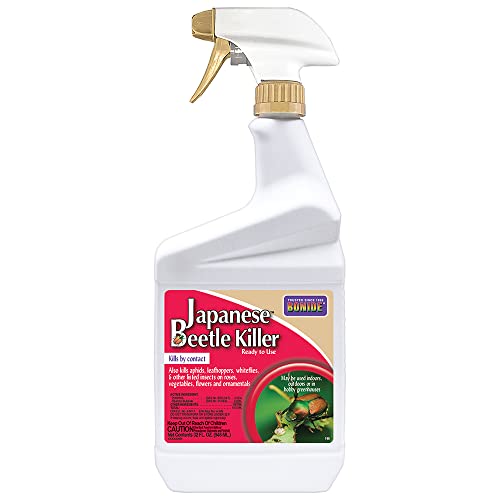
The Bonide spray is best for homeowners needing immediate, on‑contact beetle knockdown both indoors and outdoors. It targets a broad spectrum of pests, including Japanese beetles, aphids, caterpillars, and more, making it a versatile option for mixed gardens and vegetable beds. It’s suitable for use on ornamentals, trees, shrubs, and edible plants. A notable consideration is the requirement to apply when beetles are present and to reapply as needed according to label instructions.
Who this is best for: a gardener who wants quick, flexible control across various plant types and environments.
Why it was selected: It provides direct contact control and is easy to apply in multiple settings, including residential spaces and greenhouses.
Caution: Not a single‑season solution; frequency of reapplication depends on beetle pressure and weather.
Spectracide Bag‑A‑Bug Japanese Beetle Trap (Dual Lure)

This dual lure trap is designed for large outdoor areas, capable of protecting a 5,000 square foot zone. The dual lure system combines a natural sex attractant with a floral lure to attract more beetles than standard traps. It’s best placed away from prized plants to lure beetles away from gardens. A limitation is that traps require proper positioning and maintenance to avoid drawing beetles toward crops rather than away from them.
Who this is best for: homeowners seeking broad yard protection through trapping with enhanced lure effectiveness.
Why it was selected: Its dual lure setup increases beetle capture, potentially reducing adult populations during the beetle season.
Caution: Place traps away from flowers and edible plants to prevent concentrating beetles where you’re growing produce.
RESCUE! Japanese Beetle Trap – Reusable Bag
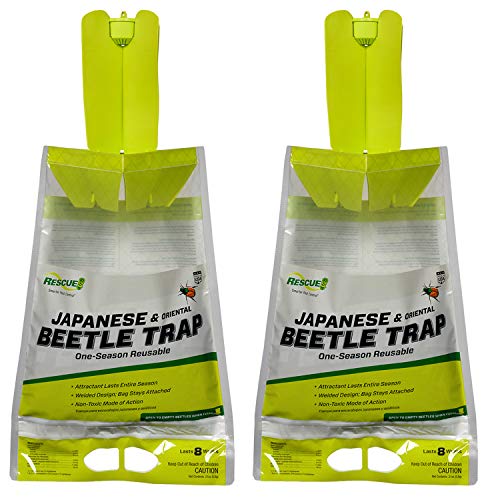
This trap emphasizes reusability with a long‑lasting attractant cartridge and a reusable bag system. It attracts both Japanese and Oriental beetles, helping reduce overall beetle pressure in the yard. The design includes a large capture area where beetles are stunned and drop into the bag. The catch process is straightforward, and the attractant cartridge lasts an entire season. Monitor bag capacity to avoid overflow and reduced effectiveness.
Who this is best for: gardeners who want a reusable trapping option with seasonal attractant longevity.
Why it was selected: It targets multiple beetle species and supports ongoing use across the beetle season without frequent repurchase of attractants.
Caution: Emptying and replacing bags as needed helps maintain effectiveness; overcrowded bags may reduce performance.
Catchmaster Japanese Beetle Traps Outdoor 3PK

The Catchmaster 3PK traps use a dual lure system to attract male and female beetles and are designed for use in large outdoor spaces. They provide easy setup and maintenance, with deterrence for gardens and fruit trees by drawing beetles away from plants. They can cover substantial areas, though placement away from attractions is crucial. Consider combining with other controls for a layered approach during peak beetle activity.
Who this is best for: yards with multiple plants or a desire for a multi‑pack trap solution across a sizable area.
Why it was selected: The multi‑pack option helps cover larger yards and provides consistent beetle capture throughout the season.
Buying Guide
What type of beetle control should you choose?
- Grub control vs. adult beetle control: If your focus is long‑term lawn health, consider grub‑targeted products like Milky Spore for season‑long suppression. If you see beetle activity now, contact sprays and traps can reduce adult damage quickly.
- Organic vs. chemical options: Organic products reduce exposure for families and pets. Chemical sprays may provide faster suppression but require careful timing and labeling compliance.
- Trap placement strategies: Traps are most effective when placed away from gardens to lure beetles away from plants. Avoid clustering traps near ornamentals you want to protect.
- Coverage area: Large yards benefit from traps marketed for wider coverage (e.g., 5,000 sq ft). For smaller spaces, a few well‑placed traps may suffice.
- Combination approach: Use a mix of grub control, spray treatments for active beetles, and traps for ongoing beetle management. Rotating methods over the season can improve results.
Practical tips for buying decisions
- Assess your lawn’s beetle pressure and planting types to determine whether year‑round grub control or active season trapping is best.
- Check product labels for outdoor vs. indoor use, especially if you have houseplants or indoor potted plants near treated areas.
- Consider the number of traps needed for your yard size; bigger areas often require multiple traps or higher‑coverage products.
- Plan for maintenance: some traps require bag changes, emptying, or reapplication of attractants to stay effective.
FAQ
- What is the best overall strategy for control of Japanese beetle in a mid‑sized yard?
Combine year‑round grub control for lawn health with traps to manage adult beetles during peak season. This layered approach addresses both life stages.
- Are Milky Spore products safe around pets and food crops?
Yes, when used as directed. Milky Spore is an organic option designed to be non‑toxic and appropriate for residential areas and edible gardens.
- Can traps attract more beetles to my garden?
Traps should be placed away from valued plants to draw beetles away from gardens. Refrain from placing traps right next to vegetable beds or flowering plants you want to protect.
- How many traps should I buy for a typical 1/4 to 1/2 acre yard?
Two to four traps are common for medium yards, with larger properties benefiting from additional units. Consider product coverage estimates to guide placement.
- Do I need to remove beetles from traps daily?
Not daily, but monitor trap bags and empty or replace as needed to maintain effectiveness and prevent overflow.