Answer: For patios, a penetrating or low-gloss sealer that protects against water, freezes, and UV exposure while preserving natural stone or concrete looks is ideal. This guide highlights top options, who they’re best for, and what to consider before buying. Suitable buyers include homeowners seeking long-lasting outdoor protection, DIY enthusiasts needing easy application, and professionals handling porous stone, pavers, or concrete surfaces.
Summary table of selected products:
| Product | Brand | Format / Coverage Type | Best For | Notes |
|---|---|---|---|---|
| Shabebe Premium Stone Sealer, 1 Gallon | Shabebe | 1 Gallon – High-Gloss Wet Look | Natural stone surfaces on patios, driveways, and pavers | Not suitable for polished stone or tile; test area advised |
| Armor AR350 Low Gloss Wet Look Sealer, 5 Gallon | Foundation Armor | 5 Gallons – Low Gloss Wet Look | Exterior concrete and pavers needing color enhancement | Solvent-based; provides dramatic color; long-lasting |
| McKinnon Concrete Sealer, 5 Gallon | McKinnon Materials | 5 Gallons – Semi-Gloss Wet Look | Wide substrate range incl. concrete, stone, brick | Water-based; durable; no peeling |
| 1 Gallon Concrete Sealer, OAIEGSD | OAIEGSD | 1 Gallon – Water-Based Silane/Siloxane | Outdoor driveways, patios; water resistance | Zero-VOC; penetrating; long lifespan |
| Siloxa-Tek 8500 Ready to Use, 1 Gallon | Ghostshield | 1 Gallon – Penetrating Silane/Siloxane | Concrete, brick, masonry; natural look preserved | DOT approved; breathable; non-film forming |
Shabebe Premium Stone Sealer, 1 Gallon

The Shabebe sealer delivers a high-gloss wet look that heightens color vibrancy and provides a mirror-like finish. Best for patios and garden spaces where a striking aesthetic is desired. It is waterproof and UV resistant, adding protection against fading and surface degradation. It is not suitable for polished stone or tile, so use on porous stone and concrete surfaces only. Application is versatile via spray, roller, or brush, with a quick-dry time of about 30+ minutes.
Best for: homeowners seeking a dramatic, glossy finish on natural stone surfaces and pavers. Choose this if you want a strong visual impact and a single-coat, easy-application process. Caution: test a small area first to verify adhesion and finish on your specific stone.
Armor AR350 Low Gloss Wet Look Concrete Sealer 5 Gallon

This professional-grade solvent-based sealer provides a dramatic color enhancement with a low-gloss finish. It is designed for unsealed concrete and pavers or surfaces previously sealed with a solvent-based acrylic sealer. The coating offers long-lasting protection against abrasion, water, salts, UV exposure, and more. Best for: commercial or residential projects needing a durable, wet-look finish without high gloss. Better for: those prioritizing strong color depth and longevity. Limitation: solvent-based formulas require good ventilation and surface compatibility checks.
McKinnon Concrete Sealer, 5 Gallon

The McKinnon sealer is an industrial-grade, water-based penetrating sealant compatible with a wide range of substrates including concrete, pavers, natural stone, brick, flagstone, stucco, and pool decks. It emphasizes durability and prevents peeling or cracking, aimed at both indoor and outdoor use. Best for: professionals or DIYers needing broad substrate compatibility and a dependable, penetrating seal. Caution: as a semi-gloss wet look, some customers may prefer lower sheen on certain stone textures.
OAIEGSD 1 Gallon Concrete Sealer

This water-resistance penetrating sealer uses a zero-VOC formula to form a protective barrier, reducing water absorption and staining. It aims to extend surface lifespan and resist freeze-thaw damage. Best for: homeowners seeking invisible protection that preserves the natural look while guarding against oil, grease, and chemicals. Limitation: being penetrating, it may require longer cure times for full protection in high-traffic areas.
OAIEGSD 1 Gallon Bricks & Exterior Surfaces Sealer

This all-weather penetrating sealer is designed for exterior surfaces like driveways, pavers, and bricks. It resists peeling and fading while providing water resistance and enhancing the natural color of concrete and bricks. Best for: exterior projects where long-term protection against rain, snow, and UV is needed. Caution: check compatibility with stamped concrete or decorative finishes to avoid undesired effects.
Armor SX5000 WB Natural-Look Sealer

This professional-grade silane/siloxane sealer reduces water absorption by up to 95% without changing look or color. It works on concrete, brick, pavers, bluestone, flagstone, slate, natural stone, and masonry. Best for: those who want effective water repellency with a natural appearance. Limitation: some projects may require multiple coats for optimal water contact reduction depending on substrate porosity.
Siloxa-Tek 8500 Ready to Use – 1 Gallon
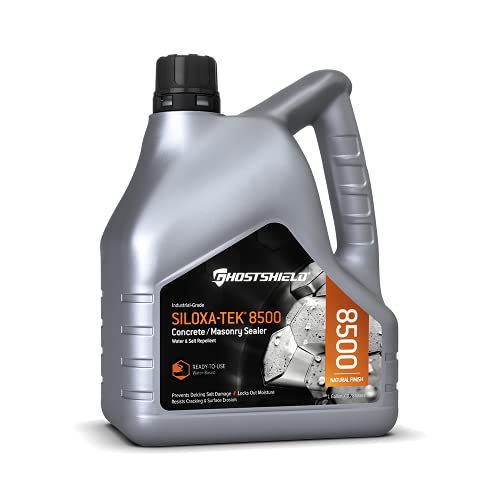
Siloxa-Tek 8500 is a breathable, penetrating silane/siloxane sealer that preserves the natural look. It resists water and salt exposure, and is DOT-approved. It is designed to reduce cracking and surface degradation from freeze-thaw cycles. Best for: projects needing long-lasting protection with minimal visual change. Caution: as a penetrating sealer, it does not provide a high-gloss finish and is best when a natural look is preferred.
Buying Guide for Concrete Sealers For Patios
What should you consider before buying?
- Type: penetrating (silane/siloxane) vs film-forming (acrylic). Penetrating sealers preserve appearance and are often low-maintenance; film-forming sealers can add color and gloss but may require more maintenance over time.
- Gloss level: choose high-gloss for a dramatic look or low-gloss to maintain a natural appearance. For high-traffic patios, a lower gloss can hide wear better.
- Substrate compatibility: ensure the product works on your surface (concrete, brick, natural stone, pavers, or stamped concrete). Some formulas are not ideal for polished stone or tile.
- Water and chemical resistance: consider UV protection, freeze-thaw resilience, and resistance to salts or oil stains.
- VOC and odor: zero-VOC or low-VOC formulas are preferable for indoor outlets or sensitive spaces, but outdoor projects may allow stronger products with proper ventilation.
- Application method: spray, roller, or brush compatibility; some products are designed for professionals, others for DIY use with simpler steps.
- Cure time and recoat window: check drying times between coats and the time needed before foot or vehicle traffic can resume.
- Maintenance: some sealers require reapplication every few years, while others last longer; consider your willingness to re-seal periodically.
How to compare products quickly?
- Look for “wet look” or “natural look” descriptions to match your desired appearance.
- Prioritize products with proven protection against water, salts, and UV exposure for outdoor patios.
- Note substrate limitations, such as “not for polished stone,” to avoid incompatibility.
Frequently Asked Questions
- What is the difference between penetrating and film-forming sealers?
– Penetrating sealers enter the surface to repel water and stains while preserving the natural look; film-forming sealers create a coatings layer that can add color or gloss but may need maintenance to prevent peeling. - Do sealers prevent cracking from freeze-thaw cycles?
– They help by reducing water absorption, which minimizes freeze-thaw damage, but they do not permanently stop cracking on severely damaged substrates. - Can I apply sealer on previously sealed surfaces?
– Some sealers are formulated for use on previously sealed or unsealed surfaces; always follow product guidelines and consider surface compatibility tests. - How long should patio surfaces dry before use after sealing?
– Dry times vary; some products dry in 30 minutes to a few hours. Allow full cure time as specified by the product before heavy use. - Is there an eco-friendly option for outdoor patios?
– Yes, zero-VOC or low-VOC penetrating sealers are available and suitable for outdoor use with reduced emissions. - Will sealers change the color or texture of my patio?
– Penetrating sealers typically do not alter color significantly, while some film-forming or gloss-enhancing products will darken slightly or add sheen.