To extend your growing season and protect plants from cold snaps, a cold frame planter box is a practical choice. This guide highlights five reliable options suited for hobbyists and serious balcony or small-yard gardeners alike. Each product is examined for durability, ventilation, insulation, and ease of use, helping you pick the right model for your climate and gardening needs.
Summary of Selected Products
| Product | Best For | Key Benefit | Potential Limitation |
|---|---|---|---|
| Backyard Discovery Aggie 4′ x 2′ Cedar Wood Cold Frame | Year-round outdoor gardening | Temperature-activated lid, solid insulation | Requires external protection in extreme weather |
| MCombo 2-Tier Wooden Cold Frame Garden Greenhouse (Dark Grey) | Versatile height adjustments | Adjustable shelf and openable roof | Wood needs maintenance over time |
| Outsunny Wooden Cold Frame Greenhouse (Gray) | Balanced ventilation and protection | Top vent, slanted roof for drainage | Smaller footprint may limit large plants |
| Outsunny Raised Garden Bed with Polycarbonate Greenhouse (Gray) | Raised-bed versatility | Dual-use cover and polycarbonate insulation | Assembly can be involved |
| DREAMADE Wood Cold Frame Greenhouse (40” x 21” x 28”) | Compact indoor/outdoor use | Four sizes, UV-protected cover | Smaller footprint limits mature plants |
Backyard Discovery Aggie Cedar Wood Cold Frame

The Backyard Discovery Aggie is a compact cedar wood cold frame designed for year-round outdoor use. Its temperature-activated polycarbonate lid automatically opens when temperatures rise above 70℉ and closes as conditions cool, eliminating the need for electricity. This makes it well-suited for gardeners who want a hands-off lid mechanism during warm spells and a stable microclimate for seedlings during cooler periods.
Best for: Home gardeners who want a low-maintenance, automated lid solution and durable cedar construction for outdoor use. The 5-year industry-leading warranty adds long-term peace of mind for those investing in a long-lived frame.
Why selected: The automatic lid feature minimizes daily adjustments and reduces heat buildup risk on sunny days while retaining heat when needed. The cedar frame provides natural resistance to outdoor weather and adds aesthetic value to any garden or patio.
Caution: The lid mechanism relies on heat; in extremely cloudy or consistently cool environments, lid opening may be slower, and you should monitor for adequate airflow on overcast days.
MCombo 2-Tier Wooden Cold Frame (Dark Grey)

The MCombo 2-Tier model offers adjustable height with four preset screw holes and the option to customize shelf height. Its openable roof and adjustable vent placements help tailor ventilation to fluctuating weather, ensuring a healthy microclimate for a range of plant types. A water drainage groove design helps shed rainwater, enabling outdoor use even during wetter seasons.
Best for: Gardeners who want flexible shelf height and a customizable ventilation system to fit different plant families and weather conditions. The two-tier design expands growing space without increasing the footprint.
Why selected: The combination of adjustable shelving, roof openness control, and rain drainage features makes this model highly adaptable for seedling trays, herbs, and small vegetables.
Caution: Wooden frames require periodic maintenance to prevent rot and scuffs, especially in humid environments. Regularly check hardware where screws secure shelves and roof supports.
Outsunny Wooden Cold Frame Greenhouse (Gray)
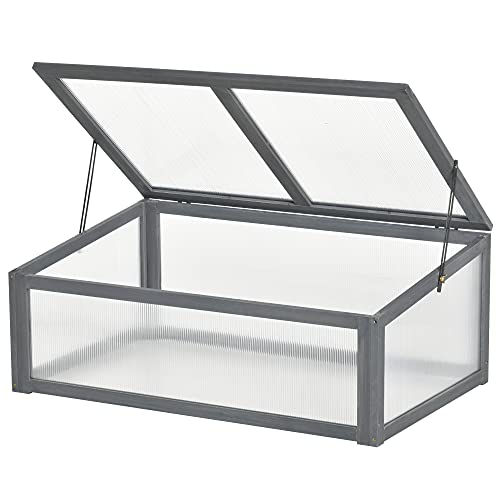
This Outsunny model combines a wooden frame with polycarbonate panels to shield plants while letting through essential sunlight. A top vent allows fresh air, supporting healthy growth during warmer periods, and the slanted top helps runoff rain to prevent water accumulation on the frame.
Best for: Gardeners seeking a balance between light transmission and insulation with reliable ventilation in a compact footprint. It suits patios, balconies, or small yards where space is at a premium.
Why selected: The slope design and openable top support consistent airflow and drainage without requiring energy inputs, aligning with low-maintenance outdoor setups.
Limitation: The wooden frame may need seasonal sealing or treatment to maintain longevity in harsher climates.
Outsunny Raised Garden Bed with Polycarbonate Greenhouse (Gray)

This raised garden bed includes a cover system that can be used standalone or with the bed, making it versatile for vegetables, fruits, herbs, and flowers. The openable roof provides ventilation to keep roots and foliage comfortable, while the polycarbonate sheets help plants absorb sunlight and stay protected from wind and rain.
Best for: Gardeners wanting a ready-to-use raised bed with a protective polycarbonate greenhouse for seasonal extension and simple maintenance.
Why selected: The dual-use design maximizes space efficiency and offers straightforward integration into existing beds. The polycarbonate insulation supports a stable growing environment across seasons.
Limitation: Assembly can be more involved due to multiple components required for the bed and the cover system.
DREAMADE Wood Cold Frame Greenhouse (40”x21”x28”)

The DREAMADE cold frame offers four size options to fit different growing spaces, including patios or balconies. It features a transparent, UV-protected cover to shield seedlings from harsh sun while preserving light transmission. The unit is designed for tool-free setup and portable use, with a modular frame that is easy to disassemble for storage or transport.
Best for: Small-space gardeners who need a compact, portable greenhouse solution that can be moved between indoor and outdoor spaces. The UV-protected cover supports tender plants in bright conditions.
Why selected: The four available sizes enable customization to fit balconies, decks, or sunrooms, while the no-tool assembly reduces setup time for seasonal use.
Limitation: The compact footprint may limit the growth of larger plants or extensive seedling trays as plants mature.
Buying Guide
What should you consider before buying a cold frame planter box?
Climate and season: If you live in regions with harsh winters, prioritize models with strong insulation, a tight lid, and good drainage. For mild climates, openable roofs and adjustable vents offer flexible airflow.
Size and footprint: Measure your growing space carefully. Pick a model that fits without overcrowding sidewalks, patios, or balcony rails while still providing enough space for your crops.
Material and durability: Wood frames look natural and insulate well but require maintenance. Cedar, pine, or treated woods resist rot better than untreated options. Polycarbonate panels provide light transmission with insulation and UV protection.
Ventilation and temperature control: Look for top vents, adjustable side vents, and lids that open automatically or manually. A reliable ventilation system reduces the risk of mold and heat stress on plants.
Water management: Raised edges, drainage grooves, and sloped roofs help prevent water pooling. Consider integrated drainage features if you expect frequent rain.
Mobility and assembly: If you need portability for seasonal moves or storage, choose a model described as portable or tool-free for quick setup and takedown.
What is the best choice for beginners?
For beginners, a cedar or wooden frame with a simple, auto-opening lid or top vent offers a forgiving learning curve and straightforward maintenance. The combination of easy assembly and clear protection helps new gardeners gain confidence while learning how to regulate microclimates for seedlings.
What should you avoid?
Avoid models with overly complex assemblies or those lacking ventilation options. Unprotected wooden frames in damp climates can deteriorate quickly, and polycarbonate sheets that lack UV protection may discolor over time, impacting light transmission.
Maintenance tips
- Seal wooden frames or treat them seasonally to extend life in wet climates.
- Regularly inspect hinges, vents, and screws for stability and proper operation.
- Clean polycarbonate panels to maintain light transmission; avoid abrasive cleaners.
- Monitor soil moisture and provide adequate drainage to prevent root rot.
Frequently asked questions
- What is a cold frame planter box best used for? – It extends the growing season by creating a warmer microclimate for seedlings and cool-season crops.
- Do cold frames require electricity? – No. Most use passive insulation and vents, with some models offering automatic lids that respond to temperature.
- Can I use a cold frame indoors? – Some models are portable and suitable for sunrooms, balconies, or greenhouses; verify dimensions and ventilation for indoor use.
- What maintenance do they require? – Regular sealing of wooden parts, cleaning of polycarbonate panels, and checking ventilation and drainage components.
- Are there wind considerations? – In windy areas, look for sturdier frames and sealed joints to prevent tipping or panel damage.