Erosion control is essential for protecting hillsides, riverbanks, and construction sites. This guide highlights top coir and natural-fiber fabrics that prevent soil loss, support seed germination, and stabilize slopes. Each product features durable materials, moisture retention, and suitability for environmental restoration projects. Read on to compare options and choose the right fabric for your site, whether you’re working on highways, landscaping, or coastal protection.
Buying Guide Snapshot:
| Product | Material | Best For | Coverage |
|---|---|---|---|
| Sandbaggy Coconut Erosion Control Blanket (1 Roll) | 100% Coconut Fiber | Steep slopes, DOT projects | 450 sq ft |
| Jute Erosion Control, Soil Saver Mesh Blanket | Premium Jute | Soil protection, biodegradable cover | 240 sq ft |
| Sandbaggy Coconut Erosion Control Blanket (2 Rolls) | 100% Coconut Fiber | Hillside and large-scale stabilization | 900 sq ft |
| Sandbaggy Jute Netting Roll | Jute Netting | Rapid erosion stop, landscaping | 1 Roll |
| Sandbaggy Coir Mat (4 ft x 80 ft) | Coconut Coir | Long-term soil retention | ~320 sq ft |
Sandbaggy Coconut Erosion Control Blanket — 1 Roll
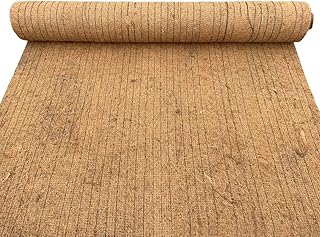
This erosion-control blanket is built from 100% coconut fiber, designed to stabilize steep slopes while supporting natural seed germination. Contractors and government projects trust it for 1:1 slope stabilization, making it suitable for hillside protection, construction sites, and eco-restoration landscaping. Its moisture-retentive matrix helps seeds establish and native vegetation to take root, reducing runoff and sediment loss in environmentally sensitive zones. The blanket balances durability with permeability to allow gas exchange and root growth as vegetation reclaims the soil.
Jute Erosion Control, Soil Saver Mesh Blanket

This product uses premium jute to deliver a biodegradable erosion-control blanket with robust soil protection. The 48-inch width and 20-yard length cover about 240 square feet, offering extensive shielding from wind and water. Jute’s natural composition supports gradual decomposition, enriching the soil as plants establish. It provides a reliable, eco-friendly option for landscape and gardening projects seeking a natural aesthetic while meeting erosion-control requirements.
Sandbaggy Coconut Erosion Control Blanket — 2 Rolls
The dual-roll package doubles the coverage to about 900 square feet, maintaining the same 100% coconut-fiber composition for erosion-control and seed establishment. This option is well-suited for larger slopes, hillside protection projects, or highway corridors where sustained stabilization is required. Like the single-roll variant, it emphasizes moisture retention to promote rapid vegetation growth and sediment anchoring, supporting long-term soil health and site resilience.
Sandbaggy Jute Netting Roll — 4 Ft x 225 Ft

This heavy-duty jute netting is designed to stop erosion quickly on slopes, hills, and drainage areas. Made from natural, biodegradable fibers, it decomposes over time, enriching the soil without leaving synthetic residues. Its durability supports stabilization against heavy rain and wind, while still enabling plant growth beneath and through the netting. For sites requiring a fast-acting, eco-friendly blanket, this option provides a straightforward application with solid coverage across moderate-to-large areas.
Sandbaggy Coir Mat — Erosion Control, 4 ft x 80 ft

This coir mat provides long-lasting erosion control for hillsides, riverbanks, and coastal edges. With a homeowner-friendly size of 4 by 80 feet, it offers substantial coverage and durability, claimed to last 2–5 years depending on site conditions. Coir fibers resist degradation better than straw blankets, supporting vegetation restoration and slope recovery while offering a robust barrier against soil displacement in challenging environments.
Buying Guide
- Material and biodegradability: Coir and jute fibers provide natural erosion control with varying degradation rates. Coir generally lasts longer in harsh weather, while jute is highly biodegradable and blends seamlessly with soil during restoration.
- Durability and coverage: For large slopes, consider multi-roll options or wider blankets. Coverage is a practical proxy for project scope—calculate total square footage needed and choose packages accordingly.
- Moisture retention and seed growth: Fabrics designed to retain moisture support seed germination and native vegetation. Look for products that explicitly mention moisture retention in their features.
- Slope compatibility: Check slope stabilization ratings (e.g., 1:1 slope) and select blankets proven for the intended gradient and soil type.
- Environmental impact: Favor biodegradable options if long-term site ecology and residue-free decomposition are priorities. Biodegradable fabrics reduce landfill waste and support soil health.
- Application context: For highway projects or government work, choose products with contractor-approved performance and field-tested credibility to meet regulatory requirements.
- Maintenance and installation: Some fabrics require fasteners or anchors for stability on steep slopes. Review installation guidance to ensure proper anchoring and effective erosion control.
- Long-term performance: Consider expected service life. Coir-based mats typically offer extended lifespan over straw, which may influence overall project cost and maintenance cycles.