Ciber-coir substrates made from coconut fiber offer a lightweight, renewable option for potting soils and terrarium bedding. This article highlights top coconut coir products, comparing water retention, aeration, and ease of use to help American gardeners and reptile enthusiasts choose the right substrate for healthy roots and thriving habitats.
The following table provides a quick snapshot of five highly relevant coconut coir substrates, including their brand and primary use cases.
| Product | Brand | Primary Use | Notes |
|---|---|---|---|
| Halatool Organic Coco Coir Brick | Halatool | Planting medium, seed starting | Low EC & pH balanced; easy expansion |
| Organic Coco Coir Brick | Miuwauer | Potting mix and garden soil replacement | Excellent water retention; good aeration |
| Legigo Pack of 10 Coco Coir Bricks | Legigo | Planting mix for herbs and houseplants | Low EC & pH balanced; high scalability |
| ZeeDix 2 Pack Coconut Fiber Substrate | ZeeDix | Terrarium bedding for reptiles | Natural, low salt; odor absorption |
| Zoo Med Eco Earth Loose Coconut Fiber | Zoo Med | Naturalistic terrarium substrate | Moisture-balancing for tropical setups |
Halatool Organic Coco Coir Brick For Plants

Halatool’s organic coco coir brick is crafted from coconut husk fibers and designed as a clean, soil-free planting medium suitable for flowers, seedlings, and small crops. The brick weighs about 1.4 pounds and measures roughly 7.8 x 3.9 x 1.97 inches. It expands dramatically when soaked and provides excellent drainage, helping prevent root oversaturation. The product emphasizes ease of use and storage, as a compressed brick that can be broken apart for mixing with other substrates.
Key features include natural organic composition, high water absorption (soaking expands the brick up to eight to ten times its weight), and suitability for seed starting and soil-less cultivation. The zero-dirt presentation makes it a clean option for indoor gardening or reptile habitats where soil-based substrates are less desirable.
Reference highlights: natural coconut fiber, low dirt content, effective expansion on hydration, lightweight and packable for storage, and compatibility with various cultivation containers. For best results, soak the brick in water, crumble, drain excess moisture, and mix with other substrates as needed.
Miuwauer Organic Coco Coir Brick

Miuwauer’s premium coco coir brick emphasizes superior water retention and aeration. Each brick expands to create a porous, well-ventilated growing medium ideal for outdoor plantings, seed starting, and container gardening. The product is derived from coconut fiber husks and is marketed as a renewable alternative to traditional soil. The brick dimensions are similar to other bricks, around 7.8 x 3.9 x 1.6 inches, with a weight near 1.3 pounds.
Highlights include enhanced water retention to maintain consistent soil moisture, improved aeration to help root systems absorb nutrients, and a sustainable, recyclable profile. This mix is suitable for a range of applications, including houseplants, herbs, vegetables, and decorative greenery. Users can expect a soil-like texture after expansion, which then supports a range of planting scenarios when combined with other soil amendments.
Reference points: strong moisture control, breathable structure, and renewable sourcing from coconut fiber. For optimal results, fully hydrate the brick, mix with complementary substrates as needed, and monitor moisture to prevent overwatering.
ZeeDix Coconut Fiber Substrate For Reptiles
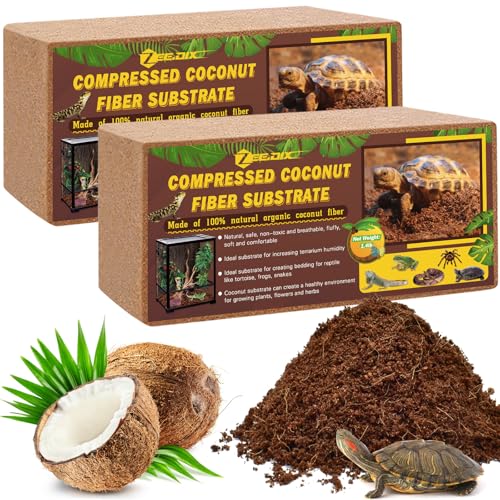
ZeeDix provides a two-pack of coconut fiber substrate bricks, each sized 7.8 x 3.9 x 1.97 inches and weighing about 1.4 pounds. This product is designed for reptile terrarium bedding, supporting burrowing and natural behaviors for species such as bearded dragons, tortoises, geckos, and snakes. The substrate is 100% natural coconut fiber, low in EC and balanced pH, and biodegrades over time, making it suitable for disposal in outdoor gardens. A notable feature is its odor-absorbing capacity, helping maintain a cleaner habitat for inhabitants.
Usage considerations include washing prior to first use to reduce residual salts, particularly when worms or dew organisms are involved. The packaging emphasizes biodegradability and compostability, enabling more sustainable disposal after use. This substrate is well-suited for ecosystems that mimic tropical soil conditions while offering practical odor and waste management.
Legigo 10 Pack Organic Coco Coir Bricks

Legigo offers a 10-pack of compressed coconut coir bricks, designed as a versatile planting medium. Each brick measures about 8 x 4 x 2 inches and weighs roughly 1.4 pounds. The substrate is described as low EC and pH balanced, making it suitable for herbs, flowers, and houseplants. It expands quickly when hydrated, creating a fluffy, well-draining base ideal for seed starting and transplanting seedlings. The product emphasizes long-term usability, with the coir remaining functional for an extended period before needing replacement.
Key considerations include multi-pack value for bulk planting projects, ease of storage due to compressed form, and robust aeration and drainage properties. This product supports a wide range of garden applications—from herbs to ornamental plants—while offering consistent quality across bricks for standardized mixing.
Zoo Med Eco Earth Loose Coconut Fiber

Zoo Med Eco Earth is an all-natural, loose coconut fiber substrate designed for naturalistic terrarium setups. The product is sold as an 8-quart package (pack of 2) and is suitable for reptiles, amphibians, and invertebrates. It absorbs moisture and breaks down odor and waste, supporting humidity control in tropical terrariums. Users can layer Eco Earth with other substrates to create a drainage foundation and maintain suitable microclimates for plant growth and animal health.
Key advantages include its natural composition, odor control, and compatibility with humidity-loving species. It is particularly well-suited for terrarium environments that require a soft, absorbent substrate that still offers a stable base for plantings and decor. As with other coconut coir products, proper hydration and mixing with water are necessary to achieve the desired texture before use.
Buying Guide: Key Purchase Considerations For Coconut Coir Substrates
- Hydration and expansion: Most bricks require soaking to expand. Verify the expected volume after hydration to plan for container size and plant load.
- EC and pH balance: Low EC and balanced pH support healthy nutrient availability. This is especially important for seed starting, houseplants, and container gardens.
- Moisture retention vs drainage: Substrates vary in water-holding capacity. Choose based on plant needs—high retention for seedlings, balanced for succulents and tropical plants, or for terrarium humidity control.
- Aeration and texture: A sponge-like structure improves air reach to roots and prevents compaction, which reduces root rot risk.
- Eco-friendliness and disposal: Coconut coir is renewable and compostable. Consider products that emphasize biodegradability, especially for pet habitats and outdoor use.
- Pre-treatment: Pre-rinsed or pre-screened options reduce dust and impurities, improving growing conditions and plant health.
- Use cases: Determine whether the substrate will be used for soil-less seed starting, potting mixes, or terrarium bedding to guide brick size and packing.
- Storage and shelf life: Compressed bricks store compactly; verify packaging integrity to prevent moisture ingress during storage.
- Compatibility with other substrates: In some setups, coir is combined with perlite, vermiculite, or compost to tailor drainage and nutrient availability.
Overall, selecting a coconut coir substrate depends on the specific application—seed starting vs long-term plantings, indoor gardening vs terrarium environments, and the desired balance of moisture management and airflow. Evaluating product specs and user reviews helps ensure you choose a substrate that aligns with your growing conditions and maintenance preferences.