Answering the need for reliable, low-maintenance poultry hydration, these automatic waterers keep water fresh, reduce waste, and free you from constant refilling. They’re ideal for small backyard coops and farms, especially for buyers who travel, work long hours, or want hands-off hydration for flocks of varied sizes. The top picks cover hanging, ground-standing, and cup-style designs to fit diverse coop layouts and climates. Below, select five options that balance capacity, leak prevention, and ease of setup. A quick buying table follows to help you compare at a glance.
| Product | Best For | Why It Stands Out |
|---|---|---|
| Lilyang Automatic Chicken Waterer 3 Gallon | Small to mid-size flocks | Float-controlled, high capacity, leak-resistant design |
| Lilyang Automatic Chicken Waterer (Ground/Leg Design) | Coops without perfect mounting | Ground-ready with long hose, sturdy controls |
| Erinaik 3 Gallons Automatic Waterer | Multiple birds, ease of use | Dual cups, spill-free flow, multiple drinkers |
| INNOLAND Chicken Feeder and Waterer Set | Combo systems in one unit | No-waste design, 3 feeding ports, 4 drinking ports |
| MAYKI Chicken Feeder & Waterer Set | Backyard flocks with mounting flexibility | 3 gal waterer, 26 lb feeder, versatile mounting |
Lilyang Automatic Chicken Waterer 3 Gallon — Float-Control

The Lilyang 3-gallon waterer uses a float-controlled valve to open water flow when needed and close when full, reducing spills and keeping water clean. This model is best for mid-sized flocks that need dependable, continuous hydration without daily attention. It supports 3/4″ faucet connections and hoses, making it compatible with standard garden setups. The system emphasizes a leak-proof seal with industrial-grade components and reinforced joints, helping bedding stay dry and water waste stay low. Note that full efficiency depends on secure mounting and proper hose connections.
- Best for: Small to medium coops needing reliable automatic fill and spill prevention.
- Why chosen: Robust float mechanism and high-capacity reservoir reduce refills and keep water clean.
- Caution: Ensure external threads are sealed with PTFE tape for a waterproof connection.
Lilyang Automatic Chicken Waterer — Ground/Leg Design

This version adds ground-placed operation with tall legs, letting you position the float valve waterer directly on the coop floor without needing a wall mount or nearby faucet. It includes a long, 60-inch stainless steel hose with a 3/4-inch thread to connect to hoses or faucets. Best for coops lacking specific wall space or where hose routing is easier. A key benefit is flexibility in placement, though you should watch for leaks around fittings and periodically inspect the valve and hose integrity.
- Best for: Coops without suitable mounting space or with distance from a faucet.
- Why chosen: Flexible placement and included long hose simplify installation in varied layouts.
- Caution: Ground positioning requires stable support and protection from freezing temperatures in cold climates.
Erinaik Chicken Waterer Cups — 3 Gallons

The Erinaik system combines a 3-gallon reservoir with five cups, using a dual float-control setup to stop water flow when full and lift cups as water drops. This makes it ideal for small-to-medium flocks that drink from multiple cups at once. The design emphasizes spill-free operation and consistent hydration, with the cups sized to accommodate several birds at the same time. A limitation to consider is the potential for cups to clog if debris enters the line; regular inspection helps maintain performance.
- Best for: Backyards hosting several birds that drink from multiple cups simultaneously.
- Why chosen: Dual float-control reduces overflow and ensures even distribution of water.
- Caution: Regular cleaning of cups helps prevent clogs and sediment buildup.
INNOLAND Chicken Feeder and Waterer Set — 3 Gal/26.5 lb

This set pairs a 3-gallon drinking bucket with a 26.5-pound feeder bucket and a total of three feeding ports and four drinking cups. It’s well-suited for buyers who want an all-in-one solution that minimizes refills and directs birds to separate food and water sources. The design emphasizes anti-waste features, a rainproof top, and anti-drip water cups to keep the coop cleaner. Limitations include the larger footprint and the need for stable support to prevent tipping when birds perch on the top.
- Best for: Coops needing a combined water and feed solution with reduced waste.
- Why chosen: Comprehensive, multi-port design supports multiple birds while limiting spillover.
- Caution: Monitor stability on uneven coop floors and ensure lids seal properly to keep feed dry.
MAYKI Chicken Feeder and Waterer Set — 3 Gallon
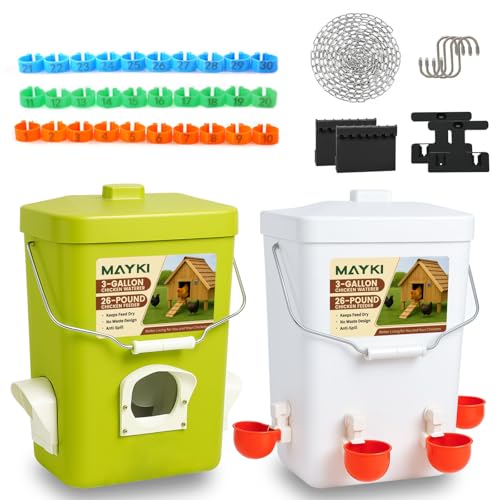
The MAYKI set blends a 3-gallon waterer with a 26-pound feeder and multiple mounting options. This flexibility makes it suitable for various coop styles, including hanging, wall-mounted, or fence-mounted setups. It’s designed to minimize waste through anti-perch ports and improved flow control. The 4-in-1 mounting system means installation can adapt to changes in your coop layout. A potential drawback is the need to confirm compatibility with your specific coop hardware and mounting hardware in advance.
- Best for: Backyard flocks with varied coop configurations seeking mounting flexibility.
- Why chosen: 4-in-1 mounting options accommodate different coop designs and locations.
- Caution: Check that mounting hardware aligns with your coop structure to prevent wobble or tipping.
Buying Guide: Key Considerations for Automatic Chicken Waterers
What capacity do you need? For small flocks, 3-gallon systems typically last a day or two between fills, while larger flocks benefit from higher capacities or multiple cups to prevent skimping on water. Consider how many birds you have, their drinking habits, and your refill schedule.
Which design fits your coop layout? Floating cups, wall-mounted units, or ground-level designs each suit different spaces. If you lack a nearby faucet, ground-placed or hose-friendly models can simplify installation. If you have a coop with restricted space, compact bucket-and-cup systems may be ideal.
Leak prevention matters. Look for reinforced joints, high-quality seals, and leak-tested connections. Cups and float valves should be easy to clean, since debris can lead to clogging and reduced water flow. PTFE tape or gasket seals improve waterproofing on external threads.
Maintenance and cleaning. Units with removable cups and accessible valves are easier to clean. Regular checks of hoses, fittings, and float mechanisms help maintain reliable hydration and reduces waste.
Materials and safety. Choose BPA-free plastics and corrosion-resistant components. Ensure the system is stable on your coop floor or wall to prevent tipping and animal interference. If you live in freezing climates, consider designs that resist freezing or are easy to drain in winter.
Frequently Asked Questions
- How does a float-controlled waterer work? It uses a float valve to regulate water flow, opening to fill and closing when at the desired level to prevent overflow.
- What size waterer is best for my flock? For up to 5-6 chickens, a 3-gallon unit is typically sufficient; larger flocks may require bigger capacity or multiple units.
- Are automatic waterers leak-proof? Reputable designs use reinforced seals and sturdy joints; regular inspection helps maintain leak prevention.
- Can these systems be used with heated water in winter? Some models permit connection to heating options or can be combined with heated pads; check model specifics and safety guidelines.
- Do I need special tools to install? Most are designed for straightforward setup with standard hoses or fittings; some may require basic tools for mounting.
- How often should I clean the cups or valves? At least weekly in busy coops; more frequent cleaning reduces algae, sediment, and blockages.