Finding cost-effective vertical shaft engines for lawn mowers requires balancing reliability, engine size, and starting performance. The following selections emphasize value while covering a range of horsepower and displacement. Each model features a vertical shaft design suitable for standard push mowers and compatible replacements. Review the features to identify which engine best fits your mower and maintenance preferences.
| Product | Brand | Displacement | Key Features |
|---|---|---|---|
| Aceup Energy Gas Engine Vertical Shaft | Aceup Energy | 173cc | 4-stroke OHV, primer, EPA compliant |
| Briggs & Stratton 104M02-0197 | Briggs & Stratton | 163cc | Flywheel brake, push mower compatible |
| Briggs & Stratton 9P602-0139 | Briggs & Stratton | 140cc | Flywheel brake, push mower design |
| Briggs & Stratton 14D932-0110-F1 | Briggs & Stratton | 223cc | ReadyStart/OHV, commercial-grade air management |
| Briggs & Stratton 44S977-0032-G1 | Briggs & Stratton | 25 GHP equivalent | Dura-bore cast iron sleeve, full lubrication |
Aceup Energy 4.4HP Vertical Shaft Engine

The Aceup Energy vertical shaft engine delivers a compact 173cc displacement with a 4-stroke OHV design. It features a recoil start, primer enrichment, and a small 0.9-gallon fuel tank for short-duty mowing tasks. Its shaft measures 7/8 inch in diameter with a length of 3.16 inches and includes a 3/8-24 UNF end, making compatibility straightforward for many lawn mower models. The engine’s lightweight configuration supports easy handling, while EPA compliance aligns with typical American lawn care standards. This option emphasizes ease of starting and reliable idle performance for budget-conscious buyers.
Briggs & Stratton 104M02-0197 Vertical Shaft Engine

This 163cc Briggs & Stratton vertical shaft engine focuses on durability and mower compatibility. It uses a flywheel brake system to provide a controlled stopping mechanism, which can be a convenience for push mowers during operation. Designed for mowers with 7/8 x 3-5/32 inch crankshafts, it integrates a flywheel brake with a robust crank arrangement. The engine is built for simple routine maintenance and long engine life, with a compact footprint suitable for a variety of mower frames. It’s a practical option for those seeking a reliable replacement engine on a tight budget.
Briggs & Stratton 9P602-0139 Vertical Shaft Engine

With 140cc displacement, the 9P602-0139 is a lightweight vertical shaft option tailored for push mowers. It uses a 7/8 inch x 3-5/32 inch crankshaft and includes a flywheel brake system to support controlled operation. The compact design reduces weight, facilitating easier maintenance and installation on smaller mower decks. This model is well-suited for homeowners seeking an economical, simple-to-replace engine without sacrificing essential features like reliable starting and steady power output at typical mowing speeds.
Briggs & Stratton 14D932-0110-F1 Professional Series
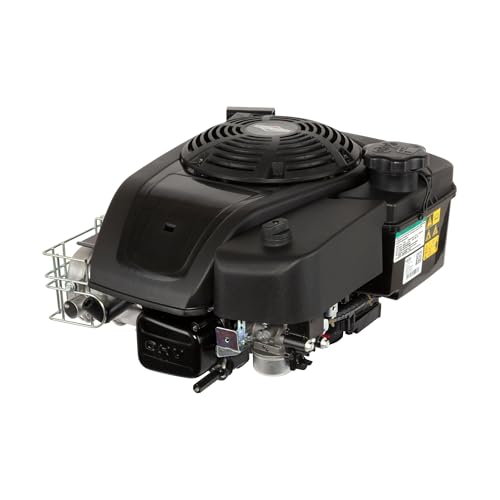
Engineered for professional-grade use, the 14D932-0110-F1 delivers 223cc displacement and is built around a ReadyStart starting system and OHV architecture. This larger displacement engine is capable of handling tougher mowing tasks and extended operation. The dual-sealing air management system helps in maintaining cooler operation and longer life in demanding conditions. It suits users who require a robust vertical shaft engine for frequent mowing or heavier lawns, while maintaining a balance between performance and durability.
Briggs & Stratton 44S977-0032-G1 25 GHP Engine
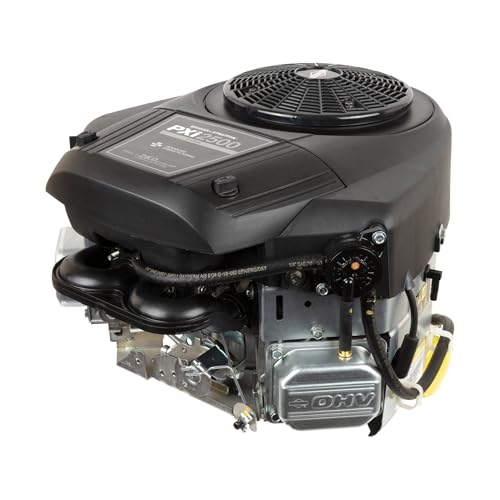
This Briggs & Stratton model emphasizes a durable, long-life solution with a dura-bore cast iron cylinder sleeve and full-pressure lubrication. The OHV design ensures cooler operation and longer valve life, with an integrated 16-amp charging system. It’s positioned as a higher-capacity option among the affordable vertical shaft engines, offering robust performance for larger or more demanding mower applications while still keeping maintenance practical for DIY users.
Buying Guide: Key Purchase Considerations
- Displacement and horsepower: Larger engines provide more mowing power but may increase weight and fuel usage. Choose an engine that matches your mower deck size and typical yard conditions.
- Starting system: Recoil starts are common and affordable; ReadyStart or electric start options offer quicker starts for busy homeowners. Consider availability of replacement parts and ease of maintenance.
- Crankshaft and mounting compatibility: Verify the shaft diameter, length, and keyway to ensure a proper fit with your mower. Look for matching crankshaft dimensions (e.g., 7/8 x 3-5/32 inch) when replacing an existing engine.
- Lubrication and cooling: Cast iron cylinder sleeves (Dura-Bore) and oil filtration enhance longevity. OHV designs generally run cooler and maintain valve timing better over time.
- Air filtration and durability: Dual-element air filters and rugged build quality extend engine life in dusty environments common in lawn care.
- Maintenance and serviceability: Availability of replacement parts, gaskets, and carburetors. Engines with widely supported service networks tend to be easier to maintain.
- Fuel efficiency and emissions: EPA-compliant models help minimize environmental impact and may satisfy local regulations for home use.
- Intended mower compatibility: Ensure the engine’s mounting pattern and shaft configurations align with your mower model and deck width.
These options collectively offer affordable vertical shaft engine choices across a range of displacements and features. For homeowners prioritizing easy starts and reliable performance on standard residential lawns, the Aceup Energy and Briggs & Stratton entries provide solid balance between cost and capability. For users needing higher torque or more robust construction, the 14D932-0110-F1 and 44S977-0032-G1 lines present stronger build quality and cooling efficiency, while the 104M02-0197 and 9P602-0139 provide compact, lighter alternatives for smaller mowers.