Charcoal-based soil amendments, or biochar, are popular for improving drainage, aeration, nutrient retention, and moisture management in both indoor and outdoor gardens. The right charcoal product can help plant roots breathe, reduce soil compaction, and support beneficial microbial life. This article reviews five reliable options, highlighting their unique benefits to help you choose the best fit for your pots, terrariums, or garden beds.
| Product | Brand | Approx. Size | Key Benefit |
|---|---|---|---|
| Legigo 2 QT Horticultural Charcoal | Legigo | 2 QT | Drains excess moisture; enhances soil aeration for roots |
| Char Bliss (8 Qts) Biochar | plantonix | 8 Qts | Excellent nutrient retention; supports carbon sequestration |
| Legigo 4QT All Natural Horticultural Charcoal | Legigo | 4 QT | Lightweight soil amendment; promotes root health |
| Harris Horticultural Charcoal 2qt | HARRIS | 2 qt | Increases soil carbon and water retention; easy to mix |
| Sukh Horticultural Charcoal 1Qt | Sukh | 1 Qt | Regulates temperature; stores water and nutrients |
Note: The table highlights five dependable options suitable for a variety of setups, from houseplants to terrariums. Consider pot size, moisture needs, and whether you prefer lighter or more concentrated amendments when choosing a product.
Legigo 2 QT Horticultural Charcoal
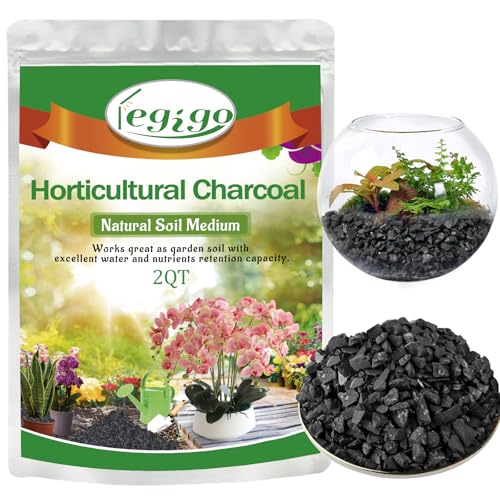
Legigo’s natural hardwood horticultural charcoal is a lightweight soil additive designed to improve drainage in containers and potted plants. It’s suitable for orchid, bonsai, and succulent soils, helping prevent root compaction while promoting air flow around roots. The charcoal is sieved into 3–7 mm pieces, making it easy to mix into various soil blends. It also has heat-absorbing properties that can boost soil temperature to support seed germination and early root development. Use this charcoal as a general soil amendment or in layered substrates to prevent compacted soil.
Char Bliss (8 Qts) Biochar

Char Bliss biochar from Plantonix is an OMRI-listed, 100% natural soil amendment harvested from wood and tree trimmings. It enhances nutrient availability, soil fertility, and water retention while supporting carbon sequestration. Biochar’s porous structure helps retain nutrients and reduces leaching, thereby promoting healthier growth with less fertilizer input. It’s suitable for both indoor and outdoor plants and can be blended into potting mixes or garden soils to improve long-term soil health.
Legigo 4QT All Natural Horticultural Charcoal

This 4-quart Legigo option emphasizes a light, non-compacting soil amendment designed for drainage and aeration in bonsai, succulents, and terrariums. The product is processed to a consistent 3–7 mm size, which blends well with most potting soils. Activated charcoal in this form supports root health by keeping the substrate loose, preventing waterlogging, and creating space for air to reach plant roots. It’s especially compatible with other soil components like perlite and peat moss for improved structure.
Harris Horticultural Charcoal 2qt
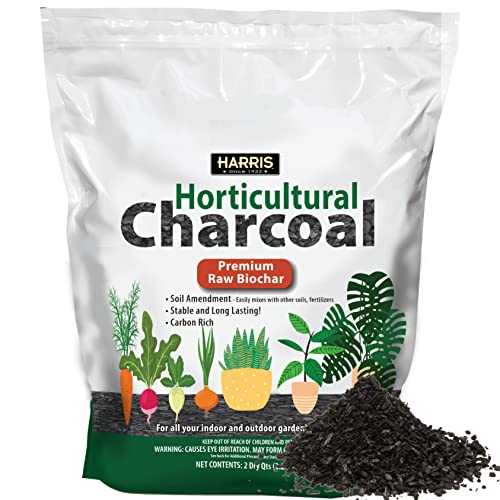
Harris offers a premium biochar designed to increase soil carbon content, nutrient richness, and microbial life. Its easy-to-use formula blends simply into potting soil in a 1:9 ratio. The product aims to improve water retention and stability in both indoor plants and terrariums, making it a practical choice for gardeners seeking a straightforward amendment with lasting effects on soil health.
Sukh Horticultural Charcoal 1Qt

Sukh’s 1-quart horticultural charcoal focuses on temperature regulation, moisture and nutrient storage, and improved soil permeability. It helps maintain balanced soil temperatures for seeds and young roots while absorbing excess water and fertilizer, then releasing it as needed. This makes it well-suited for containers with limited drainage or for terrarium setups where moisture control is critical.
Buying Guide: Charcoal For Plant Soil
Key considerations help ensure you select the right biochar for your plants. First, soil type and pot size matter: larger volumes benefit from higher-quantity amendments like 4–8 quarts, while smaller pots can use 1–2 quarts. Second, moisture needs influence choice: if you struggle with overwatering, opt for charcoal with strong water absorption to improve drainage. Third, the source and processing of the charcoal matters: hardwood-derived, activated charcoal typically provides better aeration and longevity than lighter, non-activated forms. Fourth, compatibility: test blends with your existing soil mix, compost, or perlite to avoid destabilizing pH or nutrient balance. Fifth, environmental impact: biochar supports carbon sequestration; look for OMRI-listed or sustainably sourced products when possible. Finally, application method: mix charcoal into potting soil at a ratio of roughly 10–20% by volume, or layer in terrariums to create air spaces and moisture buffering zones.
From routine houseplant care to specialized terrarium setups, charcoal soil amendments offer a range of advantages. Users should align product features with their goals—improved drainage, nutrient retention, temperature regulation, or microbial support—to maximize plant health and growth outcomes. For those seeking a balance of ease-of-use and measurable benefits, consider mid-range amendments that blend well with standard potting mixes and can be scaled up for larger planters or garden beds.