Answering the question: CFL grow lights can support flowering in indoor setups by providing a broad spectrum and adequate intensity. The right CFLs help flowering by delivering balanced light, especially when used in multiple bulbs or with fixtures designed for plant growth. This guide highlights five suitable CFL-based options and explains who they are best for, along with practical buying tips.
Who this is for:
– Home gardeners starting edible crops or flowers indoors, needing affordable, energy-efficient options.
– Small-space growers who want compact, plug-and-play lighting without complex fixtures.
– Growers focusing on flowering and fruiting stages who need balanced spectrum rather than only red or blue light.
| Product | Best For | Key Benefit | Limitations |
|---|---|---|---|
| Wiyifada 3 Pack A19 Grow Bulbs | Budget-friendly multi-bulb setups | Full spectrum, 150° light, 20000h+ lifespan | Requires multiple bulbs for higher intensity |
| HAKUTATZ 105W CFL | Simple, single-bulb CFL upgrade | Instant-start, 5500K daylight | Single-bulb use may limit coverage |
| SANSI 10W LED (not CFL but relevant) | High-efficiency supplemental light | High PPFD with optical lens | LED, not CFL |
| SunBlaster 13W CFL Set | Year-round indoor growth | 4 bulbs, 6400K, energy efficient | Lower PPFD per bulb |
| GE 15PPF A19 | White spectrum with strong growth signals | Balanced spectrum, long life | May require multiple units for flowering cover |
Wiyifada 3 Pack Full Spectrum A19 Grow Light Bulbs

The Wiyifada A19 grow bulbs offer a full spectrum design that spans 400-740nm, intended to support plants through all growth stages, including flowering. Each bulb delivers a wide 150-degree light pattern and is designed to replace a standard 100W bulb while consuming less power, which can help maintain cooler temperatures in compact grow spaces. This trio is best for buyers who want to build a low-cost, multi-bulb setup for evenly distributed light across a small grow area. The longer lifespan (up to about 20,000 hours) helps reduce replacement frequency. A potential limitation is that flowering can require higher light intensity, so you may need more fixtures or higher-output bulbs for dense canopies.
Who it’s best for: Small indoor gardens, balcony or cabinet grows where budget-conscious buyers want several bulbs to increase light coverage during flowering. Why selected: It provides full-spectrum light, a broad beam, and energy savings, making it suitable for flowering without specialized fixtures.
HAKUTATZ 105W High Power CFL Grow Light
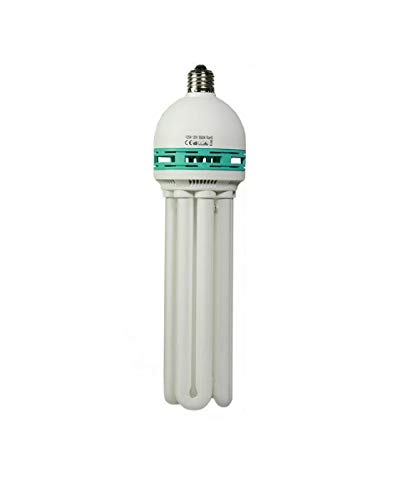
This 105W CFL grow light from HAKUTATZ is designed for easy, instant-start operation and mounts on a standard household outlet. Marketed effectively as a 400W equivalent, this bulb runs at 5500K daylight, which makes it a solid option for vegetative-to-flowering transitions where daylight-mimicking color temperature helps promote robust flowering. It’s best for growers seeking a single-bulb solution to supplement ambient lighting in a small grow space. A practical caveat is that the coverage and intensity may be insufficient for larger flowering canopies, necessitating additional units.
Who it’s best for: Quick upgrades to existing fixtures, compact grow spaces, and those who want simple, plug-and-play CFLs. Why selected: It provides reliable daytime spectrum with energy efficiency for flowering periods, without complex installations.
SANSI LED Grow Light Bulb for Seeds and Greens (2-Pack)

Though technically LED, the SANSI bulbs are included here due to popularity in indoor flowering setups and their strong spectrum design. They deliver a full spectrum from 4000K daylight with secondary optical design to improve light distribution and utilization. The 2-pack provides solid coverage for a small grow area, with a high lifespan (up to 25,000 hours) and efficient heat management via a ceramic heat sink. This option is best for growers prioritizing precise light distribution and long-term reliability over traditional CFL-only setups. Consider this if you want higher PPFD without increasing fixture count.
Who it’s best for: Growers seeking efficient, well-distributed light with excellent spectrum quality for flowering. Why selected: It supports a complete flowering cycle with strong light quality, though note it is LED, not CFL, which should fit your preferred tech approach.
Briignite A19 Full Spectrum Grow Light Bulbs (2-Pack)

The Briignite A19 bulbs offer a full spectrum with a 4000K white look complemented by red/blue accents, designed to support plants through all stages, including flowering. They deliver a bright 1000-lumen output at 11 watts, translating to a claimed 90% energy savings versus traditional bulbs. The brighter output and balanced spectrum help flowering plants, particularly in smaller grow spaces. A note of caution is that coverage may be limited to a single area per bulb; growers with larger flowering zones may need multiple units for uniform intensity.
Who it’s best for: Budget-conscious growers needing reliable, energy-efficient bulbs for flowering in compact spaces. Why selected: Strong full-spectrum performance with energy savings make it a solid performer for flowering setups requiring multiple bulbs.
SYEIORAOM Six-Head Full Spectrum Grow Light

The SYEIORAOM six-head grow light provides multiple light points, offering a broad footprint and flexible positioning for indoor flowering. Its full spectrum cover is designed to support plants from seedling through fruiting stages. The adjustable gooseneck and telescopic pole enable precise light direction and distance, making it easier to tailor intensity for flowering clusters without creating hotspots. This option is best for growers who want higher light density over a small to medium area without complex wiring. A limitation is the potential need for stabilization in taller setups because of the multi-head design.
Who it’s best for: Growers who want versatile, adjustable light coverage to optimize flowering across a wider canopy. Why selected: Six heads provide more uniform coverage and flexibility for flowering stages compared to single-bulb setups.
Buying Guide: CFL vs Other Options for Flowering
What to consider when choosing CFL grow lights for flowering
- Light intensity and coverage: Flowering typically benefits from higher light levels. Consider the number of bulbs or the wattage needed to cover your growing area without creating hot spots.
- Spectrum: Full-spectrum CFLs that mimic natural daylight while providing red light cues for flowering tend to perform best for fruiting and flower production.
- Bulb type and fixture compatibility: Ensure the bulbs fit your fixtures (E26 bases are common). UV and heat output should be managed with appropriate spacing and ventilation.
- Energy efficiency and heat: CFLs are generally energy-efficient, but multiple bulbs can raise heat in small spaces. Plan ventilation or cooling if needed.
- Longevity and warranty: Longer-lasting bulbs reduce replacement frequency, but verify compatibility with your fixtures and any warranty terms.
How many CFLs do you need for flowering?
For compact spaces, a bundle of 2–3 bulbs delivering a combined 200–400 watts of equivalent light can help flowering plants develop robust blooms. In larger spaces, increase coverage with additional lamps or fixtures while maintaining even spacing to avoid dim patches.
Placement tips for flowering success
- Position lights above the canopy to minimize leaf burn while maximizing light interception.
- Schedule light exposure to mimic natural day length for flowering stages, using timers where possible.
- Combine CFLs with reflective surfaces (mylar or white walls) to increase light efficiency.
FAQ
- Do CFLs work for flowering plants? Yes, when used with the right spectrum and sufficient coverage, CFLs can support flowering and bloom development.
- Are CFLs energy-efficient for flowering? Generally yes, especially compared to traditional incandescent bulbs, but multiple bulbs may consume more total energy if not managed well.
- What color temperature is best for flowering? A mix that includes daylight (around 5500K) and some red spectrum can support flowering signals, but flowering-focused bulbs often emphasize 2700K–6500K ranges for balance.
- Can I mix CFLs with LEDs or other lights? Yes, many growers mix light types to optimize spectrum and coverage. Ensure consistent photoperiods and monitor heat and intensity.
- How long should CFLs stay on each day for flowering? Most flowering cycles benefit from 12–14 hours of light per day, though this varies by plant species; adjust based on growth response.
- Do CFLs need special fixtures? Not necessarily; many CFLs use standard sockets (E26) or common fixtures, but check heat output and ensure safe installation.