Discover the best bulk seeds for sprouting to grow crisp, nutrient-dense greens at home. This guide highlights trusted varieties ideal for salads, sandwiches, and smoothies. Each option is selected for quality, germination potential, and ease of use in jars or trays.
| Product | Brand | Size | Focus |
|---|---|---|---|
| Seedboy Organic Salad Blend | Seedboy | 8 oz | Mixed sprouts and microgreens |
| Nature Jims Sprouts Organic Salad Mix | Nature Jims Sprouts | 1 lb | Broccoli, alfalfa, radish, clover |
| Nature Jims Sprouts Organic Broccoli Seeds | Nature Jims Sprouts | 8 oz | Broccoli sprouts with sulforaphane |
| Variety Pack Sprouting Seeds – NATURAL ROOTS | NATURAL ROOTS | Pack varies | Broccoli, alfalfa, radish, mung beans |
| Rainbow Heirloom Broccoli Seeds for Sprouting | Rainbow Heirloom Seed Co. | 1 lb | Broccoli sprouts and microgreens |
Note: All products listed are designed for quick, home sprouting with minimal equipment. Selection emphasizes high germination rates, organic or non-GMO credentials where stated, and seeds that perform well in jars or trays for beginners and seasoned growers alike.
Seedboy Organic Salad Blend – Bulk Sprouting Seeds

Seedboy’s Organic Salad Blend features alfalfa, broccoli, mung bean, lentil, and radish—covering a broad flavor spectrum from mild to peppery. The mix is suitable for quick jar sprouts or longer trays to yield microgreens. Seeds are USDA organic certified and grown in the USA, with a focus on purity and safety. Growers can enjoy a nutrient-dense harvest in under a week, supporting healthy meals without garden space.
Nature Jims Sprouts Organic Salad Mix
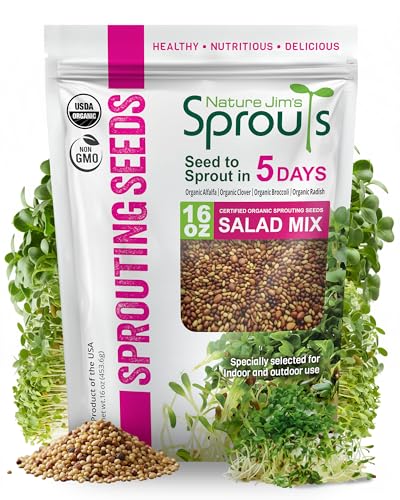
Nature Jims Sprouts offers an organic, non-GMO seed blend (broccoli, alfalfa, radish, clover) designed for rapid growth—microgreens can appear in as little as five days. The combination supports a nutrient-rich harvest with a mild to moderate flavor profile ideal for salads and sandwiches. This pack is beginner-friendly, with straightforward steps, and emphasizes swift growth without soil or specialized lighting needed for most setups.
Nature Jims Sprouts Organic Broccoli Seeds

These broccoli sprout seeds are certified organic and non-GMO, focusing on high germination and rapid growth to produce sulforaphane-rich broccoli sprouts in about five days. They’re well-suited for indoor or outdoor setups and excel in microgreen trays or sprouting jars. The seeds are typically clean and prepared for easy hydration and even sprouting results, aligning with health-focused cooking routines.
NATURAL ROOTS Variety Pack Sprouting Seeds

The NATURAL ROOTS variety pack includes multiple seeds in a single purchase—broccoli, alfalfa, radish, and mung beans—premeasured for jars or small trays. The concept emphasizes ease of use: no soil, no special equipment required, and simple instructions included. The pack’s design supports batch sprouting and is suitable for families or households seeking frequent harvests of fresh greens.
Rainbow Heirloom Broccoli Seeds For Sprouting

Rainbow Heirloom Seed Co. offers a bulk 1 lb bag of broccoli sprouting seeds, marketed for high germination and reliability. The heirloom, non-GMO seeds are grown in the USA and suitable for sprout jars, countertop sprouters, or microgreen trays. Their nutrient profile and crunchy texture make them a popular choice for home chefs who want consistent broccoli greens quickly.
Buying Guide: Key Purchase Considerations
- Seed quality and origin: Look for organic or non-GMO certifications and seeds produced in the USA when possible. These often reflect higher purity and better germination.
- Germination rate and freshness: Fresh seeds with high germination rates yield more sprouts with fewer batches. Check packaging dates and storage recommendations.
- Mix composition: Blends (like salad mixes) provide varied flavors and textures, while single-variety seeds (broccoli, alfalfa) offer predictable results for specific recipes.
- Growing method: Consider whether the seeds are suited for jars, trays, or soil-free systems. Jars are beginner-friendly; trays support microgreens and denser harvests.
- Harvest timeline: Most sprouts appear within 5–7 days; microgreens often take 7–14 days. Factor your desired timeline into selection.
- Flavor and nutrition: Different seeds offer distinct flavor notes and nutrient profiles; broccoli sprouts are known for sulforaphane, while alfalfa provides fiber and minerals.
- Packaging size: Bulk options reduce cost per harvest but require more storage space. Choose sizes aligned with your growing schedule.
- Safety and cleanliness: Opt for seeds tested for purity and free from contaminants. Follow recommended rinsing and sanitation steps to prevent mold.
When selecting bulk sprouting seeds, balance your goals—speed, flavor variety, and ease of cleanup—with the space and time you can dedicate to growing at home. The varieties above are commonly used by home gardeners and beginners seeking reliable, quick harvests of nutritious greens.