Growing vegetables demands vigilant pest management, but the right bug spray can protect yields without harming pollinators or beneficial insects. The following selections are specifically suited for gardens, vegetables, and edible crops, offering contact kill, systemic protection, or disease-fighting benefits. This guide compares the top five options to help you choose a product that fits your garden plan and safety preferences.
Summary table of chosen products:
| Product | Brand | Key Benefit | Form | Target Issues |
|---|---|---|---|---|
| Captain Jack’s Insecticidal Super Soap | Bonide | Multi-pest control; contact and ingestion kill | Ready-to-use spray | Aphids, mites, caterpillars, thrips, leaf-feeders |
| Peppermint Plant Protection Spray | Mighty Mint | Plant-based protection; safe around people and pets | Ready-to-use spray | Insects, gnats, mites, disease vectors |
| Bug Killer Concentrate for Vegetables | BioAdvanced | Concentrate for easy mixing; broad insect kill | Concentrate | Aphids, caterpillars, thrips, whiteflies |
| BioAdvanced Tomato & Vegetable Pest Control | BioAdvanced | Ready-to-use for quick protection | Ready-to-use spray | Aphids, cutworms, other listed pests |
| Earth’s Ally 3-in-1 Plant Spray | Earth’s Ally | Insecticide, fungicide and miticide in one | Ready-to-use spray | Soft-bodied insects; powdery and leaf spot diseases |
Bonide Captain Jack’s Insecticidal Super Soap

Captain Jack’s Insecticidal Super Soap from Bonide is a versatile, ready-to-use spray designed for outdoor residential gardens, lawns, and ornamentals. The formula controls a broad range of pests through both contact kill and leaf-surface ingestion, making it suitable for attacking aphids, whiteflies, caterpillars, and several other common garden pests. It is labeled for use on edible crops like artichokes, berries, basil, and many vegetables, which makes it a convenient option for vegetable plots. When applying, follow the label directions to avoid stressing plants and to minimize impact on beneficial insects.
Key features include dual-action pest control (contact and ingestion), suitability for outdoor use, and broad pest coverage. Users should consider targeted spraying during pest outbreaks or as a preventive treatment for vulnerable transplants. While effective, it is important to apply on calm days to reduce drift and to avoid bee-active times if blooming plants are nearby.
Mighty Mint Peppermint Plant Protection Spray

Mighty Mint Peppermint Plant Protection Spray offers a plant-based approach to pest management. It emphasizes safe use around people and pets when used as directed, making it appealing for home gardens where children or pets explore vegetable beds. The spray can deter a range of insects and is formulated to be easy to apply, with a focus on peppermint-derived ingredients. Gardeners seeking a natural option may value this product for its minimal synthetic input and compatibility with organic gardening practices. Coverage should be thorough, with attention to the undersides of leaves where pests often reside.
Considerations include scent intensity, potential irritation on sensitive plants, and adherence to labeled directions for frequency of applications. This product is particularly attractive for growers prioritizing natural inputs and ongoing pest deterrence rather than rapid, broad-spectrum knockdowns.
Bayer Advanced Bug Killer Concentrate for Vegetables

BioAdvanced’s Bug Killer Concentrate for Vegetables provides a flexible solution for treating vegetable crops. As a concentrate, it enables users to mix the exact strength needed, which can help optimize coverage while conserving product. It targets a wide range of pests including aphids, caterpillars, thrips, and whiteflies, aiding in protecting fruit and vegetables from damage. Application involves preparing a spray solution and applying until leaves are coated, ensuring thorough coverage without runoff. This option suits gardener who prefer a programmable, refillable approach to pest control in vegetables.
Important usage notes include proper dilution, military-grade labeling for vegetables, and ensuring harvest-safe intervals after application. It’s useful in mid-season outbreaks or as a preventive measure when pest pressure is expected to rise. Always wear appropriate protective gear and follow mixing instructions to avoid plant stress.
BioAdvanced Tomato & Vegetable Pest Control

This BioAdvanced Ready-to-Use spray combines targeted action with convenience for tomato and vegetable gardens. It is designed to kill pests such as aphids, cutworms, and other common garden insects, providing a ready-to-use option that minimizes preparation steps. The product aims to protect fruit and vegetables by delivering protection directly to foliage, making it suitable for quick intervention during pest outbreaks or preventive applications in vulnerable beds. The spray form reduces mixing steps and is favored by gardeners seeking a simple treatment protocol for vegetable crops.
Considerations include compatibility with edible produce, timing of applications relative to harvest, and resistance management through rotating products. While ready-to-use sprays offer ease, some gardeners may prefer a concentrated formula for larger plot coverage or controlled dilution in different garden sizes.
Earth’s Ally 3-in-1 Plant Spray (24 oz)
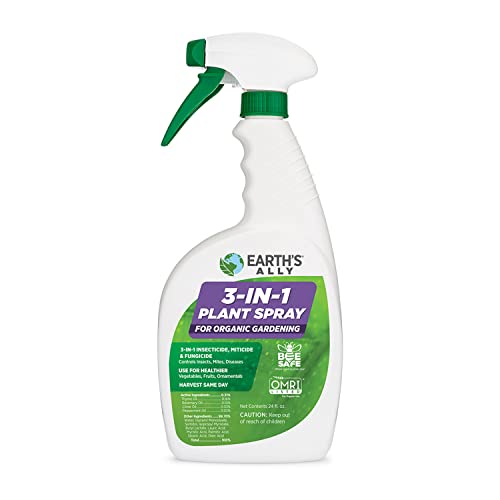
Earth’s Ally 3-in-1 Plant Spray combines insecticide, miticide, and fungicide in a single formula. It is marketed as an option that controls soft-bodied insects such as spider mites, aphids, whiteflies, and scale, while also addressing common diseases like powdery mildew and leaf spots. This makes it a versatile choice for vegetable gardens facing both pests and disease pressure. The 24-ounce ready-to-use bottle emphasizes quick, on-demand protection without the need for complex mixing. Gardeners seeking a multi-purpose product may appreciate the convenience of a single spray addressing multiple threats.
Key considerations include the breadth of pests and diseases covered, compatibility with harvest timelines, and the impact on beneficial insects. While broad in scope, users should apply as directed and consider integrating with cultural controls (crop rotation, sanitation) to minimize resistance and maintain long-term garden health.
Buying Guide: Key Purchase Considerations And Comparisons
- Target pests and diseases: Assess which pests plague your vegetable crops (aphids, caterpillars, mites, whiteflies, etc.) and whether you need insecticidal, miticidal, or fungicidal action. Some products combine multiple functions, offering convenience but potentially higher residue concerns on edible crops.
- Form and application: Choose between ready-to-use sprays and concentrates. Ready-to-use options are quick and easy, while concentrates let you tailor dilution and coverage for larger plots. Consider your experience with mixing products and the size of your garden.
- Safety and compatibility: For homes with children, pets, or pollinator activity, natural or plant-based formulas may be preferable. Always read label directions for safe use around edible crops, harvest intervals, and protective gear requirements.
- Environmental impact: Some products rely on essential oils or soap-based ingredients, which may be gentler on the environment and beneficial insects when used as directed. Balance efficacy with ecological considerations in pest management planning.
- Resistance management: Rotate active ingredients to prevent pests from building resistance. Avoid relying on a single product for extended periods; integrate with cultural controls like proper spacing, weed control, and moisture management.
- Harvest timing: Pay attention to re-entry intervals and pre-harvest intervals specified on the label. Ensure you have a plan for timing applications so produce can be harvested safely after the recommended wait period.
- Coverage and spray technique: Thorough coating on the undersides of leaves is crucial for many pests (e.g., aphids, mites). Use a thorough spray to avoid missed populations, particularly on dense or tall vegetable plants.
- Cost and availability: Compare per-ounce or per-acre costs, as concentrates can be economical for larger gardens. Check for item availability and whether products ship to your location, especially for organic-certified options.