Investing in effective brown patch fungus control starts with choosing products designed to prevent and treat common turf diseases. This guide highlights five dependable fungicides ideal for homeowners and professional lawns alike. Best for suppressing brown patch and related diseases, these selections balance rapid action with lasting protection. Use the table below to compare key points at a glance, then dive into detailed product sections to see which option fits your lawn type and climate.
| Product | Best For | Active Ingredient | Coverage | Notes |
|---|---|---|---|---|
| Scotts DiseaseEx Lawn Fungicide | Treating large lawns; prevention and early control | Multiple listed fungicides (scotch-brewed product) | Up to 5,000 sq ft | Fast-acting, 4 weeks control; safe when used as directed |
| Atticus Gunner 14.3 MEC Propiconazole Fungicide | Professional-grade prevention and control | Propiconazole (14.3%) | Jacketed gallon format | Tank-mix compatible; rainfast after drying |
| Atticus Artavia 2 SC Azoxystrobin Fungicide | Broad-spectrum turf and landscape protection | Azoxystrobin (22.9%) | 16 oz | Root-to-leaf movement for systemic protection |
| Atticus Gravex 20EW Fungicide | Wide spectrum control; curative and preventive | Myclobutanil (19.7%) | 16 oz | Controls 38+ fungi; strong for brown patch and rusts |
| Atticus Gunner 14.3 Propiconazole Fungicide (16 oz) | Compact spray plans and spot treatment | Propiconazole (14.3%) | 16 oz | MEC formulation; effective in varied weather |
Scotts DiseaseEx Lawn Fungicide
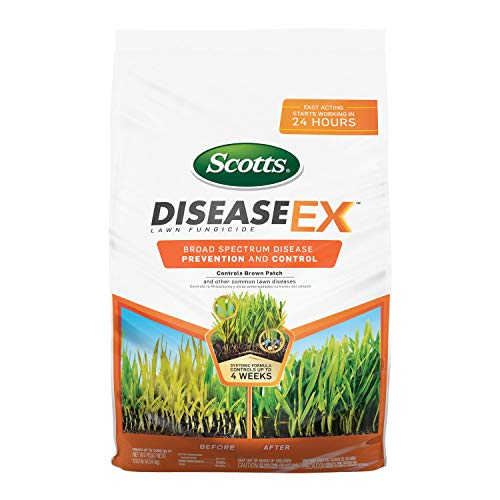
Product features: This disease control product prevents 26 listed lawn diseases, including brown patch and pythium blight. It starts working within 24 hours and provides up to four weeks of protection. Best for homeowners with mixed grasses and large lawns who want straightforward application and broad disease coverage. Caution: Follow directions for safe use on all grass types; over-application can lead to reduced safety margins.
Best for: Homeowners seeking reliable, broad-spectrum protection and quick relief from brown patch symptoms. This is a strong first-line option for preventative care and early treatment after symptoms appear.
Atticus Gunner 14.3 MEC Propiconazole Fungicide

Product features: Contains propiconazole (14.3%), a trusted active for turf fungi. MEC formulation provides easy mixing and stability, with tank-mix compatibility for customization. It offers predictable control even in adverse weather and is water-friendly after drying. Best for: Professionals and serious homeowners who want a dependable, mix-friendly option that stays put after drying.
Best for: Lawn care programs that require flexible tank-mix options and consistent performance under challenging weather.
Atticus Artavia 2 SC Azoxystrobin Fungicide

Product features: Azoxystrobin at 22.9% delivers root-to-leaf systemic protection and controls more than 20 turf and 30 ornamental fungi. It provides broad-spectrum coverage including anthracnose, leaf spot, rhizoctonia, and brown patch. Best for: Users wanting a versatile fungicide that protects both lawns and landscape plants with systemic action. Limitation: As a broad-spectrum product, follow the label for specific plant compatibility and application rates.
Best for: Those seeking comprehensive disease control across turf and ornamentals with internal plant movement for thorough protection.
Atticus Gravex 20EW Fungicide

Product features: Contains myclobutanil at 19.7%, providing both curative and preventive control. It targets brown patch, anthracnose, powdery mildew, rusts, and more (over 38 fungi on the label). Best for: Lawns and ornamentals needing robust multi-disease suppression and ongoing protection. Caution: Gravex 20 EW is a strong systemic fungicide; observe rotation and rotation plans to avoid resistance buildup.
Best for: A high-disease-pressure environment where broad-spectrum, long-lasting control is needed to protect turf and decorative plants alike.
Atticus Gunner 14.3 Propiconazole Fungicide (16 oz)

Product features: Propiconazole at 14.3% provides broad-spectrum protection across more than 20 fungi with a MEC formulation that simplifies mixing and ensures stability. It remains effective after drying and resists wash-off from rain or irrigation. Best for: Lawn operations needing reliable post-application rainfastness and compatibility with other products in spray programs. Limitation: Like other systemic fungicides, proper rotation helps prevent resistance development.
Best for: Spot treatments and regular spray programs where weather variability is a factor and consistent foliar protection is valued.
Buying Guide: Brown Patch Fungus Control Essentials
What to look for when choosing a fungicide
Consider the disease spectrum (brown patch, pythium, rust, and others), whether you need preventive or curative action, and your lawn type. Look for products labeled for turfgrass use, and check the active ingredient’s track record against brown patch specifically.
Active ingredients and modes of action
Common turf fungicides include azoxystrobin, propiconazole, and myclobutanil. Azoxystrobin provides broad-spectrum protection with systemic movement, while propiconazole and myclobutanil offer potent curative and preventive action. Rotation helps reduce resistance and extends product effectiveness.
Formulation and application
MEC formulations (microemulsion concentrates) mix easily and stay stable in tanks, reducing re-mixing. Be mindful of dilution rates, coverage per application, and wind conditions during spraying to ensure even distribution.
When to treat your lawn
Initiate treatment when grass begins to green up in spring or at the first signs of brown patch. Regular treatment every two to four weeks, depending on product label directions and weather, helps prevent reoccurrence.
Environmental and safety considerations
Follow label directions for use, storage, and disposal. Avoid runoff into waterways and protect non-target plants. Use proper protective gear if required and keep pets and children away during applications as advised by the label.
Choosing between preventive and curative options
Preventive products are ideal for new sections or episodes with a known history of disease; curative products help suppress ongoing outbreaks. For a high-risk lawn, a rotation plan combining preventive and curative options yields the best overall protection.
Practical deployment tips
- Apply during calm, dry conditions to maximize absorption and minimize drift.
- Water in after application for soil-borne fungi when label directions allow.
- Monitor weather forecasts and reapply as needed within label intervals to maintain control.
FAQ
- What is brown patch and why is it a problem for lawns?
Brown patch is a fungal disease that causes circular or irregular brown patches in turf, often during warm, humid weather. It weakens turf and spreads quickly if untreated.
- Which product is best for beginners?
Scotts DiseaseEx offers broad coverage and straightforward application, making it a solid starting point for homeowners managing brown patch.
- Can I mix fungicides?
Some products are formulated for tank-mixing with others; always consult the label and ensure compatibility before mixing.
- How often should I treat my lawn?
Follow the label directions; many products recommend every two to four weeks during the growing season, adjusting for weather and disease pressure.
- Is prevention better than cure for brown patch?
Yes. Preventive applications reduce disease establishment and lessen the chance of outbreaks, especially in high-risk climates.