Breaking up clay soil in your lawn improves water movement, root growth, and nutrient uptake. The best options below target compacted, heavy clay and standing water, helping lawns breathe and thrive. This guide highlights five effective products and who they’re best for, with practical reasons to choose each one.
Summary of selected products:
- Covington Liquid Lawn Aerator (32oz) — Easy liquid option to soften clay and improve absorption.
- Nature’s Way Soil Clay Soil Conditioner — Liquid aerator that loosens compacted soil and improves infiltration.
- Florásoul Clay Breaker Soil Amendment — Plant-based, vegan formula for drainage and aeration.
- Down To Earth Gypsum — Calcium sulfate that loosens clay without altering pH.
- Simple Lawn Solutions Liquid Soil Loosener — Concentrated liquid conditioner for quick, scalable results.
Covington Liquid Lawn Aerator Review

Best for homeowners seeking a simple, non-mechanical solution. Covington Naturals’ liquid aerator acts as a soil conditioner that loosens compacted soil, enhances nutrient uptake, and promotes deeper root growth in clay-heavy lawns. The formula uses humic acids, amino acids, and kelp to feed microbes, making it gentle enough for pet-friendly and family-safe use. This option eliminates the need for core aeration tools and can be easier for first-time users. A potential limitation is that results may vary with extreme compaction, and multiple applications might be necessary for very dense clay.
Nature’s Way Clay Soil Conditioner

Best for gardeners dealing with stubborn clay that resists standard amendments. Nature’s Way Soil offers a liquid aerator that helps loosen hard clay and compacted lawns, allowing roots, water, and nutrients to penetrate more deeply. It also improves water infiltration and drainage, reducing surface runoff. This option is well-suited for those who want a straightforward liquid application rather than granular products. Consider pairing with a regular fertilization plan to maximize root development and turf vigor.
Florásoul Clay Breaker Soil Amendment
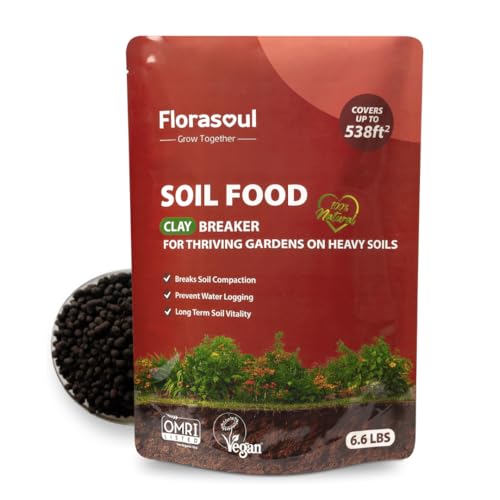
Best for organic or vegan-friendly gardens. Florasoul Clay Breaker uses plant-based ingredients to soften heavy clay and improve drainage and aeration. The formula relies on seaweed derivatives and minerals, avoiding animal by-products. It’s a good choice for organic vegetable beds and flower borders where chemical softeners aren’t desirable. A possible limitation is that results may be influenced by soil texture and rainfall, so outcomes can vary with climate.
Down To Earth Gypsum Soil Conditioner

Best for traditional clay-loosening with minimal pH impact. The gypsum conditioner supplies calcium and sulfur to strengthen cell walls and promote healthy growth. It’s pH-neutral, making it safe for pH-sensitive plants. This product is particularly useful when clay soil is compacted and hard, but you want to avoid altering soil chemistry. For lawns with calcium-sulfate needs or where you’re avoiding lime, gypsum is a precise choice.
Simple Lawn Solutions Liquid Soil Loosener
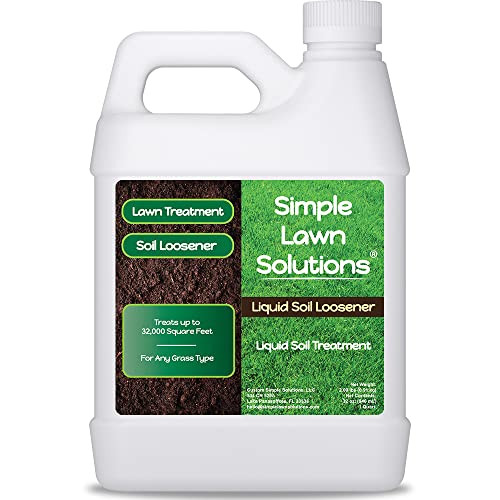
Best for those needing a concentrated, scalable solution. The Liquid Soil Loosener can be used alone or alongside mechanical aeration. It conditions compact soil, aids downward water movement, and improves drainage and infiltration. The bottle’s coverage-up-to-32,000 square feet claim helps homeowners plan large lawn projects. A limitation is that results depend on existing irrigation practices and soil moisture; avoid over-application in wet conditions.
Buying Guide: Key Considerations For Clay Soil Breakup
- Soil texture and depth: For very dense clay, consider products that combine hydration with microbial activity and calcium or sulfur sources to help structure and drainage.
- Formulation type: Liquid amendments are often easier to apply and can reach deeper layers quickly, while granules may provide longer-term slow-release effects.
- Impact on pH: Gypsum and some amendments do not significantly shift pH, which is important for limiting unintended nutrient lockout. Check your lawn’s needs before applying.
- Organic vs. synthetic: Plant-based and vegan formulas are suitable for organic gardens but check if they meet your performance expectations for heavy clay.
- Application frequency: Clay soils may require multiple treatments across growing seasons to achieve durable aeration and drainage improvements.
- Safety and compatibility: If you have pets or children, prioritize products marketed as safe for mammals and use as directed.
Frequently Asked Questions
- What is the quickest way to loosen clay soil in a lawn?
Liquid soil amendments can act faster than granular products by permeating the soil profile and starting microbial activity quickly. - Do gypsum-based products raise pH?
No. Gypsum is pH-neutral and primarily provides calcium and sulfur to improve structure and root growth. - Is core aeration still necessary if I use a liquid aerator?
Liquid aerators can reduce compaction but may not replace the immediate airflow benefits of core aeration in extremely dense soils. Consider mixing approaches. - Can I use these products on lawn grasses and garden beds?
Most products are formulated for general lawn and garden use, but always follow label directions, especially near ornamentals or edibles. - How often should I reapply after initial treatment?
For clay soils, multiple applications across a growing season or consecutive seasons often yield better results, depending on weather and soil conditions. - Are liquid soil amendments safe for pets and kids?
Many products advertise safety; verify the product label and follow timing recommendations for outdoor use to minimize exposure.