Finding the right boost pump for an irrigation system can transform garden health, lawn vibrancy, and overall water efficiency. This guide highlights five top-rated options, comparing headroom, flow rates, durability, and ease of use to help American homeowners and small farms boost performance without complexity. Each product is selected for reliability, adaptability, and compatibility with common irrigation setups.
| Product | Max Head | GPH / Flow |
|---|---|---|
| Weeflos 1.5HP Booster Pump (100 ft head) | 100 ft | 1600 GPH |
| Weeflos 1.5HP Booster Pump (120 ft head) | 120 ft | 1600 GPH |
| ECO-WORTHY 33-Series | up to 148 ft | 4.0 GPM |
| TDRSUPER 1/2 HP | 108 ft | 845 GPH |
| Aquastrong 1.6 HP (1320 GPH) | 164 ft | 1320 GPH |
Choosing a booster pump involves matching head height, flow, electrical needs, and installation practicality to your irrigation layout. The following sections present five well-rounded options that span high head capability, steady flow, and user-friendly automatic control. Each product section includes quick facts, standout features, and practical implementation tips for typical American irrigation scenarios.
Weeflos 1.5HP Booster Pump — 100ft Head, 1600 GPH
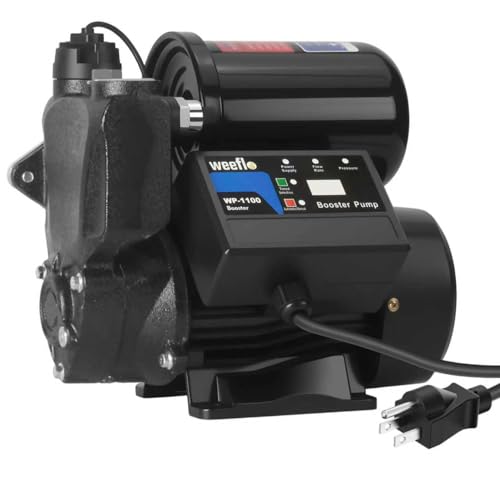
The Weeflos model with a 100-foot maximum head offers strong water transfer for medium-sized irrigation layouts. Its mechanical pressure switch provides automatic on/off cycling, delivering consistent flow without relying on sophisticated electronics. A 1.5HP motor delivers up to 1600 GPH, which is typically suitable for garden beds, sprinkler zones, and lawn watering that require higher pressure or longer-reaching spray heads. Self-priming design minimizes setup time and helps with quick deployment after winter storage or system maintenance.
Practical setup tips: place the pump close to the water source and elevated tanks if possible to maximize head via gravity assist. Use a C-bead or compatible tubing fittings to minimize air leaks, and install a simple filter pre-pump to reduce debris that could affect the pressure switch. For safety, ensure the pump is mounted on a stable surface with level feet to reduce vibration during irrigation cycles.
Weeflos 1.5HP Booster Pump — 120ft Head, 1600 GPH
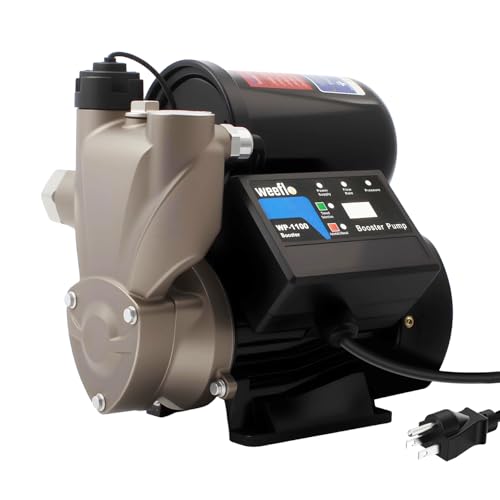
This variant shifts head capacity to 120 feet, which broadens its applicability for longer runs or elevated irrigation zones. The reliable mechanical auto control ensures minimal user intervention while maintaining steady pressure as demands fluctuate. As with the 100-foot version, priming is straightforward and the pump is well-suited for garden irrigation, basement water transfer, and outdoor showers where a straightforward, robust booster is desired.
Key considerations: confirm hose and sprinkler spacing matches the 120-foot capability to avoid over-pressurization of remote lines. If zones are controlled by a sprinkler controller, pair this pump with compatible pressure settings to prevent short cycling. Regularly inspect the mechanical switch for wear and replace with OEM parts if needed to preserve the automatic cycling behavior.
ECO-WORTHY 33-Series 110V Diaphragm Pump
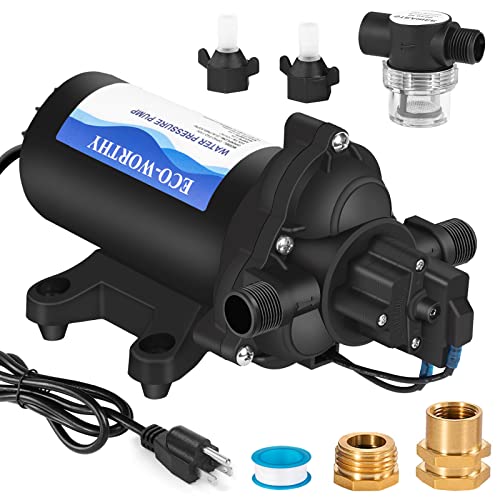
The ECO-WORTHY unit uses a diaphragm design with a 4.0 GPM (roughly 0.67 GPM per gallon) capacity and 50 PSI activation. It features a smart pressure switch that responds to demand, turning on when water is used and off when taps close, with adjustable pressure range from 45 to 70 PSI. This model is robust enough for RV setups, garden irrigation, and light commercial use where quiet operation and protection against overheating are priorities. It supports self-priming up to 9.8 vertical feet and can push water to as high as 148 feet in the right configuration.
Implementation tips: use where electrical supply is readily available and keep the unit protected from direct weather exposure. The unit’s thermal overload protection adds safety, but verify ambient temperatures stay within the recommended range to avoid nuisance shutoffs during peak heat. Consider pairing with a small pressure tank for more consistent pressure and reduced pump cycling in systems with frequent demand spikes.
TDRSUPER 1/2 HP With Smart Controller

The TDRSUPER model combines a 1/2 HP motor with a stainless steel jet pump design and a smart controller. It can lift water up to 108 feet and move about 845 GPH, making it well-suited for home, garden, or small irrigation networks where moderate pressure is sufficient. A built-in pressure gauge helps monitor system performance, while thermal overload protection guards against overheating and dry-running scenarios. The pump’s automatic on/off operation aligns with basic faucet or sprinkler demands, helping to minimize energy use during idle periods.
Best-use scenarios: small plots, raised beds, or multi-zone irrigation where a compact, quiet unit is advantageous. Ensure compatible fittings are used to avoid leaks, and maintain regular checks on the controller to avoid false triggers. If your system experiences frequent cycling, consider adding a secondary pressure tank to smooth pressure fluctuations.
AQUASTRONG 1.6 HP Portable Shallow Well Pump

The AQUASTRONG 1.6 HP unit provides strong lift up to 164 feet and reaches a maximum flow of 1320 GPH. The stainless steel build and portable design make it a convenient option for garden irrigation and water transfer across uneven terrain. An easy-to-carry handle improves portability for seasonal or temporary irrigation setups. This pump is not self-priming, so it requires proper priming prior to operation. Built-in protection features help guard against overheating, while the energy-efficient motor supports longer run times for larger irrigation tasks.
Practical guidance: prime the pump thoroughly before first use and ensure the intake line remains clear of debris. For extended irrigation zones, consider a separate pump station with a small storage tank to reduce startup strain on the motor. Maintain dry-run protection by avoiding pump operation without water in the line.
Buying Guide: Key Purchase Considerations
- Head and flow: Match the maximum head to the vertical distance to the highest sprinkler head and ensure the flow rate supports all zones simultaneously or sequentially. Higher heads are essential for distant or elevated zones; higher GPH supports multiple spray heads at once.
- Automatic control: Mechanical pressure switches and smart controllers provide automatic on/off cycling. Choose based on desired simplicity, noise level, and the ability to maintain consistent pressure during varying demand.
- Durability and materials: Stainless steel or brass components reduce corrosion and extend service life in outdoor environments. Diaphragm and jet-pump designs differ in maintenance needs and reliability under continuous operation.
- Self-priming capability: Self-priming models simplify startup after maintenance or power outages, but non-self-priming pumps require manual priming. For variable terrain or remote water sources, self-priming is advantageous.
- Power and installation: Check voltage (110V vs. 120V equivalents), available electrical capacity, and space for mounting. Portable options are useful for seasonal irrigation or temporary transfers, while permanent installs suit year-round systems.
- Safety features: Thermal overload protection and dry-run protection prevent motor damage. Look for built-in gauges or easy-to-read indicators to monitor performance.
- Compatibility: Ensure fittings, npt threads, and hose diameters align with existing irrigation hardware and filtration systems. Include strainers to reduce debris and extend pump life.
In summary, the best boost pump for your irrigation system depends on head height, required flow, and how automatic you want the system to be. For long runs and tall zones, consider models with higher maximum head (100–164 feet) and strong GPH outputs. For smaller, more compact setups, lighter 1/2 to 1.6 HP units with smart controls offer efficient operation and easier installation. Always factor in local water pressure, electricity access, and the size of your irrigation zones when selecting a pump.