Answer: A blue orchard bee house or similar bee hotel can boost pollination in small gardens and urban yards by providing nesting habitats for native solitary bees. This guide highlights five practical options designed for orchard and leafcutter bees, with notes on who each product suits best and potential limitations.
Buyer focus: Ideal for DIY gardeners seeking low-maintenance pollinator habitat, hobby beekeepers interested in native solitary bees, and homeowners wanting decorative yet functional yard accents. The following table summarizes the five selected products and how they differ.
| Product | Best For | Key Benefit |
|---|---|---|
| Cestari Mason Bee House Bamboo Tube Solitary Bee Hotel | Leafcutter and orchard bees in small gardens | Durable fir wood with bamboo tubes; rain protection |
| Wooden Insect House, Insect Hotel for Bugs | Multiple beneficial insects in diverse habitats | Multi-section design supports bees, ladybugs, butterflies |
| Elipark Mason Insect Bee Butterfly House | Bees, butterflies, and ladybugs in outdoor spaces | Natural materials; increased capacity and variety |
| Niteangel Natural Wooden Insect Hotel | Observation-friendly habitat for garden creatures | Dry wood plus bamboo for resilience and pest control |
| Topadorn Bird House Bee Hive | Outdoor garden decor with nesting habitat for pollinators | Natural pine and bamboo; decorative and functional |
Cestari Mason Bee House Bamboo Tube Solitary Bee Hotel

The Cestari bee house is designed to attract native solitary bees, particularly leafcutter and orchard species, by providing bamboo-nesting tubes and a weather-resistant wood enclosure. The sloped roof offers rain protection, and bamboo tubes allow for easy maintenance and seasonal cleaning. Best for gardeners seeking a compact, aesthetically pleasing nesting solution that blends with outdoor spaces.
- Best for: Small to medium gardens needing reliable bee nesting habitat.
- Why: Durable fir wood with a safe water-based stain and easy tube access for maintenance.
- Caution: Regular cleaning is recommended to prevent mold in humid climates.
Wooden Insect House, Insect Hotel for Bugs

This cedar wood insect hotel features multiple sections with different-sized compartments, designed to attract a variety of beneficial insects. It includes a ground stake for stable placement in gardens and yards. Best for gardeners who want to support a broader range of pollinators and pest controllers.
- Best for: Encouraging diverse beneficial insects beyond bees.
- Why: Different-sized cavities accommodate bees, ladybirds, lacewings, and more.
- Caution: Cedar needs occasional maintenance to prevent weathering in harsh climates.
Elipark Mason Insect Bee Butterfly House

The Elipark insect hotel offers more capacity and diverse filling materials to attract bees, butterflies, and ladybugs. Made of natural pine and bamboo, it emphasizes non-painted construction for a closer-to-nature appeal. Best for larger outdoor spaces where broader insect diversity is desired.
- Best for: Residents seeking a larger, multi-use habitat.
- Why: More holes and varied fillings increase species compatibility.
- Caution: Non-painted wood requires placement in sheltered spots to reduce weathering.
Niteangel Natural Wooden Insect Hotel
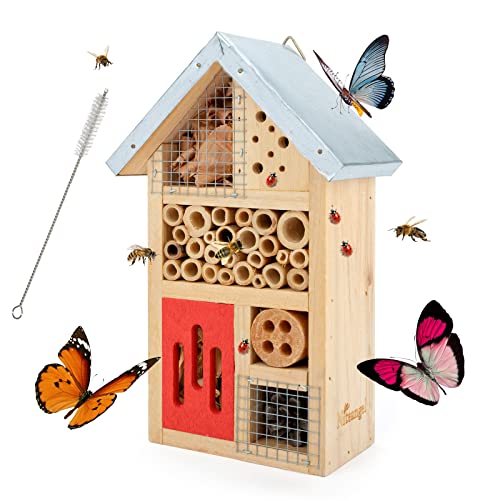
The Niteangel insect hotel provides a safe nesting environment for garden creatures to shelter, hibernate, and lay eggs while allowing observers to study them. Its dry wood and bamboo composition supports a range of beneficial insects, including ladybugs and lacewings. Best for educational gardens and observation-friendly setups.
- Best for: Educational spaces and families wanting to observe pollinators.
- Why: Easy to monitor and manage, with clear, safe nesting options.
- Caution: Position away from direct heavy rain to extend longevity.
SISTERBIRD Bluebird Houses for Outside

These bluebird houses are crafted from untreated cedar with a properly sized entrance hole to attract bluebirds, wrens, chickadees, and other small cavity nesters. The predator guard around the entrance helps protect fledglings. Best for homeowners seeking a traditional bird house that also doubles as a pollinator-friendly feature in a yard.
- Best for: Bluebirds and other small cavity-nesters in mixed-use gardens.
- Why: Cedar construction provides weather resistance and a natural look.
- Caution: Designed for birds; insect-friendly use is incidental and not guaranteed.
SISTERBIRD 2 Pack Bird Houses for Outside Clearance

This two-pack option includes cedar bird houses with copper predator guards and appropriately sized entrance holes to attract bluebirds and other small birds. While primarily a birdhouse, it can contribute to a pollinator-friendly garden by extending habitat variety near flowering patches. Best for expanding nesting opportunities in larger yards.
- Best for: Increasing nesting sites for bluebirds and similar species.
- Why: Copper guards add predator protection, supporting fledgling survival.
- Caution: Primarily designed for birds; ensure placement supports bee-friendly zones separately.
Buying Guide: Key Considerations For Selecting A Bee Nesting Habitat
Purpose and placement: Decide whether you want a compact bee hotel, a multi-species insect hotel, or a decorative bird-friendly structure. Place in sheltered spots with morning sun and afternoon shade to extend life and activity.
Material and finish: Look for untreated cedar, pine, or fir with water-based finishes. Natural materials tend to blend into gardens and support long-term durability in outdoor conditions.
Design features: Favor sloped roofs, varying cavity sizes, and accessible cleaning options. These traits help with rain protection and seasonal maintenance for orchard bees and other pollinators.
Maintenance: Regular cleaning of nesting tubes and cavities prevents mold and debris buildup. Replace or refresh tubes and fill materials as needed to maintain healthy habitats.
Species focus: If targeting orchard bees specifically, prioritize mason bee and leafcutter bee designs with appropriately sized holes and tubes. For broader pollinator support, multi-section insect hotels attract a wider range of beneficial insects.
Safety and predators: Consider predator guards or entrance barriers to protect nests, especially for fledglings in bird houses that also attract pollinators nearby.
FAQ
- What is the best type of bee house for orchard bees? A single- or multi-tubed mason bee house with bamboo or paper tubes and a weather-protected enclosure is ideal. Ensure cavity sizes match mason bee nesting preferences.
- Do bee houses attract wasps or other pests? Some designs can attract non-target insects; maintain clean tube interiors and limit exposed tubes to reduce pest encroachment.
- How often should I clean a bee hotel? Inspect annually and clean away debris after the winter season. Replace tubes showing signs of mold or excessive wear.
- Can I use a bee house near birds? Yes, but place it at a safe distance from high-traffic bird perches. Use predator guards for nesting cavities to protect fledglings.
- Will bee houses replace flowering plants? No. They complement a pollinator-friendly garden with seasonal blooms that attract bees and other insects.
- Are these products suitable for indoor use? Most bee houses are designed for outdoors; interior use may not provide appropriate ventilation and humidity control.