Blue LED grow lights are essential for promoting sturdy vegetative growth, stronger stems, and robust foliage in indoor gardens. This guide helps American buyers choose the right blue-heavy or full-spectrum options for different plant needs, from seed starting to flowering. Each product section highlights who it’s best for, why it was selected, and any limitations to consider.
Summary table of selected products:
| Product | Best For | Key Benefit | Limitations |
|---|---|---|---|
| Otryad LED Grow Lights for Indoor Plants | Beginners and small desks | 9 dimmable levels; timer options | USB power; adapter recommended |
| LEOTER Grow Light for Indoor Plants | All growth stages; mix-ready spectrum | 80 LEDs; multi-spectrum modes | Timer reset if power is disconnected |
| HIGROW LED Aquarium Blue Light Bulb | Aquarium and indoor greens | Blue 450–460nm for foliage growth | Blue-only spectrum focus |
| Garpsen Grow Lights, 2 Heads | Small setups needing longer timers | 3 brightness modes; 6/12/16H timers | Two heads may take more space |
| yentbokj Grow Lights, 5 Heads | Flexible multi-head coverage | Adjustable tripod; independent head control | Remote control and RF controller requirement |
Otryad LED Grow Lights for Indoor Plants
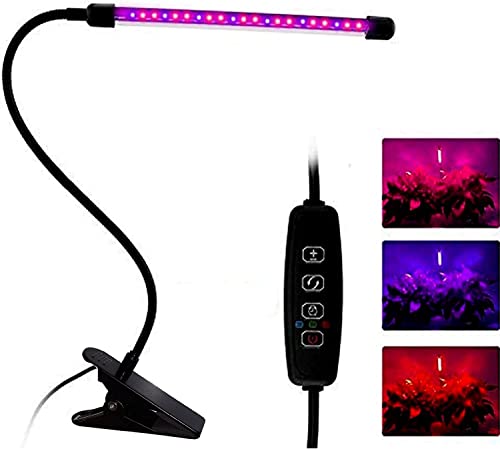
Product overview: This full-spectrum clip-on desk grow lamp offers three lighting options—Red, Blue, and Blue plus Red—with nine dimmable levels. A built-in timer supports 3/6/12-hour cycles. Designed to fit compact desks or plant corners, it helps germination, growth, and flowering phases with flexible distance control. Best for entry-level growers and small spaces where clip-on light is preferred.
- Best for beginners or desk gardeners needing a simple, adjustable setup.
- Highlights: 9 dimmable brightness levels; 3/6/12-hour timer options; full-spectrum with red/blue blends.
- Limitations: Requires a USB power option; adapter use is recommended for certain USB plugs.
LEOTER Grow Light for Indoor Plants
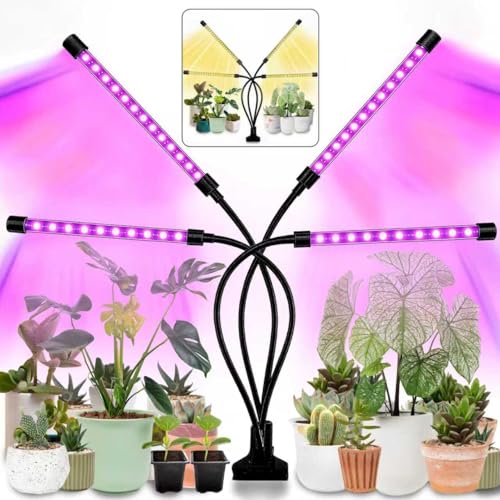
Product overview: An upgraded 80-LED full-spectrum lamp with red, blue, and full-spectrum options. It integrates a circular memory timer for 3H, 9H, or 12H lighting cycles and a 10-dimmable mode system. The gooseneck and three spectral modes support seedling, vegetative, and flowering stages. Best for growers seeking comprehensive spectrum options and a flexible timer that minimizes manual operation during work or travel.
- Best for all growth stages; flexible spectrum and dimming controls.
- Highlights: 80 LEDs (32 red, 12 blue, 36 full spectrum); three timer durations; 10 dimmable levels.
- Limitations: Timer may require reset after power loss.
HIGROW LED Aquarium Blue Light Bulb

Product overview: A blue-focused LED grow bulb designed for indoor plant growth and aquarium cultivation. It features 18 high-power blue LEDs (450–460nm) with a 90-degree optical lens and advanced heat dissipation via aluminum heat sinks. Best for users prioritizing blue spectrum intensity for foliage development and compact setups where a dedicated blue bulb is ideal.
- Best for blue-light emphasis without broader full-spectrum needs.
- Highlights: 18x 2W LEDs, 450–460nm, improved heat dissipation for longer use.
- Limitations: Primarily blue spectrum; not a full-spectrum grow light for flowering stages.
Garpsen Grow Lights for Indoor Plants

Product overview: A two-head LED grow light with full-spectrum options and 9+4+7 LED configuration per light tube. It includes 6H, 12H, and 16H timers plus three lighting modes and five brightness levels. This setup is suitable for small plant collections or seed starter trays that need a richer spectrum and longer automated lighting. Best for compact setups that require reliable daily timer cycles and spectrum versatility.
- Best for small spaces needing extended timers and richer spectrum.
- Highlights: 2 heads, full spectrum, three modes, 5 brightness levels, up to 16H timer.
- Limitations: Two heads may occupy more space on narrow desks; coupling may affect placement for larger plants.
yentbokj Grow Lights, Five Heads
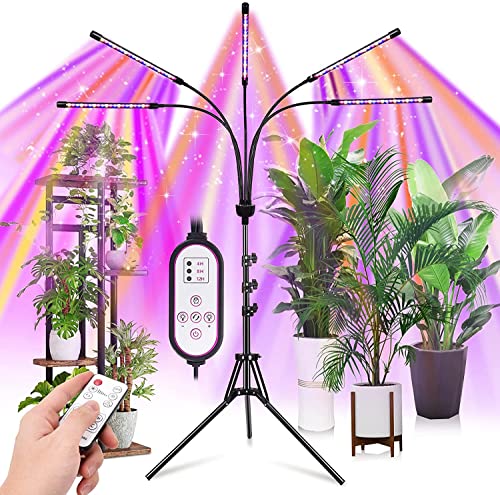
Product overview: A five-head grow light with a tripod stand, adjustable height (15″ to 63″) and 360-degree gooseneck rotation. It offers three spectral modes and ten brightness levels, plus inline and RF remote controls for auto on/off at 4H, 8H, or 12H. Best for growers needing flexible multi-head coverage and remote operation in larger plant clusters or tables. The five-head design supports broader light distribution.
- Best for flexible multi-head coverage and remote control convenience.
- Highlights: 5 heads, adjustable tripod, 3 spectral modes, 10 brightness levels, auto timer options.
- Limitations: More components mean the setup can be bulkier and require space to position all heads effectively.
Buying Guide: Key Considerations For Blue Light And Full-Spectrum Grow Lights
- Light spectrum needs: Decide whether you want pure blue light for vegetative growth or a full spectrum that includes red for flowering. Some plants respond best to blue during early stages, while others benefit from mixed spectra as they mature.
- Light distribution and coverage: For seed starting or small desks, compact single-head designs may suffice. For larger trays, multi-head or adjustable tripod systems ensure even coverage.
- Timer and automation: Consider models with daily auto on/off timers (3/6/12H or longer sessions). Timers reduce maintenance and help protect plants during absences.
- Power source and efficiency: LED solutions are generally energy-efficient. Check whether the unit uses USB power or wall adapters and ensure compatibility with your setup.
- Adjustability: Gooseneck, tripod height, and head angles influence how evenly light reaches plant surfaces. Flexible designs improve coverage for varying plant types and pot sizes.
- Durability and heat management: Look for solid heat sinks and well-ventilated housings to prolong bulb life, especially for longer lighting sessions.
- Ease of installation: Simple clip-on or clamp designs are ideal for desks; multi-head floor stands work well for tables or windowless rooms.
Frequently Asked Questions
- What is the difference between blue-only and full-spectrum grow lights?
Blue-only lights primarily support vegetative growth, while full-spectrum lights support the entire life cycle from seedling to flowering. - How long should blue LED lights be on each day?
Most setups use 12–16 hours per day during active growth, but follow plant-specific guidelines and adjust with timers. - Do I need a special adapter for USB-powered lights?
Yes, some units recommend adapters to ensure stable power supply, especially when running longer lighting cycles. - Can blue light replace natural sunlight?
Blue light supplements sunlight indoors but does not fully replace it; ensure adequate ambient light or supplementary full-spectrum options for flowering plants. - Are multiple-head lights better than single-head lights?
Multiple heads can provide broader and more uniform coverage, but require careful placement to avoid hot spots and crowding.