Finding the right deck drive belt for a riding lawn mower is crucial to maintain cutting efficiency and engine health. The following guide highlights five reliable options commonly used with Craftsman, Husqvarna, Poulan, and other 42-46 inch riding mowers. Each product is evaluated on compatibility, material quality, and overall durability to help you make an informed choice for long-term yard maintenance.
Summary table of selected products:
| Product | Brand | Length x Width | Key Benefit |
|---|---|---|---|
| 144959 Deck Belt Compatible with Craftsman LT1000 LT2000 LT3000 | Tecreddy | 1/2″ x 96″ | Broad compatibility; premium material |
| 144959 Deck Belt for Craftsman 42 Inch | UDC Mower Belts | 0.50″ x 95.40″ | Aramid-cord option; detailed fit list |
| Lawnmowers Parts Craftsman 42″ Cut Belts 144959 | Lawnmowers Parts | Unknown width; typical 1/2″ | Multi-model compatibility |
| 954-04060C Deck Belt for Troy-Bilt / MTD | Wanotine | 1/2″ x 96.5″ | Wide compatibility; bearing performance |
| AILEETE 532144959 144959 Deck Belt | AILEETE | 1/2″ x 95″ | OEM-replacement style; broad mower reach |
Tecreddy 144959 Deck Belt for Craftsman and More

The Tecreddy 144959 deck belt is designed to fit Craftsman 42-inch decks and a wide range of LT-series mowers, including LT1000, LT2000, and LT3000 variants. It supports multiple part numbers, enabling compatibility with entities like 532144959 and 138255. The belt is marketed as a premium, durable drive belt intended to improve reliability and extend mower service life, especially under frequent mowing schedules in residential landscapes.
Key features include extensive compatibility with Craftsman and Husqvarna lines, plus a focus on maintaining optimal blade speed and consistent traction. The belt’s construction emphasizes stability under load, which translates to steadier cutting performance and reduced slippage during mulching or bagging operations. For households relying on a single mower for diverse yard layouts, this belt offers a practical, widely compatible option.
UDC Mower Belts 144959 Deck Belt for 42 Inch Mowers
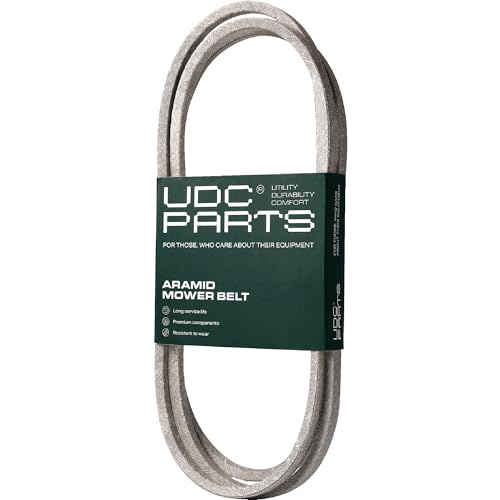
The UDC Mower Belts option targets Craftsman and Husqvarna 42-inch decks, including LT3000 and similar models. It is marketed as an aramid-cord belt variant and uses a length of 95.40 inches with a width of about 0.50 inches, aligning with typical OEM specifications for 144959 replacements. The description emphasizes compatibility across a broad model range and cautions buyers to verify their exact mower configuration to ensure a proper fit.
Material choice and aramid cord construction are highlighted as factors contributing to reduced wear and tear, potentially improving belt longevity and reducing the need for frequent replacements. For owners who operate in mixed mowing conditions—thick grass, uneven terrain, or frequent start-stop cycles—such a belt can help maintain peak blade speed and smooth drive performance over time.
Lawnmowers Parts 42″ Cut Belts 144959

This product line targets the 42-inch cutting decks common to Craftsman, Poulan, and Husqvarna machines. The listing notes a rotary deck belt, with multiple part numbers potentially replaced by the same belt. Buyers are advised to check their mower model and part compatibility before purchasing, as variations in deck design or engine configuration can affect fit.
From a performance standpoint, the belt’s ability to align with several OEM numbers makes it a flexible replacement option for households with multiple operating mowers or for those who prefer stocking one belt to cover several models. The emphasis on correct part number verification helps reduce the risk of the wrong belt, which could lead to poor blade engagement or belt slip during operation.
Wanotine 954-04060C Deck Belt for Troy-Bilt and More

The Wanotine deck belt is a widely compatible option that fits a range of Troy-Bilt, MTD, Cub Cadet, John Deere, and Craftsman riding mowers with 42-inch decks. It carries a 1/2-inch width and a length around 96 and a half inches, aligning with common 954-04060 replacement patterns. The product listing emphasizes compatibility with a broad roster of brand models and suggests verifying both model and configuration for an exact match.
Performance considerations for this belt focus on load-bearing capacity and resilience under prolonged mowing tasks. The belt’s dual compatibility across major brands is a practical advantage for homeowners with legacy equipment or for service providers who maintain multiple customer machines. Durability is reinforced by the belt’s construction, designed to resist wear and cracking under typical operating temperatures and engine power ranges.
AILEETE 532144959 144959 Deck Belt

The AILEETE deck belt is marketed as a direct replacement for multiple OEM parts, including 532144959 and 144959 variants. It covers Craftsman 42-inch decks across several models such as LT1000, LT2000, LT3000, and DYT4000, as well as Husqvarna and Poulan lines. The belt’s construction emphasizes compatibility with a wide range of mower configurations, aiming to simplify replacement decisions for owners with diverse equipment.
Advantages include broad fitment and an emphasis on accurate OEM replacements. The belt’s specification aligns with standard 1/2-inch width, which helps ensure proper engagement on pulleys and smooth blade operation. For buyers who own a mixed fleet of riding mowers, this belt offers a single, reliable replacement that covers many common configurations, reducing the need to stock multiple belts.
Buying Guide: Key Considerations For Replacing A Riding M mower Belt
- Model compatibility: Confirm the exact mower model, deck width, and drive belt path. Even small differences in deck dimensions or pulley arrangement can affect fit and performance.
- Belt width and length: Most riding mower belts use standard widths (commonly 1/2 inch) and lengths around 95–96 inches for 42-inch decks. Measure or verify OEM part numbers to ensure proper tension and speed.
- Material and construction: Belts with aramid cords or reinforced compounds typically offer higher durability and wear resistance, especially under heavy mowing or frequent start-stop cycles.
- OEM versus aftermarket: OEM replacements are designed to match exact factory specifications, but reputable aftermarket belts can provide comparable performance at lower cost. Check return policies and warranty terms.
- Installation and tension: When replacing a belt, ensure correct routing around pulleys and under tension. Improper installation can lead to premature wear or belt slip, reducing blade performance.
- Maintenance context: If you frequently cut thick grass or navigate uneven terrain, consider belts with higher heat and wear resistance to extend service life.
- Cross-brand compatibility: Some belts are advertised as fitting multiple brands. Use model-specific checks and customer reviews to confirm real-world fit for your mower.
- Availability and replacements: Keeping a spare belt with a known good fit can minimize downtime. Consider belts that cover multiple models in case of equipment upgrades.
Additional Considerations
When evaluating belts, look for clear model-number mappings, reputable brands, and concise fit lists. Customer feedback often highlights real-world fit issues, which can help you avoid buying an ill-suited belt. For owners managing maintenance records, documenting the exact belt part number used on each mower helps streamline future replacements and service history.
In terms of performance perspectives, comparing two belts on the same mower under similar conditions can reveal differences in longevity, resistance to cracking, and how well each belt maintains blade speed during heavy load. A belt that preserves blade speed reduces routine mowing time and helps achieve a consistent cut quality across the yard.
Overall, selecting a belt with broad compatibility, proven material strength, and reliable tension characteristics offers the best balance of ease, durability, and cost for the typical American residential lawn.