Protecting a garden from wildlife and pests often means deploying a dependable, battery-powered fence energizer. This guide curates top solar and battery-powered fence chargers designed to defend gardens, pastures, and pet enclosures. Each pick balances portability, reliability, and performance to help you choose a system that fits your terrain and animal challenges. Below you’ll find brief product highlights, a quick comparison, and practical buying tips to ensure you select the right setup for long-term garden protection.
| Product | Brand | Output | Range | Notes |
|---|---|---|---|---|
| ANDMON 10 Miles Solar Electric Fence Charger | ANDMON | 0.11J | Up to 2 miles typical | Day/Night mode; portable solar panel |
| Zareba EDC5M-Z | Zareba | Not specified in short features | 5 miles | Battery operated; requires 6V battery |
| FenceMate Battery Powered Charger | FenceMate | 0.5J | Up to 10 miles (depends on wire and vegetation) | Peak 10 kV; rainproof design |
| Gallagher S20 Solar Electric Fence Charger | Gallagher | 0.2J | Up to 2 miles | Lithium battery; efficient solar |
| Andmon MINI400 20 Miles Solar Charger | ANDMON | 0.3J | Up to 20 miles | Day/Night mode; long runtime |
| VEVOR 10kV 1J Charger | VEVOR | 1J | 1.86 miles | AC/DC options; weather resistant |
| PLOWIC 10 Miles Solar Fence Charger | PLOWIC | 0.20J | 10 miles | Portable; 8KV output |
| FarmNix 30 Miles Solar Fence Charger | FarmNix | 0.3/0.8/1.1/1.5J | Up to 30 miles | Adjustable outputs; 24h protection |
When choosing a garden fence charger, consider how much fencing you need to protect, the typical weather in your area, whether you prefer solar or battery operation, and how often you’ll relocate the unit. The models below were selected for their blend of portability, durability, and practical output suitable for home gardens, poultry runs, and pet enclosures.
ANDMON 10 Miles Solar Fence Charger

This solar-powered energizer is designed for portability and easy installation. It claims to energize up to 2 miles of fence, making it suitable for smaller to medium garden perimeters or strip grazing setups. The unit pairs a built-in solar panel with an internal GEL battery, supporting reliable operation in low-light conditions. Users can mount the charger on a suitable steel rod and connect it to the fence line for 24/7 protection. The Day/Night mode helps ensure continuous operation across varying daylight conditions.
Key advantages include its compact form and the convenience of a renewable power source. The device is described as rugged, implying suitability for outdoor garden environments. Potential limitations to verify include real-world range depending on fence type, vegetation, and load, as well as battery longevity in extreme weather. This charger is a practical choice for gardeners seeking a mobile, solar-powered solution with straightforward setup.
Zareba EDC5M-Z 5-Mile Battery Operated Charger

The Zareba EDC5M-Z is a battery-operated energizer designed for moderate fencing needs. It’s intended for use with a 6-volt battery and powers up to several miles depending on wire type and loading. The product description highlights its suitability for controlling various animals, including horses, pigs, and cows, while offering a practical option when a weatherproof AC power source is unavailable. Battery replacement and the actual run-time will depend on battery health and load on the fence.
Consider this model if you prefer a straightforward, battery-powered solution with a traditional setup. It’s appropriate for gardens requiring a simple, reliable fence energizer without ongoing solar charging. Ensure you have a compatible battery on hand and plan for occasional maintenance like battery swaps and component checks.
FenceMate Battery Powered Charger

FenceMate offers a compact, sealed design with two terminals for ground and fence connections. It provides a practical solution for fencing poultry, livestock, or yard perimeters. The charger is described as capable of powering around 2.5 miles under multi-wire configurations or up to 10 miles with a single high-conductivity wire in low-vegetation conditions. The peak voltage is listed at 10 kV, with a rainproof design intended for outdoor use. Practically, real-world performance depends on vegetation, grounding quality, and wire type.
The device includes a weather-resilient build and a straightforward indicator system to show pulse activity. This makes it a sensible choice for garden boundaries where weather exposure is common and a compact, dependable unit is preferred. Confirm compatibility with your fence materials and ensure proper grounding for optimal results.
Gallagher S20 Solar Electric Fence Charger

The Gallagher S20 is a solar-powered energizer that uses lithium battery technology. This combination supports faster charging and longer charge retention, which can improve performance in fluctuating weather. It is designed for portability and ease of relocation, making it a strong option for gardeners who rotate fencing areas or practice strip grazing. The unit includes smart energy management that adapts output based on stored energy and conditions, helping sustain fence power across day and night—even during cloudy periods.
For gardeners prioritizing energy efficiency and longer-term battery life, the S20 offers a compelling balance. As with all solar devices, ensure good sun exposure and consider the compatibility of the solar panel with your fence length and vegetation. The lithium battery helps reduce maintenance compared with traditional lead-acid options.
Andmon MINI400 20 Miles Solar Charger

This model is marketed as a high-capacity solar charger capable of energizing up to 20 miles of fencing with 0.3 joule output. It uses a relatively large solar panel and a sealed lead-acid battery to extend run time, claiming up to 14 days of operation without sun in some configurations. The device is designed for extreme operating ranges and temperature stability, making it adaptable for challenging environments. It is appropriate for gardeners with larger plots or multiple fencing segments needing reliable power through varied weather.
Consider the MINI400 if you require long durations between sun exposure and a substantial fence length. It is important to assess whether a 0.3J output is sufficient for your animal deterrence needs and to verify the fence wire resistance and grounding setup to avoid wasted energy and ensure peak performance.
FarmNix 30 Miles Solar Fence Charger
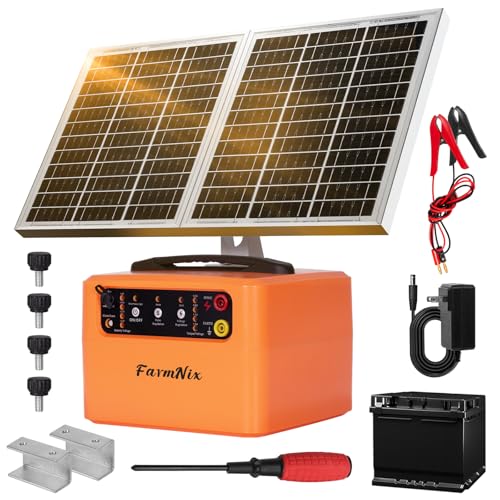
The FarmNix system targets larger garden setups and property boundaries, offering a wide protection range with adjustable output power. It supports several voltage levels (6KV/8KV/10KV/12KV) and a selectable energy range (0.3/0.8/1.1/1.5 joules). The solar-powered charger is designed for 24-hour, day-and-night protection, backed by a 12V 7Ah sealed lead-acid battery. This model suits gardens with extensive fencing and a need for reliable, continuous deterrence against intruders and wildlife.
Its versatility extends to various fence types, including poultry netting and traditional wire, and it emphasizes long battery life and adaptability to different climates. Review your fence material, distance, ground conditions, and expected animal pressure to determine whether this is the best fit for your garden perimeter.
Buying Guide: Key Purchase Considerations
- Fence length and load: Match the charger’s range and joule output to your fence type and the animals you’re deterring. Higher joule outputs are better for larger pests or heavier livestock, but require a compatible fence and grounding.
- Power source: Solar versus battery. Solar units work well in sunny climates and offer portability, while battery-powered models perform consistently in shaded areas but require periodic battery maintenance or replacements.
- Weather resistance: Look for IP ratings or weatherproof enclosures if the charger will stay outdoors. Rainproof or water-resistant builds help ensure continued operation during storms.
- Grounding and installation: Proper grounding improves efficiency and safety. Verify the number of ground rods needed and ensure connections to the fence line are secure.
- Maintenance and longevity: Consider battery type (gel, sealed lead-acid, lithium) and the expected lifespan of solar panels. Some models boast longer run times between charges, reducing maintenance frequency.
- Portability: If you need to relocate the charger seasonally or for different fencing segments, prioritize compact, lightweight units with simple mounting options.
- Cost of ownership: Evaluate not just the upfront price but long-term costs such as battery replacements and potential solar panel cleaning. Compare warranties and customer support options.
- Safety and compliance: Ensure the device follows local regulations for fencing devices and that safety features are in place to prevent unintended shocks to pets or people.
In choosing the right battery-powered or solar-powered fence energizer for a garden, assess your specific needs: fencing length, expected wildlife interactions, climate, and whether you prefer a portable or permanently installed solution. The selections above cover a range of use cases—from small garden plots to larger domains—allowing you to balance energy, reach, and ongoing maintenance. The right charger helps deter intruders while minimizing upkeep and ensuring safe, reliable protection for your garden perimeter.