Bare root rose trees offer an economical and efficient way to add color, fragrance, and vertical interest to any landscape. This guide focuses on five popular bare root rose trees that perform well in American gardens, detailing each plant’s size, soil needs, and spacing. Whether you want classic Iceberg varieties or climbing roses to cover a trellis, these selections provide reliable performance and easy establishment when planted in well-drained, humus-rich soil.
| Product | Brand | Size/Form | Key Benefit |
|---|---|---|---|
| ICEBERG Dormant Bare Root Tree Rose | BRECK’S | 24 inch tree form | Reliable white-flowered classic for beds and borders |
| Burgundy Iceberg Floribunda Tree Rose | SPRING HILL NURSERIES | 24 inches tall, dormant bare root | Vibrant burgundy-rose floribunda in tree form |
| Skys The Limit Dormant Bare Root Climbing Rose | BRECK’S | 1.5 grade bare root | High climber with expansive growth and blooms |
| Don Juan Dormant Bare Root Climbing Rose | BRECK’S | 1.5 grade bare root | Deep red blooms, strong climber for trellises |
| Pearly Gates Climbing Rose | GURNEY’S | Bare root, 1-pack | Soft pink blooms, reliable climber for fences |
Note: All selections benefit from well-drained soil, humus-rich components, and adequate spacing to ensure air circulation and healthy root establishment. For best results, plant in full sun and water regularly as roots establish, gradually reducing frequency as plants mature.
BRECK’S Iceberg Dormant Bare Root Tree Rose

Each offer includes one dormant bare root 24 inch tree form rose. Space plants approximately 3 feet apart for best results. Prefers well-drained, humus-rich, slightly acidic soil. This classic white rose adds timeless elegance to borders, with dependable garden performance. Suitable as a focal plant in perennial beds or a stunning backdrop behind lower-growing shrubs.
SPRING HILL NURSERIES Burgundy Iceberg Floribunda Tree Rose

One dormant bare root tree form rose, up to 24 inches tall. Space plants about 48 inches apart for best results in ground or in containers. Grows well in well-drained soil; floribunda blooms provide a cascade of color and repeat flowering. This cultivar mixes bold burgundy hues with classic Iceberg form for striking compositions.
BRECK’S Skys The Limit Dormant Bare Root Climbing Rose

Includes one dormant bare root 1.5 grade rose. Reaches a mature height of 10 to 12 feet, suitable for trellises, fences, or arbors. Space plants approximately 4 to 6 feet apart for best results. Thrives in well-drained soil and benefits from strong support structures to showcase its climbing habit.
BRECK’S Don Juan Dormant Bare Root Climbing Rose
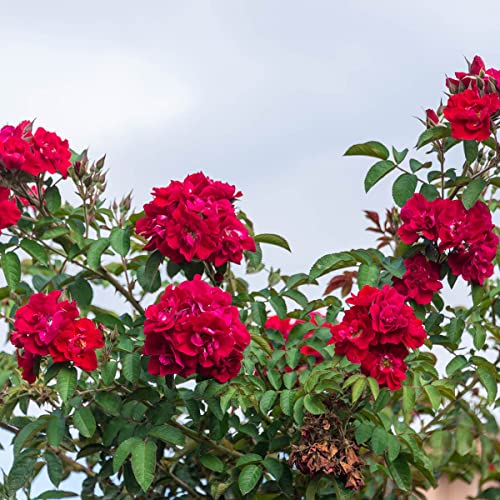
One dormant bare root 1.5 grade rose. Reaches 10 to 20 feet in mature height. Plant can climb to 14 feet tall when supported on a trellis or arbor. Planting should emphasize vertical growth with sturdy staking and proper training on structures for best flowering display.
Pearly Gates Climbing Rose
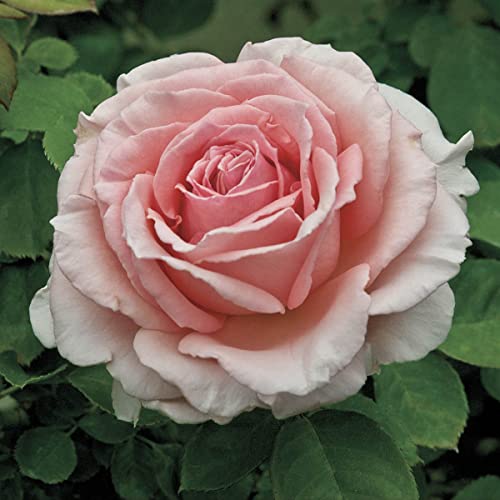
One dormant bare root rose. Space plants about 8 to 12 feet apart for best results. Prefers well-drained, humus-enriched, slightly acidic soil for vigorous growth. Blooms appear in clusters along sturdy vines, and can be trained along fences or arbors for a dramatic vertical display.
Buying Guide: Bare Root Rose Trees
- Planting time and preparation: Bare root roses are best planted while dormant, typically in early spring or late winter. Soak roots in water for several hours before planting to rehydrate, trim damaged roots, and prune canes to an appropriate shape.
- Soil and location: Use well-drained soil rich in organic matter. Amend with compost to improve texture and drainage. Choose a sunny location with at least 6 hours of direct sun per day for robust bloom production.
- Spacing and support: Climbing roses require sturdy structures such as trellises or arbors and ample space (often 4–6 feet apart) to prevent crowding. Tree roses may be spaced more compactly for defined borders, about 3–4 feet apart as a baseline.
- Watering and care: Water deeply after planting to settle the roots. Keep the soil consistently moist but not waterlogged during the first growing season. Mulch to retain moisture and suppress weeds.
- Pruning and training: Prune canes to encourage outward growth, remove any weak or crossing branches, and train climbers along supports in the desired direction. Seasonal pruning helps maintain shape and flowering cycles.
- Disease and pests: Look for signs of common rose issues such as powdery mildew or aphids. Choose cultivars with good disease resistance when possible and apply appropriate treatments as needed, following product labels.
- Climate and variety fit: Select varieties that suit your climate zone. Climbing roses often tolerate warmer climates where summer heat is a consideration, while floribundas and Iceberg-type roses perform well in temperate regions.