Growing vegetables at home can extend your growing season and protect crops from pests and weather. This guide highlights five sturdy backyard greenhouses and related options that fit a range of spaces and budgets. Each product section includes a quick image reference and key features to help you compare at a glance.
| Product | Brand | Notable Feature |
|---|---|---|
| 6×4FT Small Greenhouse | WUKHG | Sturdy aluminum frame with polycarbonate panels; weather resistant |
| Greengro Greenhouse, 57 x 57 x 76” | Greengro | Thick PE cover; large 6.2 ft height for space |
| Elevated Wood Gardening Bed With Green House Cover | BACKYARD EXPRESSIONS | Cedarwood planter with greenhouse top for early starts |
| HOPETANA 8×8 FT Outdoor Greenhouse Kit | HOPETANA | Walk-in design; 6mm twin-wall PC panels; UV protection |
| Ohuhu Plastic Greenhouse for Outdoors | Ohuhu | Portable walk-in design with multiple shelves and PVC cover |
6×4FT Small Greenhouse

This compact greenhouse is built to withstand varied weather while providing an accessible space for tending vegetables and herbs. The frame uses aluminum alloy for strength, paired with heavy-duty polycarbonate panels that resist impact and UV exposure. The 4mm twin-wall panels maximize light transmission while helping regulate humidity and temperature inside the structure. A key feature is adjustable ventilation windows and a lockable door, which support air flow and security for young transplants or seedlings. This setup is ideal for patios and smaller gardens where space is at a premium.
Materials and build quality are oriented toward long-term outdoor use. The aluminum frame reduces corrosion risk and keeps the unit lightweight enough for relocation if needed. Potential buyers should consider where the greenhouse will be placed to optimize sun exposure and wind protection. Regular checks on the sealant and connections can help maintain the weatherproof performance over seasons.
Greengro Greenhouse, 57 x 57 x 76”

This walk-in greenhouse focuses on creating a controlled environment suitable for a variety of vegetables and seed trays. The structure relies on a sturdy frame and a thick polyethylene cover, with a door that seals well and windows that can be screened. The design helps regulate external airflow to stabilize temperature and moisture. The cover is thick and durable, engineered to withstand wind while protecting plants from UV exposure that can damage delicate foliage. Inside, shelves or weight-bearing supports offer space for multiple pots, trays, and starter plants, facilitating a broad range of crops.
With a robust frame and secure weatherproof cover, it’s suitable for year-round use in temperate climates. The extended height provides ample headroom and easier access to taller plants. For gardeners with larger plant volumes, this model can support a dense layout. Owners should apply ground anchors or weights in windy areas to maximize stability on uneven surfaces.
Elevated Wood Gardening Bed With Green House Cover
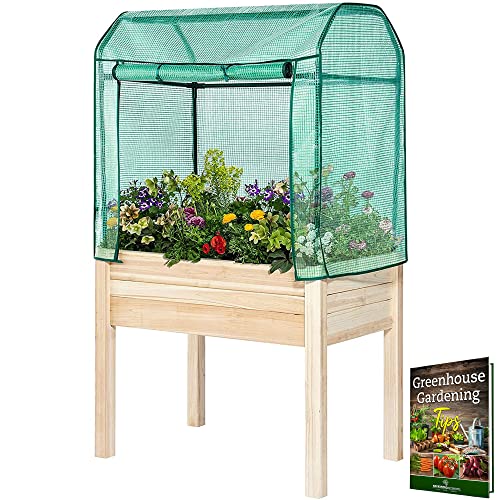
This raised garden bed combines natural cedarwood with a removable greenhouse top, enabling early-season planting and controlled growth for vegetables and herbs. The cedarwood is non-toxic and helps maintain stable soil temperatures around the root zone. The greenhouse cover allows you to start plants earlier, then lift the cover for sun exposure as outdoor conditions permit. The bed’s total weight rating supports substantial soil and plant mass, while the greenhouse frame is designed to withstand moderate wind loads.
Practical considerations include monitoring moisture levels in the soil and ensuring the cover is securely attached during windy days. The cedar’s natural properties help resist decay, but periodic treatment may support longevity in harsher climates. This option is well-suited for elevated accessibility, raised-bed gardening, or gardeners who want a defined, contained space for starting crops before transplanting.
HOPETANA Sturdy 8×8 FT Outdoor Greenhouse Kit

This larger walk-in greenhouse emphasizes ease of assembly and durability. The slide-in panel design speeds setup, with most users completing installation in about 1–2 hours. The reinforced aluminum frame and sturdy base feet provide stability for year-round outdoor use, while ground nails help anchor the structure against wind. The 6mm twin-wall polycarbonate panels offer high light transmission with UV protection to support vigorous plant growth and extended growing seasons. This model is suitable for serious vegetable growers or households seeking substantial space for trays, pots, and mature plants.
Considerations include ensuring adequate site drainage and planning for access around the structure for watering and maintenance. The kit’s larger footprint means it requires more space but yields greater capacity for crops and equipment storage. The vented design improves airflow, reducing the risk of excessive humidity that can lead to fungal issues in dense plantings.
Ohuhu Plastic Greenhouse for Outdoors

The Ohuhu plastic greenhouse is a portable, walk-in option with multiple shelves and a transparent PVC cover designed for easy visibility and access. The tiered shelving systems maximize space for seed trays, pots, and starter plants, making it a practical choice for hobbyist gardeners who want to organize crops by type or stage. The durable PVC cover balances sunlight penetration with protection from the elements, while rust-resistant framing supports longevity in outdoor environments. A walk-in design enables comfortable tending and transplanting.
Assembly is typically straightforward, and the lightweight construction makes it feasible to relocate as needed. For gardeners in windy or rainy regions, securing the unit with stakes or weights can enhance stability. This model suits patio gardeners or those with compact backyards who still want a dedicated greenhouse area to promote healthy transplants and early-season harvests.
Buying Guide: Key Purchase Considerations For Backyard Greenhouses
When choosing a backyard greenhouse for vegetables, several factors influence long-term value and performance:
- Size and footprint: Assess available space and desired cultivation area. Larger greenhouses support more plants but require more outdoor space and base stability.
- Frame material: Aluminum frames offer corrosion resistance and lightness; wood frames provide natural aesthetics and solid stability but may require maintenance. Steel frames offer durability but can be heavier.
- Cover material: Polycarbonate and PE coverings balance light transmission, insulation, and durability. Twin-wall panels improve insulation and reduce heat loss, which can extend growing seasons in cooler climates.
- Ventilation and temperature control: Look for adjustable vents, doors, and the ability to regulate airflow to prevent overheating and humidity buildup that can foster disease.
- Weather resistance: Consider wind loads, snow load, and UV exposure. Heavier-duty frames and reinforced anchors improve resilience in harsh weather.
- Grounding and stability: Ground stakes, anchors, and weight distribution help maintain structure during storms and gusts.
- Maintenance and accessibility: Easy assembly, removable panels, and accessible doors support ongoing plant care and seasonal reconfiguration.
- Ventilation strategies: Screened vents or roll-up openings improve air exchange, reducing the risk of mold and heat stress for crops.
- Accessibility for plants: A walk-in design reduces bending and makes it easier to manage larger trays, pots, and mature specimens.
- Cost-to-benefit balance: Weigh initial investment against capacity, durability, and expected growing season length to determine overall value.