Answering the demand for simple, hands-off indoor gardening, an automated indoor growing system lets you grow herbs, greens, and small vegetables with minimal effort. These kits use smart lighting, nutrient delivery, and water management to sustain healthy plants all year. They’re ideal for busy households, kitchen enthusiasts, and urban dwellers with limited space who want fresh produce without soil mess. The following top five models prioritize ease of use, app control, and reliable maintenance for different living spaces and plant goals.
Summary table of chosen products
- LetPot LPH-SE Hydroponics System — Best for feature-rich control and faster growth.
- LetPot LPH-Air — Best for compact spaces and sleek kitchen integration.
- Ahopegarden 10-Pod Kit — Best for high capacity without complexity.
- Sonicgrace Indoor System — Best for quiet operation in bedrooms or offices.
- DRYADES 12-Pod System — Best for robust multi-plant kitchens and offices.
LetPot LPH-SE Hydroponics System

Best for tech-forward homes that want precise control. This model features a patented smart hydroponic system with the LetPot app, enabling 0-24 hour LED scheduling and on/off timing. Water reminders help prevent under- or over-watering, keeping plants healthy with minimal intervention. A true 24-watt full-spectrum LED supports year-round growth, claimed to accelerate development compared with traditional methods.
Why it’s chosen: The dual growing modes let you tailor blue vs red light for vegetative and flowering stages, while app control translates to predictable outcomes. The large 5.5L reservoir supports longer cycles between fills. Caution: App reliability and firmware updates can affect long-term scheduling accuracy; ensure your phone pairing remains active for best results.
Best for: Tech-savvy users who want robust automation and precise light plans. Better for: Those who value growth acceleration and reminders over a simple, plug-and-forget setup.
LetPot LPH-Air Hydroponics System

Best for small kitchens and counter space. The LPH-Air emphasizes compactness while offering app connectivity and a powered, adjustable 24W grow light. Ten pods provide substantial variety for herbs and greens without dominating counter real estate. It’s designed for easy integration into everyday living spaces, with intelligent controls that simplify maintenance.
Why it’s chosen: The system’s space-saving footprint makes it ideal for apartments or office kitchens. The app supports scheduling and alerts, reducing manual checks. Caution: Pod quantity is lower than some larger kits, which may limit production of multiple crops at once.
Best for: Small-space dwellers who still want a smart, hands-off garden. Choose this if: you need a sleek appliance-like garden that blends with modern kitchens.
Ahopegarden 10-Pod Hydroponics Kit

Best for ambitious home gardeners who want more plants with straightforward operation. This kit supports 10 pods and includes a visible water level and adjustable height. It uses an LED grow light with two modes to simulate different growth stages, helping basil, lettuce, and other greens thrive indoors. A quick-release design aids cleaning and maintenance.
Why it’s chosen: The combination of a large reservoir, clear water window, and adjustable light height offers a balanced, scalable solution for kitchen gardens. Caution: The dual-mode lighting is useful, but not every plant prefers intense blue or red light; monitor plant responses during new crop trials.
Best for: People who want a mid-to-large capacity system that remains user-friendly. Better for: households growing multiple herbs and leafy greens simultaneously.
Ahopegarden 10-Pod Indoor Garden with LCD Touch Panel

Best for tech-enabled, hands-off users who value a modern interface. This system uses a built-in LCD touchscreen for one-touch control, with dual light modes that mimic daylight across growth stages. The 10 pods maximize herb and leafy greens production in compact spaces, delivering year-round harvests without soil.
Why it’s chosen: The touch panel simplifies operation, and the dual-spectrum lighting supports diverse crops. Caution: Design emphasizes aesthetics and control; ensure you have space for the stand and pod layout in your kitchen or office.
Best for: Tech lovers seeking an elegant, easy-to-use indoor garden. Choose this if: you want a visually striking unit with straightforward controls and reliable light scheduling.
Sonicgrace Indoor Hydroponic Growing System

Best for quiet operation in shared spaces. The Sonicgrace system features a full-spectrum LED grow light and a silent water pump, delivering uninterrupted growth cycles. It supports up to five pods and uses a 24-hour lighting cycle to accelerate growth, making it suitable for herbs and compact vegetables year-round.
Why it’s chosen: Ultra-quiet performance is ideal for bedrooms or home offices where noise could be disruptive. Caution: With fewer pods, it may not suit households wanting many simultaneous crops; plan rotation accordingly.
Best for: Sleep-friendly or office environments seeking a discreet, low-noise garden. Avoid this if: you expect to run a large, multi-crop system in a single unit.
DRYADES 12-Pod Hydroponic System
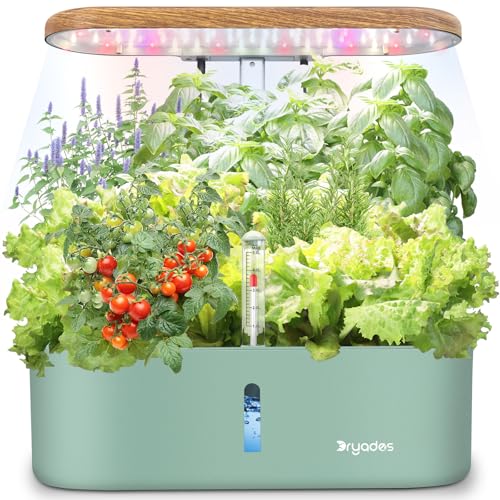
Best for robust kitchen and office gardens that want maximum variety. The Dryades system provides 12 pods and a clear water gauge for easy monitoring. It uses dual light modes to support different crop types and aims to accelerate growth through optimized LED lighting and circulation.
Why it’s chosen: The larger pod count supports more diverse crops, increasing harvest variety. Caution: Higher pod count can require more desk or counter space and more active maintenance planning for crop rotation.
Buying Guide: Key Considerations for Choosing an Automated Indoor Growing System
What space do you have available?
Measure your counter, shelf, or kitchen area before choosing a model. Compact units fit apartments, while larger 10- to 12-pod systems are better for dedicated cultivation corners in kitchens or offices.
How much automation do you need?
Consider whether you want app control, automatic watering, programmable lighting, and reminders. Some systems rely on smart apps for scheduling, while others offer physical controls or simple timers.
What crops do you plan to grow?
Herbs such as basil and mint thrive with moderate lighting, while leafy greens benefit from consistent full-spectrum light. If you want tomatoes or larger vegetables, prioritize higher light output and larger reservoirs.
Noise and energy usage
Quiet operation is important for bedrooms or offices. Look for systems with silent or near-silent pumps. Energy efficiency matters for long-term running costs, especially with 24/7 lighting.
Maintenance and ease of use
Choose units with visible water levels, easy-clean components, and simple pod replacements. Quick-release designs and accessible reservoirs reduce upkeep time.
Connectivity and data management
Apps that log growth days, water needs, and lighting schedules help with planning crops and optimizing yields. Ensure compatibility with your smartphone and consider firmware update longevity.
Durability and aesthetics
Durable plastics and a compact, modern appearance help the system blend with your home décor while withstanding daily use.
FAQ
- Do automated indoor growing systems work year-round? Yes. They provide controlled lighting, irrigation, and nutrients to support year-round cultivation indoors.
- Can I grow a variety of crops in one system? Most systems support multiple herbs and greens; some models offer higher pod counts for more crop variety.
- Is app control necessary for best results? Not strictly, but apps improve scheduling accuracy, reminders, and monitoring for many users.
- Do these systems require soil? No. They use hydroponic or aeroponic methods to deliver nutrients directly to the plants’ roots.
- Are there safety or warranty concerns? Check manufacturer details for safe electrical design and available support; ensure you follow water and power guidelines.
- What is the typical maintenance cadence? Regular refilling of water, nutrient solutions, and occasional cleaning of light panels and reservoirs help sustain growth.