Annual bluegrass (Poa annua) is a common lawn weed that thrives in cool seasons. This guide highlights proven products to prevent and control Poa annua, Crabgrass, and related weeds. Best for homeowners seeking reliable pre-emergent protection, season-long prevention, or broad-spectrum weed control, these options fit various turf types. The selections emphasize clear usage guidance, target weeds, and practical timing to help you choose confidently.
Summary table of selected products
| Product | Best For | What It Does |
|---|---|---|
| 0-0-7 Granular Prodiamine Pre-Emergent (18 lb) | Pre-emergent protection for Poa annua and crabgrass | Pre-emergent barrier with prodiamine |
| 0-0-7 Granular Prodiamine Pre-Emergent (45 lb) | Large areas; durable crabgrass/annual bluegrass prevention | Wide coverage; versatile weed prevention |
| BioAdvanced Season Long Lawn Weed Killer + Preventer | Southern lawns with long protection | Kills and prevents, up to 6 months |
| Scotts Turf Builder Triple Action | Weed control plus fertilizer for active lawns | Kills existing weeds and prevents crabgrass |
| Fertilome Broadleaf Weed Control with Gallery | Broadleaf weed control in landscapes and lawns | Stops broadleaf weeds before they start |
Note: This guide focuses on products that address annual bluegrass alongside other common lawn weeds. Consider your grass type, climate, and application timing when selecting a product.
0-0-7 Granular Prodiamine Pre-Emergent (18 lb)

Product overview: This granular pre-emergent uses 0.37% prodiamine to establish a weed barrier in spring and fall. It targets crabgrass and annual bluegrass, supporting broad compatibility with many grass types, including bermudagrass, fescue, zoysia, and St. Augustine varieties. Best for homeowners seeking a straightforward pre-emergent that can be safely applied to multiple turf types.
Who it’s best for and why: Best for homeowners who want a versatile, pre-emergent solution capable of long-term Poa annua and crabgrass prevention across diverse lawns. The formulation is suitable for turf-type tall fescue and other common warm-season and cool-season grasses.
Caution/limitation: As a pre-emergent, timing is critical. Apply before weed seeds germinate; late applications may reduce effectiveness. Do not apply to established bare patches without re-seeding as directed.
0-0-7 Granular Prodiamine Pre-Emergent (45 lb)

Product overview: This larger bag provides a comprehensive pre-emergent barrier to prevent crabgrass, Poa annua, and other annual weeds. It is designed for lawn care setups needing higher coverage per application, suitable for expansive landscapes and contractors.
Who it’s best for and why: Choose this if you manage large lawns or multiple properties and want fewer applications with broad Poa annua and crabgrass prevention coverage. The product supports consistent protection across many turf types.
Caution/limitation: Follow label directions for rate and timing to avoid turf stress. Large-volume bags require precise storage and handling to maintain effectiveness.
BioAdvanced Season Long Lawn Weed Killer + Preventer

Product overview: This weed killer and preventer offers broadleaf and grassy weed control with a long-lasting effect, designed to protect up to 4,000 square feet in southern lawns. It targets annual bluegrass alongside typical broadleaf weeds like crabgrass, dandelion, and goosegrass for up to six months.
Who it’s best for and why: Best for southern lawns where a season-spanning solution is desirable and Poa annua is a common nuisance. The product is suited for St. Augustinegrass varieties and other southern turf types.
Caution/limitation: Ensure appropriate application timing for your climate and apply only to designated turf types as per label to avoid unintended effects on ornamentals or non-target plants.
Scotts Turf Builder Triple Action
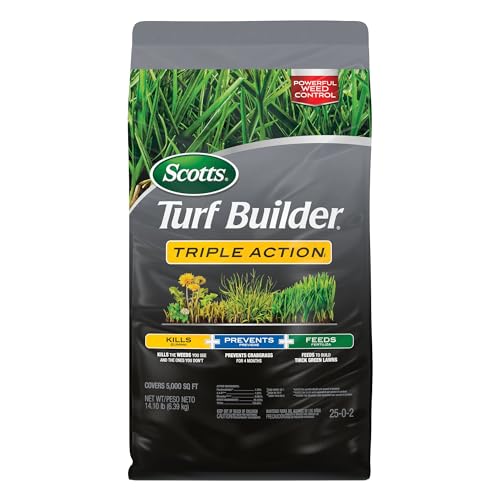
Product overview: This three-in-one formula combines weed control, crabgrass prevention, and fertilizer to support thick, green lawns. It claims to tackle listed weeds and provide ongoing crabgrass prevention for several months, aiding overall lawn health.
Who it’s best for and why: Choose this if you want a single product that both reduces weed pressure and promotes lawn growth. It’s particularly useful for active lawns needing both protection and nutrition.
Caution/limitation: It does not kill existing crabgrass; it prevents new growth. For best results, apply when weeds are actively growing and follow fertilizer timing to avoid over-fertilization.
Fertilome Broadleaf Weed Control with Gallery

Product overview: This broadleaf weed control product focuses on preventing broadleaf weeds like chickweed, clover, dandelion, and henbit. It is designed for landscapes and home lawns and emphasizes late-summer to fall or early spring application timing before germination.
Who it’s best for and why: Best for homeowners wanting targeted broadleaf weed suppression with clear pre-emergent timing to reduce future germination of stubborn broadleaf species.
Caution/limitation: Not all grassy weeds are addressed; this is primarily a broadleaf-focused product. Use as directed to avoid damage to desirable grasses and ornamentals.
Buying Guide: Key Considerations for Annual Bluegrass Weed Control
What type of product fits your lawn?
Pre-emergents (like prodiamine products) stop Poa annua seeds from germinating. They work best when applied before weeds appear and are most effective on lawns with even irrigation. Post-emergents (like broadleaf weed killers) target weeds that have already emerged but may require multiple applications for persistent Poa annua.
What turf type do you have?
Some products are labeled for specific grass types (St. Augustine, bermudagrass, fescue, zoysia). Verify compatibility with your lawn to avoid turf stress or damage. Warm-season grasses may respond differently than cool-season grasses to active ingredients.
How large is your lawn?
Bag size and coverage influence how often you must reapply. For large properties, consider bulk pre-emergents or misting-scale solutions to minimize labor and ensure uniform coverage.
What is your timing and climate?
Spring and fall timing is essential for Poa annua suppression. In southern climates, season-long preventers may provide extended protection, while northern lawns may hinge on precise timing around germination cycles.
Are you balancing weed control with lawn nutrition?
Some products combine fertilizer with weed prevention. If you prefer to separate tasks, use dedicated fertilizers and separate weed preventers to fine-tune feeding and control.
What are the practical safety and application considerations?
Read labels for application intervals, irrigation requirements, and re-entry intervals. Some formulations require avoiding rainfall within a specific window after application to maximize effectiveness. Store products securely and follow local regulations for herbicide use.
Choosing between pre-emergent and post-emergent options
Pre-emergents are best for Poa annua and crabgrass prevention in seedling stages. Post-emergents provide immediate weed suppression for established weeds but may not prevent new Poa annua seeds from germinating. A combination approach often yields robust results across seasons.
FAQ
- What is annual bluegrass, and why is it a problem?
- When should I apply a pre-emergent for Poa annua?
- Can I use these products on all lawn types?
- Is one product enough to control Poa annua?
- Are there safety considerations for pets and children?
- How long do these products last?
Annual bluegrass (Poa annua) is a cool-season weed that germinates in fall and spring, often forming light-green patches that can go to seed quickly and reduce lawn vigor.
Apply before Poa annua seeds germinate, typically in early spring or fall, depending on your climate. Timing is critical for effectiveness.
Many products are labeled for multiple grass species, but always check the label for grass compatibility and recommended usage for your specific turf type.
Often a combination approach yields the best results: a pre-emergent to prevent germination plus post-emergent solutions for established weeds, along with proper lawn care practices.
Follow all label directions for application and re-entry intervals. Some products require waiting periods before children or pets can re-enter the treated area.
Season-long products can provide protection for several months; some formulations target multiple weed species over a similar timeframe. Always refer to product labels for duration specifics.