Maintaining a clean, balanced pond when fish are present requires algaecides that target algae without harming aquatic life. The following selections are EPA-registered or widely recommended for ornamental ponds and koi ponds, designed to control green water, string algae, and blanketweed while staying safe for fish when used as directed. This guide highlights practical options, uses, and considerations to help you choose the best algaecide for ponds with fish.
Summary table of chosen products
| Product | Brand | Volume | Notes |
|---|---|---|---|
| API POND ALGAEFIX Algae Control | API | 32-Ounce | Effective against green water, string and blanketweed; safe for ponds with fish when used as directed |
| API POND ALGAEFIX Algae Control | API | 1-Gallon | Treats large volumes; broad algae coverage; EPA-registered |
| Algae D-Solv Pond Algae Control | CrystalClear | 1 Gallon | Fast-acting, broad-spectrum; copper-free; safe for koi and ornamentals when directed |
| Algae D-Solv Pond Algae Control | CrystalClear | 16 Ounces | Compact option; same copper-free, fish-friendly formulation; fits smaller ponds |
| GREEN CLEAN Granular Algaecide | BioSafe Systems | 8 lbs | Granular, convenient for large ponds; copper-free and phosphate-free; fish-friendly when used as directed |
Choosing an algaecide for ponds with fish involves considering pore-safe formulations, coverage area, application method, and compatibility with ornamental plants. Below are five top options, each with practical details to help you match your pond’s size, fish population, and maintenance routine.
API Pond Algaefix 32-Ounce

API POND ALGAEFIX Algae Control is designed to rapidly reduce green water and various forms of algae, including string, hair, and blanketweed in ornamental ponds and water gardens. The 32-ounce bottle provides a compact option for moderate ponds. The product is formulated to be safe for fish and other aquatic life when used as directed, making it suitable for koi ponds with living fish. Regular dosing helps prevent recurring blooms by controlling new algae formation and maintaining clearer water. Follow the label directions and maintain proper aeration during application.
API Pond Algaefix 1-Gallon
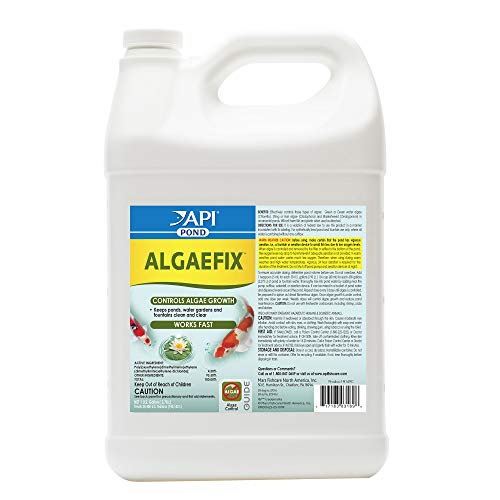
The 1-gallon size offers extended coverage for larger ponds or installations with significant algae challenges. API’s algaecide works against common pond algae including green water, Chlorella, and Cladophora-type forms. This EPA-registered algaecide is designed to be safe for fish and aquatic life when used as directed, which is important for ponds stocked with koi or other decorative fish. For best results, combine product use with ongoing aeration and routine maintenance to prevent algae regrowth and maintain water clarity.
CrystalClear Algae D-Solv 1 Gallon

Algae D-Solv from CrystalClear is a fast-acting, broad-spectrum algaecide that targets multiple algae types, including green water, string, and blanketweed. The formulation is copper-free, reducing risk to fish and ornamentals when used as directed. It is suitable for use in outdoor ponds containing koi and other fish, with a recommendation to ensure adequate aeration prior to application. This option is ideal for growers seeking quick relief from algae blooms without harsh residues or plant damage.
CrystalClear Algae D-Solv 16 Ounces

This smaller bottle provides a practical option for water gardens or ponds with moderate algae challenges. Like the gallon variant, Algae D-Solv 16 Ounces is fast-acting and copper-free, minimizing potential stress to fish and decorative plants when used as directed. Remember to aerate before and after treatment and to measure the correct dosage based on pond volume and algae severity.
BioSafe GreenClean Granular Algaecide

BioSafe GreenClean Granular Algaecide is formulated as a granular treatment that can be applied directly to ponds to control string and other algae. The product is designed to treat up to 16,000 gallons and is marketed as safe for fish and aquatic life when used as directed. Its chlorine-, copper-, and phosphate-free formula aligns with environmentally conscious pond management, especially for ponds that support a diverse aquatic ecosystem. For best results, use in conjunction with filtration and aeration.
Buying Guide: Key Considerations For Ponds With Fish
- Fish safety: Look for algaecides labeled safe for fish when used as directed. Copper-based formulas can be harmful to some fish species in certain conditions, so copper-free options are often preferred for koi and similar fish.
- Aeration and pond setup: Ensure adequate aeration before, during, and after treatment. Oxygen levels impact fish health and algae control effectiveness, especially in deeper or heavily stocked ponds.
- Volume and coverage: Confirm the product’s coverage capacity (gallons treated) to match your pond size. Over- or under-dosing can reduce effectiveness or risk fish health.
- Type of algae: Identify the predominant algae in your pond (green water, filamentous algae, blanketweed). Some products target multiple types; others have narrower scopes.
- Ease of use: Consider application methods (liquids vs. granular) and whether the product requires routine re-application or a single treatment to manage blooms.
- Plant and wildlife compatibility: If ornamental plants or wildlife are present, choose copper-free and non-staining formulas to minimize collateral impact.
- Environment and safety: Prefer EPA-registered products when possible and follow storage and disposal guidelines to reduce environmental concerns.
- Maintenance integration: Combine algaecide use with regular pond maintenance, filtration cleaning, and partial water exchanges to sustain long-term clarity.
- Non-target effects: Some algaecides can affect beneficial biofilms or microfauna. Balance algae control with the overall health of the ecosystem.
- Monitoring: After treatment, monitor water clarity, fish behavior, and any residual residues. Reassess if algae return quickly.
These options provide a range of choices for ponds with fish, from ready-to-use liquids to granular formulations. Always read product labels for recommended dosages, cautions, and any specific instructions regarding stocking levels, plants, and filtration systems. When in doubt, consult a pond care professional to tailor a treatment plan to your specific pond size and fish population.