Answering the common question, “which 30 weight oil should I use for a lawn mower?” this guide highlights suitable 30W oils and related 10W-30 blends that perform well in outdoor power equipment. This overview targets homeowners with push or riding mowers, landscapers, and people maintaining small engines in seasonal climates. The top five products discussed are chosen for reliability, engine protection, and compatibility with small engines often found in lawn care equipment. A quick summary table of the chosen products follows to help you compare at a glance.
| Product | Brand | Oil Type / Weight | Best For |
|---|---|---|---|
| STP Premium Small Engine Oil | STP | SAE 10W-30 | All-season small engines, ideal for year-round starts |
| Valvoline Daily Protection SAE 30 | Valvoline | SAE 30 | Everyday wear protection for standard lawn mowers |
| Briggs & Stratton SAE 30 Engine Oil | Briggs & Stratton | SAE 30 | Briggs & Stratton engines and similar small engines |
| VP Racing 4-Cycle Engine Oil | VP Racing | SAE 30 / 10W-30 | Small engines needing robust 30W or 10W-30 performance |
| Lucas Oil Lawn Mower Oil | Lucas Oil | SAE 30 | Push and riding mowers needing protective formulation |
STP Premium Small Engine Oil Formula

STP Premium Synthetic Blend 4 Cycle Small Engine Oil comes in a 32 oz bottle and is formulated for lawnmowers, generators, tractors, and other outdoor power equipment. This all-weather formula is designed to start easily in various seasons and fights thermal breakdown with antioxidants to maintain effectiveness at high temperatures. Best for homeowners who operate small engines year-round and want reliable protection against wear and heat buildup.
Caution: This oil is designed for small engines; use only as directed for your specific equipment. Avoid mixing with incompatible oil types.
Valvoline Daily Protection SAE 30
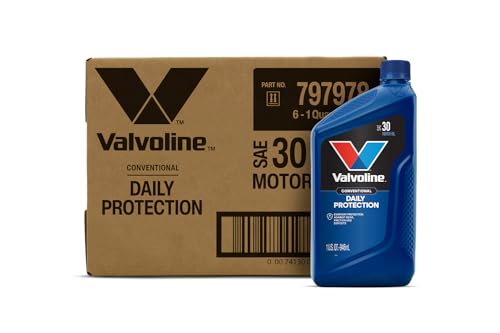
Valvoline Daily Protection SAE 30 Conventional Motor Oil is a straightforward option for routine lubrication, designed to minimize everyday wear and keep engines clean with detergents. Best for users seeking a dependable, conventional 30W oil with stable performance for typical lawn mower engines and similar small engines.
Limitation: Lacks synthetic elements found in higher-cost blends, which may matter under extreme heat or heavy-duty mowing tasks.
Briggs & Stratton SAE 30 Engine Oil

Briggs & Stratton packages provide 18 oz bottles of SAE 30 oil along with a 3-in-1 fuel treatment. This option targets Briggs & Stratton engines and similar small engines, offering convenient small-bottle sizing and a treatment boost for gas quality. Best for owners of Briggs & Stratton equipment seeking a compact package with a basic fuel treatment option.
Limitation: The smaller bottle size may require more frequent purchases for larger mowers or high-use scenarios.
VP Racing 4-Cycle Engine Oil

VP Racing 4-Cycle Engine Oil is an 18-ounce bottle that exceeds standard 10W-30 and SAE 30 performance. It uses synthetic base stocks to reduce oil consumption and is inherently biodegradable. Best for users who want lower oil consumption and a modern synthetic blend in a compact size.
Limitation: The 18-ounce bottle may require more frequent changes for high-mileage mowers or frequent use; check oil capacity of your specific engine.
Lucas Oil 11315 Lawn Mower Oil

Lucas Oil Lawn Mower Oil is a dedicated SAE 30 formulation designed to reduce engine wear and extend equipment life. Suitable for both push and riding mowers, it protects against overheating in typical lawn-care workloads and helps maintain engine cleanliness.
Limitation: As a non-detergent or conventional formulation can vary by product line, verify the exact Lucas specification to ensure compatibility with your engine model.
Buying Guide
What oil weight should I use for a lawn mower?
Most small engines in lawn mowers use SAE 30 or a 10W-30 multi-grade oil. Choose SAE 30 for warm climates or simple, straight-weight needs, and select 10W-30 if you anticipate cold starts or need broader temperature performance. Always check the owner’s manual for the recommended grade.
Should I choose conventional or synthetic-blend oil?
Synthetic blends offer better high-temperature stability and potentially longer intervals between changes, ideal for frequent mowing or high-load conditions. Conventional oils are typically enough for casual, seasonal use and budget-friendly options.
What about additives or detergents?
Detergents help keep sludge and deposits in check, while anti-wear additives protect engine components. For some older engines, non-detergent or minimal-additive oils may be specified; always follow the manufacturer’s guidance.
How often should I change lawn mower oil?
Oil-change intervals depend on usage, engine type, and oil specification. Common practice ranges from every 25-50 hours of operation or at least once per mowing season. For heavy use or dusty environments, consider more frequent changes.
Is there a difference between engine oil and mower oil?
Engine oils for small engines are designed to handle the lubrication needs of push and riding mowers, which are similar to automotive engines but smaller. Use products explicitly labeled for small engines or lawn equipment to ensure proper viscosity and additive packages.
Which product is best for my mower type?
- Push mowers: Consider 30W or 10W-30 blends with good wear protection and detergents.
- Riding mowers: Synthetic blends or conventional 30W oils with robust anti-wear properties work well for longer operation times.
- Older engines: Look for oils formulated to reduce sludge and offer high-heat stability.
FAQ
- Q: Can I mix 10W-30 with SAE 30 oil in the same engine? A: Mixing can alter oil performance; refer to your mower’s manual. If in doubt, drain and replace with a single oil grade.
- Q: Do I need to change the oil every mowing season? A: Not necessarily; follow the mower’s maintenance schedule and monitor oil condition and level.
- Q: Is synthetic oil necessary for my lawn mower? A: Not always. Synthetic blends offer better heat resistance, but many engines run reliably on conventional 30W oil.
- Q: What about oil for seasonal storage? A: If storing the mower, consider a fresh oil change before storage and drain or stabilize fuel as recommended by the manufacturer.
- Q: Are there eco-friendly or biodegradable oils? A: Some brands offer environmentally friendlier formulations; check product details for eco-friendly claims.