Find the right 200-cell plug tray for growing healthy seedlings. This guide highlights top options suited for home gardeners and commercial growers alike, with clear reasons why each tray fits specific needs. The selections emphasize depth, durability, drainage, and compatibility with standard 1020 trays. Whether you’re starting vegetables, herbs, or flowers, these trays are chosen to minimize transplant shock and streamline transplanting.
Buyer notes: for compact spaces, look for trays that are lightweight, stackable, and compatible with standard 1020 trays. If you need robust, reusable options for frequent use, prioritize thicker plastic and strong construction. For beginners, choose trays with reliable drainage to prevent overwatering. The following table summarizes the five highlighted products for quick comparison.
| Product | Cells | Depth | Best For | Notes |
|---|---|---|---|---|
| RooTrimmer 200 Cell Plug Tray (10 pcs) | 200 | 1.5 inches | Commercial growers and home gardens seeking durability | Thick, reusable plastic; fits 1020 shallow trays |
| Gardzen 10 Pack 200 Cell | 200 | 1.5 inches | Seedlings needing strong root development | Drainage holes reduce overwatering; easy transplantation |
| Vesici 20 Pack Seed Starter Trays | 200 | ~1.81 inches | Bulk seedling production; deep cells | Includes 1020 flat tray; durable construction |
| Grower’s Solution 200 Plug Tray | 200 | 1.75 inches | Vegetable and flower seed starting | Fits standard 1020 trays; compact footprint |
| Kapok Candle Co 200 Cell Trays (10 Pack) | 200 | 1.65 inches | Organized germination in a scalable system | 0.85mm thick plastic; fits 1020 trays |
RooTrimmer 200 Cell Plug Tray, 10pcs-Pack
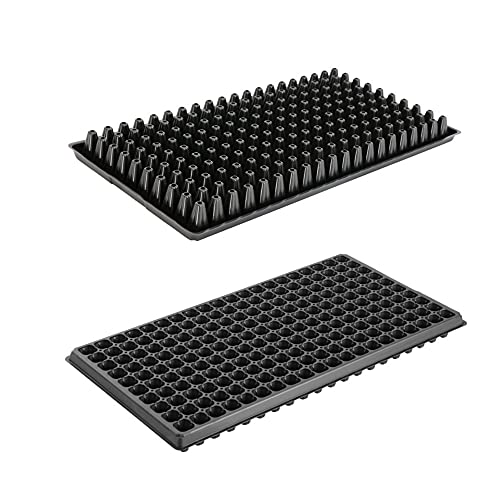
The RooTrimmer tray uses thick, high-quality plastic designed for repeated use. It accommodates 200 individual cells, promoting strong seed development and minimizing transplant shock. The shallow 1.5-inch depth makes it ideal for starting vegetables, herbs, flowers, and microgreens. Best for home gardeners who want durability and for small commercial setups needing reliable turnover. Caution: long-term sun exposure can degrade plastic if left uncovered in direct sun.
Gardzen 10 Pack 200 Cell Tray

Gardzen trays emphasize sturdiness and reliable shape retention. With drainage holes, these trays help reduce overwatering and encourage air pruning of roots, which supports healthier root systems and easier transplantation. The 1.5-inch depth is well-suited for a broad range of seedlings. Best for growers who value consistent performance and straightforward handling. Limitation: some users may prefer deeper cells for crops with longer rooting times.
Vesici 20 Pack Seed Starter Trays

Vesici offers a value-centric pack that includes 10 seedling trays and 10 non-perforated planter trays. Each tray holds 200 cells, and the cells are designed to support strong root development for easier transplanting. The trays are described as durable and reusable, suitable for long-term use. Best for budget-conscious buyers who still want reliable performance. Note: avoid prolonged direct sunlight to preserve durability.
Grower’s Solution 200 Plug Tray

This tray is described as a compact option that fits in standard 1020 trays. The 200-cell design supports starting vegetables and flowers efficiently, with cell dimensions around 1.75 inches in depth. Best for users who prefer a simple, standard-fit starter tray with predictable dimensions. Limitation: some batches may have minor manufacturing variances in cell walls, which can affect uniformity across batches.
Kapok Candle Co 200 Cell Tray, 10 Pack

The Kapok Candle Co tray features a 0.85mm thick plastic construction that resists bending and cracking while offering ample durability for multiple growing seasons. Each cell is 1.65 inches deep, optimized for germination and seedling hardening. Best for growers who want a sturdy, long-lasting option compatible with standard 1020 trays. Limitation: slightly heavier than ultra-light alternatives, which may affect handling in very tight spaces.
Buying Guide: Key Considerations For 200 Cell Seed Trays
- Purpose and plant type: Choose deeper cells for longer rooting crops and shallower cells for quick-rooting greens or herbs.
- Durability and reuse: Thicker plastics tend to last longer under repeated use and sun exposure. Consider trays with reinforced walls for commercial applications.
- Compatibility: Ensure tray dimensions align with your existing 1020 trays or drip trays. Most 200-cell trays are designed to fit standard 1020 systems.
- Drainage: Trays with drainage holes help prevent overwatering and encourage healthy root pruning. Non-perforated options exist but require careful water management.
- Ease of transplanting: Cells that maintain structure during handling reduce transplant shock. Look for uniform cell size and clean demolding for consistent root balls.
- Bulk and value: Bulk packs save costs for large projects but verify that cell quality is consistent across units in the pack.
Buying Considerations: Practical Questions
- What seed types will you start this season? Choose deeper cells for perennials or longer-duration crops.
- Do you require a complete kit with humidity domes or lids? Some kits include domes for improved germination rates.
- Is your grow space climate-controlled? If yes, you can opt for lightweight trays; otherwise, durability matters more.
- Will you be stacking trays for space efficiency? Look for lightweight, stackable designs without sacrificing strength.
FAQ
- What does a 200-cell tray indicate? It indicates the tray has 200 individual seed cells designed for germination and transplanting.
- Are these trays reusable? Most listed options are designed for reuse; however, check manufacturer guidance for longevity and cleaning.
- Will these trays fit in standard 1020 trays? Yes, many are designed to fit standard 1020 nursery flats, but some models may be slightly different—verify before purchase.
- Which tray is best for beginners? A reliable, durable tray with drainage holes and 1.5″ depth is often best for new gardeners to prevent overwatering and ensure easy transplanting.
- Are there any cautions about UV exposure? Prolonged direct sunlight can degrade some plastics; store trays in shade when not in use.
- Can I buy in bulk for a community garden? Yes, many brands offer multi-pack options that reduce per-tray cost and support larger projects.