If you’re choosing a 2-cycle tiller cultivator, you want reliable power, manageable weight, and clear guidance on where each model excels. This guide compares five well-rounded options that balance performance with portability, helping you decide who should buy each model. The selections below are best for backyard vegetable plots, flower beds, small-to-medium gardens, or field edging where quick soil turnover matters. Each product highlights its ideal user type, why it stands out, and any notable limitations to watch for.
Product overview at a glance: the table below shows the five selected tillers, their primary strengths, and who they’re best for. Use it to quickly compare key factors before reading deeper into each model’s section.
| Product | Best For | Notable Strength |
|---|---|---|
| VEVOR Tiller Cultivator | Home gardeners needing robust power and adjustable depth | Four tines, 300 mm width, 3.9″ depth with heat-dissipation design |
| Earthquake MC33 Mini Tiller | Weeders and small-space plots with easy transport | Lightweight, on-board wheels, simple control |
| ZERNEIL Gas Powered Tiller | Budget-conscious users needing strong soil penetration | 52CC engine, wide tilling width, adjustable wheels |
| LGXSHOP 52CC Mini Tiller | Field work and larger containers where depth control matters | High heat-dissipation design, 13.78″ tilling width |
| Mantis 7920 2-Cycle Plus | Compact storage and easy handling for hobbyists | Lightweight, folding handlebars, built-in carrying handle |
VEVOR Tiller Cultivator

Best for: Home gardeners who need steady power with reliable cooling and a controlled tilling width. The 43cc two-stroke engine delivers solid soil penetration for vegetables, flower beds, and mixed garden plots. It’s EPA-certified, which appeals to buyers seeking efficient, environmentally mindful operation.
Why selected: The VEVOR model features four steel tines to cover a 300 mm (11.8″) width and 100 mm (3.9″) depth. It includes enlarged heat-dissipation holes to minimize overheating and an air-filter system to protect the engine during longer sessions. An adjustable skid and 5.8″ drive wheels help reduce operator fatigue and make maneuvering easier on uneven terrain.
Caution or limitation: The power and depth are well-suited for mid-size plots, but the unit’s 43cc engine might require more fuel and maintenance for very dense or compact soil compared with higher-displacement models. Regular cleaning of air filters is advised to sustain performance.
Earthquake MC33 Mini Tiller Cultivator

Best for: Gardeners with tight spaces needing a compact and maneuverable tiller for weeding, soil mixing, and aeration.
Why selected: This model emphasizes convenience with on-board wheels for transport and depth control, plus overhand control that reduces bouncing and helps you focus on weed removal rather than plant damage. It’s a compact solution that still delivers practical cultivation depth and width for small beds and raised beds.
Caution or limitation: The MC33’s smaller engine size means it may take longer to till larger plots. It’s designed for lighter workloads, so very dense soil might test its single-operator efficiency.
ZERNEIL Gas Powered Tiller Cultivator
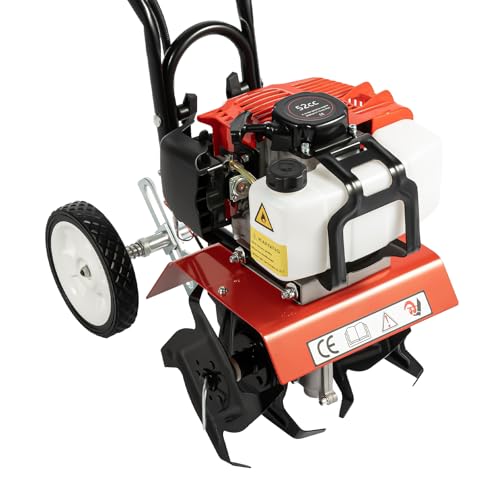
Best for: Buyers seeking a strong power-to-weight ratio with broad tilling capabilities and a sizable cutting width. The 52CC two-stroke engine aims for efficient soil turnover and faster completion of tasks in medium-density soils.
Why selected: The ZERNEIL unit uses four blades with a wide working range, reaching up to approximately 13.78″ in width and 1.18-3.94″ in depth, making it versatile for larger kitchen gardens or plots that require deeper aeration. It also includes an air-filtered design to help maintain performance.
Caution or limitation: As a larger-displacement 2-stroke engine, fuel use and maintenance may be higher than smaller models. Check local fuel compatibility and perform regular engine care to conserve longevity.
LGXSHOP 52CC Mini Tiller

Best for: Gardeners tackling field work or larger areas who still want a compact tool with substantial tilling width. This model is selected for its 52cc engine and a broad tilling footprint that helps reduce multiple passes.
Why selected: The LGXSHOP tiller emphasizes durability, including an aluminum-manganese steel build and effective heat dissipation through strategic venting. It uses a two-stroke design for improved fuel efficiency and easier starting in some conditions. It also offers a wide tilling width up to 13.78 inches for efficient coverage.
Caution or limitation: The 52cc engine, while powerful, may require more routine maintenance and fuel management compared to smaller units. Ensure proper fuel mix and air filter maintenance to maintain performance.
Mantis 7920 2-Cycle Plus Tiller
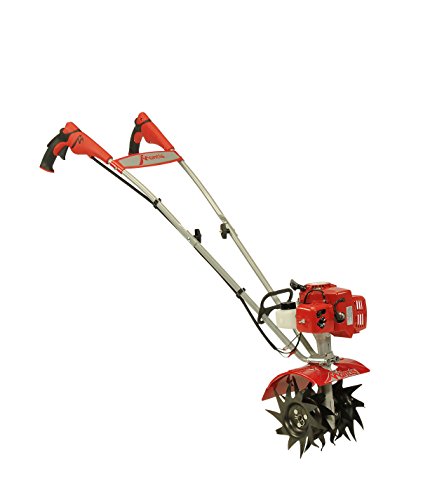
Best for: Users prioritizing ultra-lightweight design and easy storage, such as hobby gardeners with limited storage space or those who need a grab-and-go tool for quick soil tasks.
Why selected: The Mantis 7920 weighs only about 20 pounds, with handle bars that fold for compact storage. Its portability makes it a practical choice for those who frequently relocate the tool between storage and garden beds. It provides basic yet effective tilling for small patches and raised beds.
Caution or limitation: The lighter design can limit heavy-duty performance on very compact or tough soils. For extensive or deep tilling of large plots, a more powerful unit may be more efficient.
Buying Guide: How To Choose The Right 2 Cycle Tillers
What size garden are you tilling? For small plots and raised beds, lighter models with easy maneuverability are often best. For medium plots, choose a machine with adequate depth and a stable frame. Large plots may benefit from higher displacement engines and wider tilling widths, but weight and maneuverability should still be considered.
What is your preferred engine size? Higher displacement engines (like 52cc) deliver stronger soil penetration but require more maintenance and fuel. If you’re a casual user with small tasks, a 33cc or 43cc engine may be sufficient and easier to handle.
Do you need adjustable width and depth? Tiller models with adjustable tines and depth settings help tailor performance to different soil types and planting plans. A skid or wheels that allow height and depth adjustments can improve control and reduce fatigue.
What about portability and storage? If storage space is limited, models with foldable handles and lighter weights offer better convenience. On-board wheels and compact frames help with moving the unit around the yard or garage.
Maintenance considerations: Two-stroke engines require proper fuel mixing and air-filter upkeep. Look for models with easy-access air filters and straightforward maintenance tasks. Regular inspection of spark plugs and carburetors will help sustain performance over time.
Frequently Asked Questions
- What is a 2-cycle tiller cultivator?
A 2-cycle tiller uses a two-stroke engine that requires mixing fuel and oil for combustion. These engines are typically lighter, offer strong torque for soil breaking, and are well-suited for small to medium garden tasks.
- Are 2-cycle tillers good for dense soil?
Yes, with higher displacement and a robust chassis they can break dense soil efficiently. Choose models with ample tine width and adjustable depth for best results.
- Which tiller is best for raised beds?
Smaller, lightweight models with precise depth control and narrow width are ideal for raised beds, as they prevent over-tilling and protect fragile bed edges.
- Do 2-cycle tillers require special maintenance?
Yes. Use the correct fuel-oil mixture, keep air filters clean, and perform regular spark plug checks. Proper storage and carburetor care help maintain performance.
- How do I choose between a 33cc and 52cc tiller?
Choose 33cc for light to moderate work and easier handling. Choose 52cc for larger plots or tough soil, understanding it may be heavier and require more fuel and maintenance.