Answering the needs of organic gardeners, the following 12 qt or larger seed starting mixes are ideal for starting herbs, veggies, and flowers. These selections emphasize peat-free or organic composition, balanced pH, and ingredients that support strong root development. They’re best for beginners seeking ready-to-use options and seasoned growers needing reliable amendments for containers or in-ground beds.
| Product | Best For | Key Benefit |
|---|---|---|
| Back to The Roots Organic Seed Starting, Compressed Block expands to 12 Quarts | All-purpose starter mix for containers and ground | Expands to 12 qt, balanced pH, peat-free OMRI-listed |
| Purple Cow Organics Seed Starter 12 Quart Bag | Ready-to-use seeds trays or soil blockers | Compost-based with up to 45 days fertility, activated compost |
| Burpee Organic Coconut Coir Concentrated Seed Starting Mix, 16 Quart | Renewable, peat-free seed starting | Expands to 16 quarts; coconut coir provides moisture balance |
| Espoma Organic Seed Starter Premium Potting Soil Mix, 16 qt | Germination and early growth for many species | Mycorrhizae blend, proper pH with lime, organic ingredients |
| Jiffy Natural & Organic Seed Starting Soil Mix, 10 QT | Compact starter for trays or blocks | Peat moss, vermiculite, and lime with moisture retention |
Back to The Roots Organic Seed Starting, 12 QT Block

The Back to The Roots seed starting block expands to 12 quarts and is suitable for herbs, vegetables, and flowers. It offers a balanced pH and can be used as a standalone starter mix or as an amendment for pots and in-ground plantings. Best for buyers who want a single, all-purpose, peat-free option that supports organic production processes.
Best for: beginners and home gardeners seeking a straightforward, all-purpose organic starting mix. Limitations: expansion requires hydration and proper handling to ensure uniform moisture distribution across larger volumes.
Purple Cow Organics Seed Starter 12 Quart
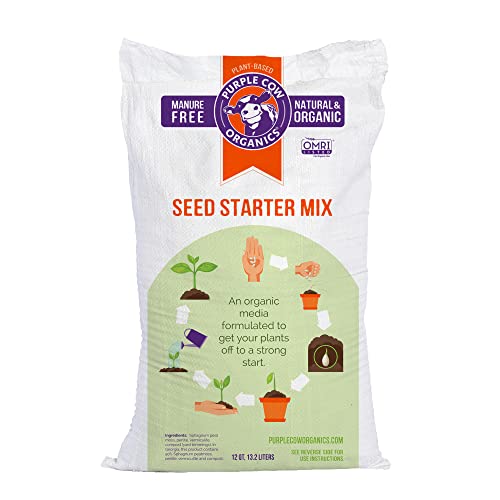
Purple Cow Seed Starter is a ready-to-use mix designed for seed trays and blockers, leveraging compost-based fertility and activated compost to support up to 45 days of seedling growth. It’s a strong choice for indoor germination and indoor garden setups, with emphasis on sustainable organic inputs. Best for: gardeners who value compost-based fertility and quick germination in trays or soil blockers. Caution: may contain organic amendments that require careful watering to avoid over-saturation in very dry environments.
Jiffy Natural & Organic Seed Starting Soil Mix, 10 QT

Jiffy’s seed starting mix provides a blend of peat moss, vermiculite, and lime designed to prevent soil compaction and improve moisture retention. Although it comes in 10 quarts, it remains a widely used option for starting seeds that require balanced aeration and hydration. Best for: growers who need predictable moisture management and easy expansion for smaller setups. Limitation: not the exact 12-quart size, but compatible with standard seed trays and blocks.
Burpee Organic Coconut Coir Concentrated Seed Starting Mix, 16 Quart
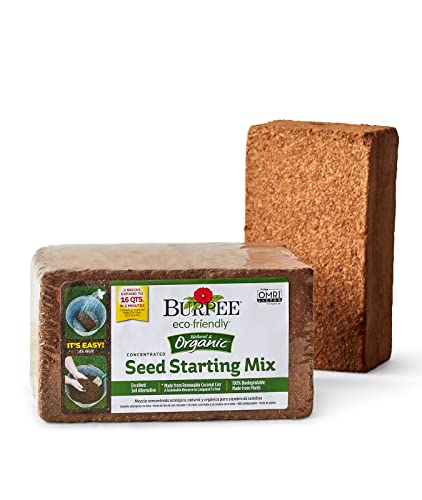
Burpee’s coconut coir seed starting mix is peat-free and OMRI-listed, utilizing coconut fiber for moisture retention and improved air spaces. The product expands to 16 quarts, making it suitable for larger seed-starting projects or multiple cycles. Best for: gardeners seeking a renewable, peat-free medium with strong water-holding capacity. Caution: coconut coir can retain moisture longer; adjust watering to avoid overwatering in dense seed trays.
Espoma Organic Seed Starter Premium Potting Soil Mix, 16 qt

Espoma’s 16-quart seed starter mix blends sphagnum peat moss, perlite, yucca extract, and lime to maintain proper pH. It includes mycorrhizae to support root development and overall plant vigor. Best for: gardeners who want a reliable, organic starting mix with consistent pH balance and established beneficial fungi. Limitation: larger bag size may be more than needed for small projects.
Rosy Soil Seedling Seed Starter 4qt
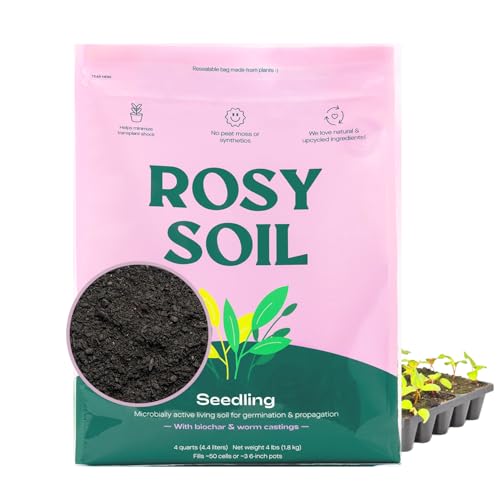
Rosy Soil emphasizes peat-free formulation with biochar, worm castings, mycorrhizae, and pine bark fines to improve aeration and drainage. Although it’s a 4-quart option, it’s included here for readers seeking a peat-free, nutrient-rich base for propagation and microgreens. Best for: small-space gardeners and microgreen growers who prioritize sustainability. Caution: may require more frequent watering in warm conditions due to lighter texture.
Buying Guide
Key considerations when choosing a 12 qt or larger organic seed starting mix:
- Peat content and sustainability: Prefer peat-free formulas or alternatives like coconut coir or compost-based mixes to support eco-friendly gardening.
- Nutrition and mycorrhizae: Look for blends that include beneficial fungi (mycorrhizae) and slow-release fertility for robust root systems.
- pH balance: A stable, slightly acidic to neutral pH helps most vegetables, herbs, and flowers establish quickly.
- Moisture management: Coir or compost blends should balance moisture retention with adequate drainage to prevent root rot.
- Expansion size: When buying compressed blocks or bricks, check total expanded volume to ensure you have enough medium for your project.
- Versatility: Consider whether the mix is suitable for trays, pots, or in-ground use, enabling long-term reuse or multiple seed cycles.
Frequently Asked Questions
- What makes a seed starting mix organic?
– An organic seed starting mix uses ingredients approved for organic farming, with natural nutrients and no synthetic inputs. - Why choose a 12 qt or larger bag?
– Larger quantities reduce the need for frequent reordering when starting many seeds or growing multiple cycles. - Is peat-free always better than peat-based?
– Peat-free options are more sustainable; however, peat-based mixes can offer excellent water retention. Choose based on your sustainability goals and plant needs. - Should I use mycorrhizae in seed starting?
– Mycorrhizae can improve nutrient uptake and root development, especially for new transplants, but not every mix includes them by default. - How do I avoid overwatering seed-starting mixes?
– Use proper containers with drainage, water evenly, and monitor moisture by touch. Coir-based mixes may require less frequent watering than peat-heavy blends. - Can I reuse seed starting mix for subsequent cycles?
– Some mixes are designed for single-use; others can be amended and reused if you maintain good sanitation and avoid disease build-up.