Answering the common buyer question: which 1000 lb capacity deer feeders deliver reliable feeding and safety for your land? This guide highlights top options, focusing on durability, ease of use, and practical limitations. The featured picks span from a true 1000 lb-capacity capsule feeder to robust mid-range and portable designs. Each product suits different property sizes, deer pressure, and maintenance preferences. Use the quick comparison table below to pick the best fit for your needs.
| Product | Capacity | Best For |
|---|---|---|
| Capsule Feeder Game Feeder with 1000LB Capacity | 1000 lbs | Large properties; minimal daily maintenance |
| Banks Outdoors Feed Bank Gravity Feeder, 600 lb | 600 lbs | Moderate deer pressure; simple gravity feed |
| HECASA 450LB Capacity Big Game Feeder | 450 lbs | Balanced capacity; steel build for durability |
| Banks Outdoors Feedbank 300 lb Capacity Deer Feeder | 300 lbs | Smaller plots; easy portability |
| Boss Buck Stand & Fill Sled Feeder 300 lb | 300 lbs | Varmint protection and portable placement |
Capsule Feeder Game Feeder with 1000LB Capacity

Capacity and design are the highlights. The capsule sits at ground level, reducing the risk of head injuries or collapse under heavy barrels. The HDPE construction is lightweight, rust-resistant, and moveable, aiding seasonal relocation. A digital timer enables up to six feedings per day, helping you manage feeding without daily site visits. Best for large properties where you need dependable, low-maintenance feeding and safer handling for people and wildlife.
- Best for: remote hunting leases or properties with frequent feeder relocation needs.
- Why selected: true 1000 lb capacity combined with a ground-sitting capsule design enhances safety and uptime.
- Caution: ensure secure anchoring if exposed to high winds or uneven terrain.
Banks Outdoors Feed Bank Gravity Feeder, 600 lb
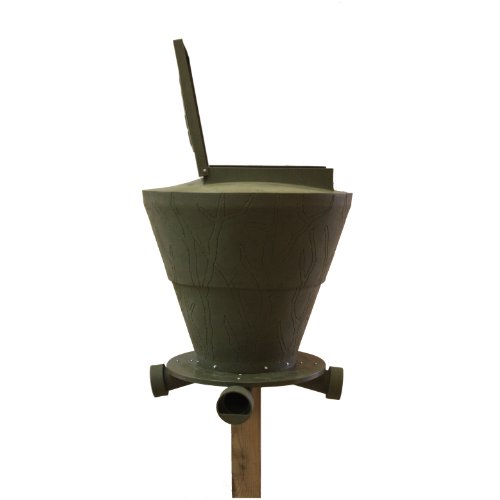
Simple gravity-fed design with four feed ports and a 600 lb capacity. Best for moderate deer pressure and straightforward operation where remote control features are not required. Selection rationale centers on durability, ease of use, and predictable feed flow. The feeder’s gravity mechanism helps minimize maintenance, making it suitable for smaller properties or beginners.
- Best for: mid-sized properties with steady deer traffic.
- Why selected: dependable gravity feed with basic setup and maintenance needs.
- Caution: capacity is below 1000 lbs; plan refills accordingly on high-traffic plots.
HECASA 450LB Capacity Big Game Gravity Feeder

This feeder emphasizes capacity balance and weather resistance. A zinc-plated steel body adds durability for long-term outdoor use, while the internal cone gravity design promotes smooth, even distribution. Best for property owners who want a sturdier metal unit without venturing into high-maintenance electric setups. A practical choice when you need reliable distribution and thicker protection against rust and moisture.
- Best for: hunters seeking a corrosion-resistant, rugged steel option.
- Why selected: durable metal construction with gravity-based feeding for predictable results.
- Caution: heavier than plastic models; consider placement and transport needs.
Banks Outdoors Feedbank 300 lb Capacity Deer Feeder

Designed for easy mounting on a single 8-foot post, this model minimizes impact on antler growth and offers adjustable feeding ports to control flow. Best for smaller plots or areas where deer pressure is moderate and you want to fine-tune feed output. The single-post installation helps reduce setup complexity on varied terrains.
- Best for: compact plots or homeowner-level setups.
- Why selected: adjustable ports offer precise feed control with simple installation.
- Caution: 300 lb capacity may require more frequent refills with heavy deer activity.
Boss Buck Stand & Fill Sled Feeder 300 lb

Features include easy assembly, a secure powder-coated steel lid, and a versatile sled design with anchor holes and tow hooks for placement flexibility. The feeder uses a spin plate and diverter plate to optimize feed dispersion while protecting against varmints with a grating. Best for hunters who want a robust, portable option with reliable protection against weather and pests.
- Best for: rugged terrain where portability and protection matter.
- Why selected: combines durable construction with adjustable dispersion features.
- Caution: 300 lb capacity means more frequent refills on high-traffic sites; plan accordingly.
Buying Guide: Key Considerations For 1000 Lb Or More Capacity Feeders
What should you consider before buying a 1000 lb-capacity feeder?
Capacity needs depend on deer density, plot size, and driving distance to refill. A true 1000 lb model reduces refill frequency on large properties, while mid-range capacities offer a balance between weight, cost, and maintenance.
Material and durability: plastic vs steel
Plastic feeders weigh less and resist rust, but steel options typically provide greater durability in harsh weather. For very large dogproof and wildlife-driven sites, galvanized or powder-coated steel can offer longer service life.
Power and controls: manual, wired, or app-based
Consider whether you want a digital timer, wireless remote, or Bluetooth/app control. App-connected feeders enable remote scheduling, but design around your connectivity and data needs to avoid unnecessary complexity.
Dispersion and feed flow
Dispersion plates and diverter mechanisms affect how evenly feed lands in the feeding zone. A well-designed spin or diverter plate helps reduce waste and crowding, especially when deer congregate to feed.
Installation and portability
Ground-level capsules and sled platforms offer different installation challenges. If you rotate feeders seasonally, prioritize models with straightforward assembly and light weight. If you need to move feeders between sites, weight and handles matter.
Safety and wildlife considerations
Flooded or tall feeders can pose tip-over risks. Ground-sitting capsules or low-profile designs minimize injury risks for people and wildlife. Look for stable bases and low centers of gravity in your selection.
Frequently Asked Questions
- Which feeder provides the best safety for large-capacity needs? Capsule-style or ground-sitting designs reduce the risk of heavy barrels collapsing and are safer to maintain on uneven ground.
- Is a 1000 lb capacity necessary for all properties? Not always. Large properties with high deer pressure may benefit, but smaller plots often do well with 300–600 lb capacities.
- Do I need app control to manage feeding times? App control is convenient for remote management, but basic feeders with built-in timers also effectively schedule feedings on-site.
- How often should I refill a high-capacity feeder? Refill frequency depends on deer density, feed type, and consumption rate. Plan for less frequent but larger refills with 1000 lb-capacity models.
- What maintenance helps extend feeder life? Regularly inspect seals, lids, and feeding ports; clean debris; and protect metal parts from rust with appropriate coatings.
- Are metal feeders better than plastic? Metal feeders generally offer greater durability in harsh outdoor conditions, but high-quality plastics can be lighter and resistant to corrosion.