Aggregate sand and gravel are foundational materials for construction, landscaping, and potting projects. This guide highlights five practical options that balance size, texture, and application—from engineered man sand for concrete to decorative natural sand for planters. Each product is best for specific buyers: builders needing consistent gradation, DIY enthusiasts seeking versatile backfilling material, and hobbyists aiming to improve drainage in pots. Below you’ll find concise comparisons, usage tips, and a buying guide to help you choose the right sand or gravel for your project.
| Product | Best For | Key Benefit | Typical Use |
|---|---|---|---|
| Gravel Company Manufactured Sand (40 lbs) | Concrete mixes and bedding | Consistent gradation for dependable bonding | Concrete, asphalt, backfill, pipe bedding |
| Gravel Company Manufactured Sand (3 lbs) | Small-scale projects | Same engineered consistency in compact bags | Concrete mixes and lightweight bedding |
| NUPICK Coarse Sand 1-2mm | Plants, succulents, decorative gardening | Improves drainage while maintaining moisture balance | Potting mixes, planters, terrariums |
| FANTIAN Aquarium Sand 2 lbs | Aquarium and terrarium substrates | Clean, natural substrate with minimal dust | Fish tanks, succulent soil covers, landscaping |
Manufactured Sand – Gravel Company (40 Lb) For Concrete

Product overview: Manufactured sand (Man Sand) with a consistent gradation designed for construction applications. Angular particles promote strong compaction and dependable bonding in mixes. Common uses include concrete, asphalt production, backfill, and pipe bedding. This option is best for larger projects where controlled particle size improves short- and long-term performance.
Best for: Builders and contractors needing uniform sand for structural mixes, where predictable behavior under compaction matters most. Choose this if you require reliable bonding in concrete or asphalt and consistent mix quality.
Caution or limitation: Large bags require adequate storage space; ensure proper containment to prevent moisture exposure that could affect gradation.
Manufactured Sand – Gravel Company (3 Lb) Engineered Aggregate
Product overview: A compact version of engineered sand with the same consistent gradation and angular particles. It supports strong compaction and dependable bonding in small-scale concrete or bedding applications. Common uses mirror the 40 lb bag, making it versatile for DIY projects or limited-space jobs.
Best for: DIY enthusiasts and small contractors who need precise sand characteristics without purchasing large bags. Choose this if you’re building a small concrete pad, patching, or backfilling in tight spaces.
Caution or limitation: Smaller bag size may require multiple purchases for larger projects; plan for total material needs ahead of time.
NUPICK Coarse Sand 1-2mm For Plants and Decor
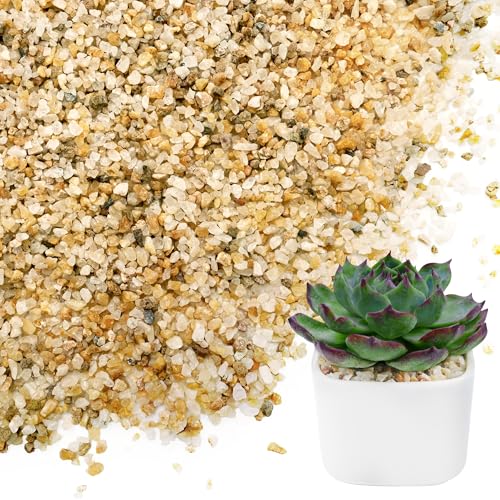
Product overview: Natural and reusable river sand in 1-2mm sizes made of durable natural silica, free of dyes or artificial additives. Washes clean without fading and is suitable for long-term use in potting, crafts, and decor. Enhances aeration and moisture balance when mixed with potting soil (1:3 ratio).
Best for: Gardeners and hobbyists seeking an aesthetically pleasing substrate that improves drainage and reduces soil compaction in planters, succulents, and cacti. Choose this if you want a decorative, low-dust sand for containers or terrariums.
Caution or limitation: Can cloud water or soil temporarily when first mixed; rinse and pre-wet before use in sensitive setups.
FANTIAN Aquarium Sand 2 Lbs

Product overview: Aquarium sand in 1/16 inch granules, packaged in convenient two-pound bags. Suitable for fish tanks, terrariums, vases, plant covers, and outdoor landscaping accents. It provides a natural look and can help with substrate stability in small aquatic setups.
Best for: Aquarists and terrarium enthusiasts who want a clean, natural substrate that deposits smoothly and supports plant and snail habitats. Choose this if you need a ready-to-use aquatic or decorative substrate.
Caution or limitation: This sand should be rinsed before use to reduce dust, and cloudy water may persist briefly after initial setup.
Buying Guide: Key Considerations for Aggregate Sand & Gravel
What should you consider when choosing sand or gravel?
Material consistency: For structural or concrete uses, engineered sand with uniform gradation provides more predictable performance. For decorative or drainage-focused projects, natural sands can be ideal.
Particle size and gradation: Larger or angular particles improve compaction and bonding in mixes, while finer sands better fill voids and improve workability in bedding and leveling tasks.
Dust and usability: Some sands contain more dust; pre-washing or rinsing may be necessary for aquariums and terrariums to avoid cloudiness and water quality issues.
Storage and handling: Large bags take more space and require dry storage to maintain gradation. Smaller bags are convenient for DIY projects but may require more frequent restocking.
Project type considerations: Concrete and asphalt require engineered gradation; potting mixes benefit from sands that improve drainage without drying out roots; aquariums demand low-dust, inert substrates.
Choosing between engineered and natural sand
Engineered sand is designed for consistent performance across batches and is typically preferred for construction-grade applications where bonding and compaction are critical. Natural sands offer variety in texture and appearance, which can be advantageous for landscaping, decorative pots, and hobbyist projects.
How much material do you need?
Calculate volume in cubic feet and convert to cubic yards for larger builds. Consider waste, overlap, and compaction when estimating bags and bulk loads. For decorative uses, account for soil depth in pots and planters to avoid under- or over-filling.
Maintenance and safety tips
Rinse or wash sands intended for gardening, terrariums, or aquariums to minimize dust. When using in outdoor beds, ensure proper drainage to prevent waterlogging. Store materials off the ground to reduce moisture exposure and caking.
Best practices for different buyers
- For contractors: Prefer engineered sand with tight gradation for consistent results in concrete and backfill.
- For hobbyists: Select decorative or coarse sands that enhance aesthetics and plant health without creating excessive dust.
- For aquariums and terrariums: Prioritize dust-free, inert sands that won’t alter water chemistry or harm inhabitants.
Frequently asked questions
- What is the difference between manufactured sand and natural sand? Answer: Manufactured sand is engineered for consistent gradation and performance, while natural sand varies in particle size and texture.
- Can I use decorative sand for concrete projects? Answer: Decorative sands are generally not designed for structural strength; use engineered sand for concrete or bedding applications.
- Is dust a concern with bottom-dag sands? Answer: Yes, some sands produce dust during initial use. Rinsing or washing can reduce dust before application.
- How do I determine how much sand I need? Answer: Measure project volume in cubic feet, convert to cubic yards, and add extra for waste and compaction.
- Is sand suitable for plant drainage? Answer: Yes, when mixed appropriately with potting soil to improve aeration and prevent root rot in containers.
- Are there safety considerations for handling sand? Answer: Wear a mask if dust is present, and store in a dry area to prevent clumping and moisture-related issues.