If you’re watering a garden, you want clean water that protects roots, beneficial microbes, and overall plant health. This guide highlights five chlorination-reducing garden hose filters that are practical for home gardens, hydroponic setups, and pet-friendly outdoor spaces. Each option targets chlorine, odors, and contaminants while preserving essential nutrients. The top picks are best for different needs, from compact packs to hose-protector designs. Use the buying guide below to compare features, suitability, and limitations before purchasing.
| Product | Best For | Key Benefit |
|---|---|---|
| AQUA CREST Garden Hose Water Filter (Pack of 2) | Small gardens, household use | High chlorine reduction with lightweight design |
| AQUA CREST Garden Hose Water Filter (Pack of 4) | Medium to larger gardens | Greater coverage with same filtration tech |
| AQUACREST Garden Hose Water Filter (With Hose Protector) | Hose protection and longevity | Includes hose protector, easy installation |
| Camco GardenPURE Inline Water Filter | Organic/hydroponic systems | Advanced carbon filtration for chlorine and chloramine |
| Filterlogic Garden Hose Water Filter | Cleaner irrigation water | 5-micron filtration for smaller contaminants |
AQUA CREST Garden Hose Water Filter — Pack of 2
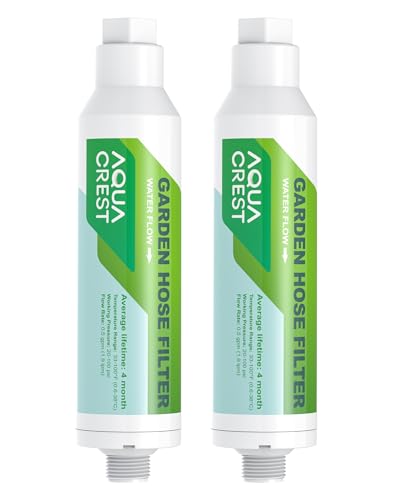
This filter uses advanced KDF and Coconut Activated Carbon to reduce chlorine and odors while preserving essential elements like nitrogen, phosphorus, and potassium. It is best for small to medium gardens where water flow remains steady and you want simple, plug-and-play setup. It fits standard 3/4″ garden hose threads and includes a lightweight design for easy storage.
- Best for: Home gardens with standard hose connections.
- Why chosen: Proven chlorine reduction and plant-friendly mineral preservation.
- Limitation: Filtration capacity is designed for regular home use; extended heavy irrigation may require more frequent replacement.
AQUA CREST Garden Hose Water Filter — Pack of 4

Designed for larger irrigation needs, this set maintains the same filtration technology as the 2-pack. It reduces chlorine and odors across multiple hoses or zones, making it suitable for community gardens, larger landscapes, or farm setups. The lightweight build remains easy to carry and switch between hoses.
- Best for: Medium to large outdoor spaces with multiple hoses.
- Why chosen: More filters per purchase reduce refill frequency across zones.
- Limitation: More parts mean slightly longer setup time compared to a single-filter solution.
AQUACREST Garden Hose Water Filter — With Hose Protector

This version includes a hose protector to guard against kinking and leaks. It retains the same effective filtration, focusing on chlorine reduction and odor elimination while preserving essential nutrients. The protective feature is helpful for longer irrigation runs or rough outdoor environments.
- Best for: Garden setups with longer hose runs or where connection stress is a concern.
- Why chosen: Added protection reduces risk of leaks and hose damage.
- Limitation: The hose protector adds a bit of bulk; ensure hose availability supports the setup.
Camco GardenPURE Inline Water Filter

Camco’s inline filter targets chlorine and chloramine compounds while supporting plant health in hydroponic and aeroponic systems. It emphasizes essential soil and root health when clean water is critical for root development. Suitable for organic gardening workflows that require chemical-free water components.
- Best for: Hydroponic and aeroponic gardens that need reliable water quality.
- Why chosen: Addresses chloramines and heavy metals to protect beneficial microbes.
- Limitation: Inline filters may require closer monitoring in high-demand irrigation systems.
Filterlogic Garden Hose Water Filter

Featuring a 5-micron filtration step, this model aims to reduce heavy metals and contaminants larger than 5 μm while maintaining essential plant nutrients. It’s positioned for gardeners who want a precise filtration threshold and longer service life, with up to four months of optimal performance depending on water quality and usage.
- Best for: Gardeners seeking tighter filtration and longer filter life.
- Why chosen: 5-micron filtration helps remove finer contaminants that can affect root zones.
- Limitation: Filtration efficiency depends on water quality; heavy metals may require higher-rated units in some regions.
Buying Guide
Key considerations help match a chlorine filter to your garden needs. Use these questions to compare options and ensure you choose the right solution.
Which filtration technology matters most?
KDF (Kinetic Degradation Fluxion) and coconut activated carbon are common in garden filters. KDF reduces chlorine, heavy metals, and certain contaminants, while activated carbon improves taste and odor and removes organic compounds. If chloramines are present in your water, look for a filter labeled for chloramine reduction and consider a model with strong carbon filtration.
What size and flow do I need?
Most garden hose filters fit 3/4″ standard hoses. Check your irrigation flow requirements; higher flow needs filters designed to minimize pressure drop. A lightweight, compact unit is easier to handle for small gardens, while larger packs suit multi-zone or larger plots.
How long does a filter last?
Filter life varies by water quality and usage. Some products advertise several months of performance, while others may require more frequent changes in hard water or highly chlorinated supply. Consider your region’s water chemistry and plan for replacements accordingly.
Is hose protection important?
Hose protectors reduce wear and tear at connection points, potentially extending hose life and reducing leaks. If you have long irrigation runs or delicate garden setups, a model with protective features can be advantageous.
Are there compatibility notes to consider?
Ensure the filter threads match your hoses (most are 3/4″ standard). If you use a misting system, hydroponic line, or specialized irrigation, confirm that the filter’s material and flow rate are compatible with your equipment.
What about environmental and safety aspects?
Many of these filters are designed to reduce chemical exposure to roots and beneficial microbes while preserving nutrients. This approach supports organic gardening goals and pet-friendly outdoor spaces by minimizing chemical additives in irrigation water.
FAQ
- What is the primary benefit of using a chlorine filter for garden water?
It reduces chlorine and related odors, protecting plant roots and beneficial soil life while preserving essential nutrients. - Will a garden hose filter remove all minerals from water?
No. It reduces chlorine and certain contaminants but aims to preserve beneficial minerals needed by plants. - How often should I replace a garden hose water filter?
Replacement frequency depends on water quality, usage, and the product’s rated life; follow manufacturer guidelines and monitor flow rate. - Can I use these filters for hydroponic systems?
Yes, several models are designed or suitable for hydroponic or aeroponic setups where clean water is critical for roots. - Do filters protect against chloramines?
Some models target chloramines; check product specs if chloramines are present in your water supply. - Are there any caveats to consider when using hose filters?
Filters can alter water pressure and require periodic replacement; ensure compatibility with your irrigation layout.