The Cape Honeysuckle, Tecoma capensis, brings bright, nectar-rich blooms to temperate and subtropical landscapes. Native to South Africa, this genus offers vibrant red-orange to peach-toned flowers that attract hummingbirds and butterflies. These 5 Amazon selections vary in size, bloom color, and growth habit, making them suitable for borders, containers, or climbing walls. This guide highlights each option, helping American gardeners choose reliable, low-maintenance plants for year-round garden color.
| Product | Bloom Color | Growth Habit | Ideal For |
|---|---|---|---|
| Cape Honeysuckle – Tecoma capensis – Live Semi-Tropical Plant | Orange-Red | Low-Compact | Borders, Pots |
| Cape Honeysuckle Orange Tecoma Capensis, 3-Pack | Bright Orange | Vigorous Climber/Spread | Containers, Landscapes |
| Mango Honeysuckle – Tecoma capensis – Live | Mango/Apricot | Upright, Open | Borders, Patio Pots |
| Orange Cape Honeysuckle Tecomaria capensis – 30 Seeds | Orange | Seed Option | Starter Garden |
| Cape Honeysuckle Bush – Orange | Orange | Shrub/Low Hedge | Hedges, Florida Gardens |
Cape Honeysuckle – Tecoma Capensis (Live 4 Inch Pot)

This cultivar, sourced as a live semi-tropical plant, delivers vibrant red-orange tubular flowers that attract hummingbirds and butterflies. It is native to South Africa and thrives in subtropical to tropical landscapes. The plant is best planted in fertile, well-draining soil with full sun to light afternoon shade. Water to maintain consistent moisture, but avoid overwatering. A slow-release bloom-boosting fertilizer supports initial flowering, with annual feed in spring. Prune after flowering to control size and shape, and avoid pruning during winter dormancy. The plant is a versatile option for boundaries, screens, or outdoor pots.
Cape Honeysuckle Orange Tecoma Capensis (3-Pack)
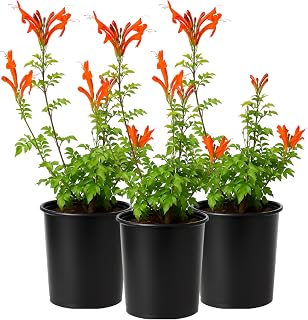
This 3-pack features three healthy Cape Honeysuckle plants in 1-gallon pots. The brilliant orange trumpet-shaped blooms illuminate outdoor areas and patios. Suitable for containers or garden beds, borders, and focal plantings, these plants are ideal for adding continuous color along fences or entryways. Care follows standard Tecoma guidelines: full sun to light afternoon shade, regular watering without waterlogging, and spring feeding with a slow-release fertilizer. Pruning after flowering helps maintain a compact, attractive shape.
Mango Honeysuckle – Tecoma Capensis

This Mango variety offers soft mango-apricot-toned blooms. While its shape resembles a honeysuckle, it is not a true honeysuckle and is not fragrant. The Cape Honeysuckle family remains a dependable bloomer for boundary plantings, screens, or porch pots. Plant in fertile, well-draining soil with full sun to light afternoon shade, and water to keep soil evenly moist but not waterlogged. Use a bloom-boosting fertilizer annually in spring and prune after flowering to maintain size and form.
Orange Cape Honeysuckle Seeds

These seeds represent a custom starter option for gardeners interested in growing Cape Honeysuckle from seed. The listing notes a no-return policy and that starter plants may arrive in varied sizes due to growth conditions. Seeds arrive with root material and organic packaging, ready to sprout in appropriate soil. Expect variability in height during shipment; germination may require patience and consistent warmth. This option suits experimental planters, borders, and mixed plantings for a seasonal display of orange blooms.
Cape Honeysuckle Bush – Orange

This Cape Honeysuckle Bush option is a 3-gallon size including a 10-inch planter, reaching overall heights of 24 to 30 inches. It prefers partial to full sun and is suitable for warm climates, such as USDA zones around Florida. The compact shrub is designed for use as a hedge, border, or focal plant in tropical-inspired landscapes. Regular watering to maintain moisture without soggy soil supports healthy growth, while full sun exposure encourages robust blooming and a strong, vibrant display of orange flowers.
Buying Guide
- Growth habit: If space is limited, choose compact or potted varieties; for fences or walls, select climbing or sprawling types.
- Light needs: Cape Honeysuckle thrives in full sun to light afternoon shade; ensure your site provides sufficient sun for best bloom production.
- Soil and watering: Use well-draining soil and water consistently without overwatering. Mulching helps retain moisture and stabilize soil temperature.
- Fertilization: Apply a slow-release bloom-boosting fertilizer in spring to encourage flowering; avoid high-nitrogen blends that promote foliage over blossoms.
- Pruning: Prune after flowering to control size and shape. Avoid pruning during the semi-dormant winter phase to protect flowering potential.
- Variety considerations: Orange and mango hues offer different visual impacts; consider container use, trellis compatibility, or hedge potential when selecting.
- Maintenance: Some listings note seed-based or starter plant options with variable sizes; plan for gradual growth and potential differences in plant vigor.