Choosing the right paint for a boat hull is about balance. You want durability, gloss, and ease of application, plus a finish that stands up to sun, salt, and spray. The selections below focus on topside and bottom coatings commonly used above and below the waterline, including polyurethane topside paints for sleek hulls and ablative antifouling paints to keep barnacles away. Each product is highlighted with its key features to help you compare performance, application, and long-term maintenance.
Summary Table of Chosen Products
| Product | Brand | Type | Color | Size | Key Benefit |
|---|---|---|---|---|---|
| TotalBoat Wet Edge (White) | TotalBoat | Topside Paint | White | Quart | High-gloss marine-grade polyurethane, above-waterline use |
| TotalBoat Wet Edge (Largo Blue) | TotalBoat | Topside Paint | Largo Blue | Gallon | Durable, glossy finish, versatile for hulls and trim |
| TotalBoat JD Select | TotalBoat | Ablative Antifouling | Black | Gallon | Self-polishing, low-odor, lower environmental impact |
| TotalBoat Wet Edge (Light Gray) | TotalBoat | Topside Paint | Light Gray | Gallon | Same high-gloss polyurethane with easy application |
| Rust-Oleum Marine Flat Boat Bottom Antifouling | Rust-Oleum | Antifouling | Black | Quart | Prevents fouling below the waterline with slow copper release |
TotalBoat Wet Edge White Topside Paint

TotalBoat Wet Edge is a premium polyurethane coating designed for topside use above the waterline. The formula delivers a high-gloss, scratch-resistant finish with strong color and gloss retention. It is a one-part system, simplifying application with either a brush and roller (roll & tip) or spray methods. The product is versatile, suitable for power and sailboat hulls, as well as RV exteriors, doors, and trim. The emphasis is on multi-season beauty and durability in marine environments while maintaining a cleaner work area due to its low odor profile and easy cleanup with water-based tools.
TotalBoat Wet Edge Largo Blue Topside Paint

This variant of TotalBoat Wet Edge provides the same durable, high-gloss, marine-grade finish in a vibrant Largo Blue. The one-part polyurethane system is easy to apply with brushes, rollers, or spray equipment and is formulated for use above the waterline. It cleans easily, resists fading and cracking, and holds color and gloss over multiple seasons. The color vibrancy makes hulls and trim look sharp while offering protection from UV exposure and environmental elements.
TotalBoat JD Select Ablative Antifouling (Black)

JD Select is an ablative antifouling bottom paint designed for fiberglass, wood, and steel boats. The self-polishing film wears away with use, reducing bottom build-up and easing post-season sanding. It minimizes odors and VOCs, making cleanup easier in marinas with environmental restrictions. This product is suitable for both saltwater and freshwater conditions and is designed to be burnished for a smoother, faster hull surface. It does not require maximum dry times before launch in typical marina schedules.
TotalBoat Wet Edge Light Gray Topside Paint
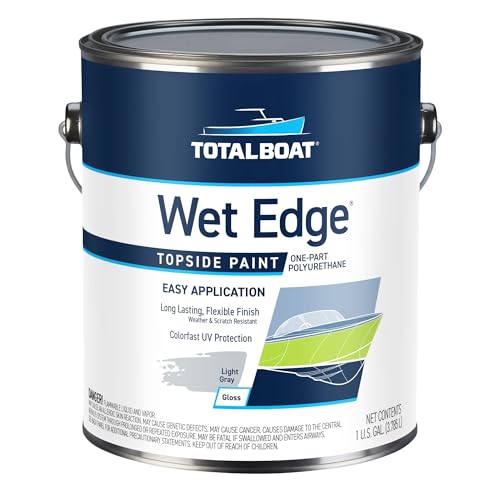
This Light Gray option offers the same high-gloss, durable finish as the white variant, enabling crews to achieve a modern, clean look on hulls and exterior trim. The one-part polyurethane ensures straightforward application, with strong resistance to fading, cracking, and peeling. It is designed for use above the waterline and supports long-lasting color retention and gloss in marine conditions while remaining compatible with various substrates like fiberglass, metal, and wood.
Rust-Oleum Marine Flat Boat Bottom Antifouling Paint (Quart, Black)

Rust-Oleum’s Marine Flat antifouling paint is designed for below-the-waterline protection. The formulation releases copper slowly to inhibit fouling from barnacles, weeds, and slime. It’s suitable for fiberglass, wood, and steel hulls and supports re-coating within a relatively short window. Coverage is robust, making it a practical choice for boaters seeking reliable antifouling performance with straightforward maintenance and cleanup. Always follow marina rules regarding VOCs and environmental considerations.
Buying Guide: Key Purchase Considerations
What to consider when choosing boat hull paint
- Substrate compatibility: Ensure the paint adheres to fiberglass, wood, metal, or aluminum as needed. Topsides paints are formulated for above-waterline surfaces; bottom paints target submerged areas.
- Waterline location: Antifouling paints are typically used below the waterline, while polyurethane topside paints are used above water.
- Application method: Some paints are one-part and designed for brushes/rollers, while others can be sprayed. Consider your equipment and experience level.
- Finish and color: Glossy finishes look sharp and are easier to clean; lighter colors can show wear more quickly but reflect heat better.
- Durability vs. maintenance: Ablative antifouling wears away to reveal fresh paint, reducing buildup but requiring reapplication every season or two; hard antifoulings provide longer intervals but can resist smoothing.
- Environmental and marina rules: VOC content and cleanup requirements may vary; water-based products are often favored for easier cleanup and lower odor.
Performance comparisons
- Topside polyurethane paints (TotalBoat Wet Edge): Excellent gloss, color retention, and scratch resistance above water. Ideal for crews seeking a showroom-ready hull with straightforward maintenance.
- Ablative antifoulings (TotalBoat JD Select): Self-polishing bottom that reduces build-up and maintains smooth performance through the season; good for boats that stay mostly in the water.
- Below-the-waterline antifoulings (Rust-Oleum): Copper-release chemistry providing fouling protection; practical for quick re-coats and general use, though compliance with marinas’ environmental restrictions should be checked.
- All-around performers (SENVEN option considered): High-gloss marine finishes with broad substrate compatibility, but note limitations like not for continuous submersion for some coatings.
Practical tips for preparation and application
- Prepare surfaces properly: Remove old coatings, sand to a smooth finish, and clean thoroughly before applying new paint.
- Temperature and humidity: Follow label guidance for optimal curing times. Avoid painting in extreme heat or humidity.
- Safety: Use ventilation and appropriate protective gear when applying solvent-based products and antifoulants.
- Maintenance: Periodically inspect the hull for chips, cracks, or dull spots and touch up as needed to maintain protection.